
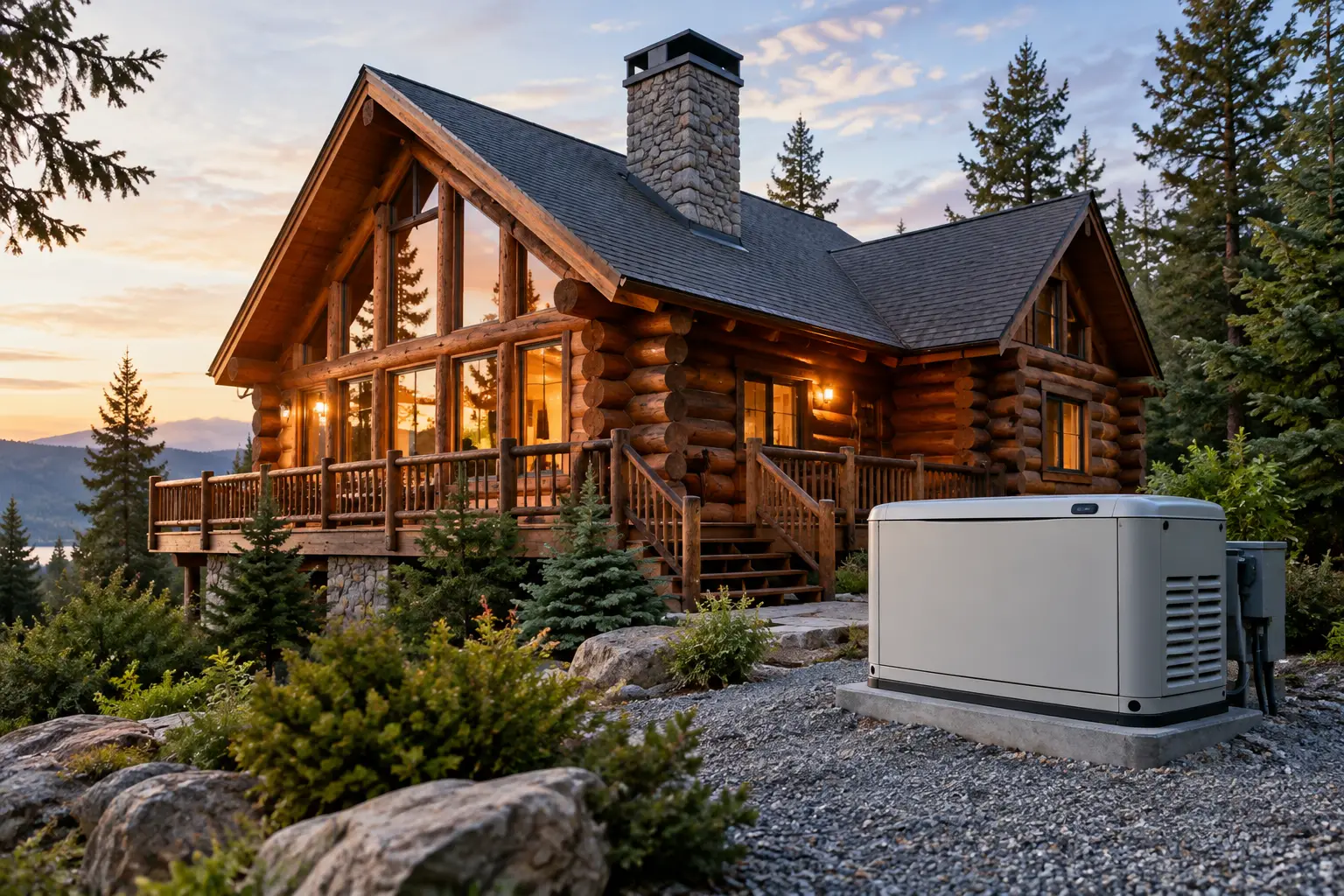
A generator is not much help if the home was never planned to use it properly. When the power goes out after a hurricane, a well-designed backup system should keep the essentials working safely: refrigeration, water, selected lighting, communications, climate control where practical, and the equipment needed to live comfortably on your property.
That is why generator-ready log homes should be considered early in the design process, not treated as an accessory added after construction. For many Florida and Georgia log home owners, especially those building a retirement home, family compound, or long-term getaway, backup power is part of the larger goal: independence, security, and fewer worries when conditions are less than ideal.
What Generator-Ready Really Means
A generator-ready home is not simply a house with a portable generator stored in the garage. It is a home designed with a clear plan for how backup power will enter the electrical system, what circuits it will serve, where the equipment will sit, and how the family will use the home during an outage.
The right setup depends on the property and the owner’s expectations. Some families want to power only the basics for a few days. Others want a standby system capable of running most of the house, including well equipment, refrigeration, security systems, selected air conditioning, and other major loads. There is no one-size-fits-all answer, and an honest plan begins by deciding what must stay on when utility power is unavailable.
A properly planned system commonly includes a transfer switch or interlock installed by a qualified electrical professional, a designated generator connection, load planning, and a safe location for the generator itself. Standby units also require consideration for fuel supply, service access, noise, drainage, and local requirements. These details are far easier to handle before walls are finished, driveways are poured, and landscaping is in place.
Start With the Loads That Matter Most
The first question is not, “What size generator do I need?” The first question is, “How do we intend to live when the power is out?” That answer should guide the electrical design.
For a home on a well, the well pump may be a priority. For a rural property, a gate, security system, septic or lift equipment, and exterior lighting may also matter. Refrigerators and freezers protect food. Internet equipment and charging circuits help families stay informed and connected. If a household member has medical equipment, that need should be identified from the beginning.
Heating and cooling require a more careful discussion. A whole-house generator may support broad comfort, but air conditioning equipment can create a substantial electrical demand. Some owners prefer to back up a selected bedroom or a smaller conditioned area rather than every system in the house. Others want a larger standby arrangement because remaining at home during a prolonged outage is a central part of their plan.
The point is to build a sensible priority list before electrical circuits are finalized. A good electrical plan separates essential loads from convenience loads where appropriate. This gives the owner useful choices during an outage instead of leaving everything dependent on guesswork.
Do Not Oversimplify the Fuel Question
Fuel availability can determine whether a generator is useful on day one and still useful several days later. Portable systems may rely on gasoline, while standby generators often use propane or natural gas where service is available. Each approach has advantages and limitations.
A portable unit can be practical for limited essential loads, but it requires safe handling, refueling, secure storage, and a disciplined operating routine. A permanently installed standby unit offers greater convenience and can start automatically, but it needs a properly planned fuel source and regular service. On rural or coastal properties, access after a storm and the ability to obtain fuel deserve serious thought.
Generator equipment must always be installed and operated according to applicable electrical, fuel, ventilation, clearance, and local code requirements. Never operate a portable generator in a garage, under a home, or near openings where exhaust can enter the living area. Most of our customers at Log Home Guys will have an underground 1000 gallon propane tank installed. Then they will design as many gas appliances as possible, like a gas stove, gas instant on-demand water heaters, gas dryer, gas assist fireplace, and more. This lowers their electric footprint, and in most cases those appliances are most efficient on gas. So now the customer can live comfortably in long-term power outages for six months or more. This is true peace of mind.
Good Design Makes Backup Power Easier
The best time to plan for generator power is while designing the home, garage, and site together. On a custom log home, that planning can include a logical equipment location, protected routing for electrical connections, room for fuel equipment where needed, and access for future maintenance.
Placement matters. A generator should be located where it can be serviced without tearing up landscaping or working around a tight side yard. It should not become an afterthought sitting in the most visible part of an otherwise beautiful Cypress log home. Drainage matters as well. Heavy rain, wind-driven debris, and standing water are not uncommon concerns in the Southeast.
The garage or a separate timber structure can also play a useful role. A thoughtfully designed log garage may provide secure space for portable equipment, fuel supplies where permitted, tools, and storm preparation materials. It can also keep those items out of the main home and organized for the day they are needed.
For larger properties, consider the relationship between the home, gate, workshop, guest house, and water systems. A legacy property may have more than one electrical need during an outage. Planning those systems together can prevent expensive inconvenience later.
Hurricane Performance Is More Than Backup Power
Generator planning is only one part of storm readiness. The house itself must be designed to stand up to the conditions it may face. A generator cannot make up for weak structural planning, poor water management, or materials that demand constant repair in a hot, humid climate.
At Log Home Guys, we design Cypress log homes with hurricane-focused structural engineering in mind. That means looking beyond the bare minimum where practical and considering wind loads, uplift, shear loading, connections, roof design, and the details that affect long-term performance. Every property is different, but the goal remains the same: build with common sense and plan for real conditions, not just a pleasant day on the drawing board.
Heart-Cut Cypress is a natural fit for this kind of long-term thinking. It is the heartwood of Bald Cypress, valued for natural resistance to decay and insects. That does not mean any wood home can be neglected, and no honest builder should claim otherwise. Proper design, finishes, roof overhangs, drainage, and regular care still matter. But premium Heart-Cut Cypress gives the owner a far better foundation for low-maintenance performance than cheap, lower-cost pine log alternatives.
A home built for decades should not be designed around the lowest initial decision. It should be designed around fewer preventable problems, sensible upkeep, and confidence that the materials and structure are working for the owner year after year.
Generator-Ready Log Homes Need a Practical Electrical Plan
A custom floor plan affects the backup-power plan more than many people realize. The location of mechanical rooms, refrigerators, bedrooms, well controls, outdoor kitchens, garages, and future additions all influence circuit layout and electrical capacity.
For example, a homeowner may want the primary bedroom, kitchen, and one living area to remain comfortable during an outage. Another may want the entire main level supported while guest rooms and recreational spaces remain off. A family compound may require separate priorities for the main house and a detached guest cabin. These are design decisions, not merely generator decisions.
It is also wise to leave room for change. Owners may add a pool, workshop equipment, an electric vehicle charger, or additional living space later. Not every future possibility needs to be installed on day one, but discussing it early can help avoid boxed-in choices later.
This is where personal service matters. A pre-packaged log home kit may give you a materials list, but it cannot replace a real conversation about how you plan to live on your land. A custom home should make structural, practical, and maintenance sense from the start.
Plan for the Day You Need It
The best generator arrangement is one the homeowner understands and can use with confidence. Keep operating instructions available, exercise equipment as recommended by its manufacturer, and make sure the people who may be at the home know the basic procedure. If the property will sit vacant part of the year, arrange regular checks rather than assuming equipment will be ready after months of neglect.
A generator-ready home is not about living in fear of the next storm. It is about building a home that lets you stay comfortable, informed, and self-reliant when normal services are interrupted. When backup power, sound engineering, and premium Heart-Cut Cypress construction are considered together, your log home is better prepared to serve your family exactly as it should: reliably, quietly, and for the long haul.
Reviewed By: Bill Mathews Owner & Founder of Log Home Guys 9/30/2026