
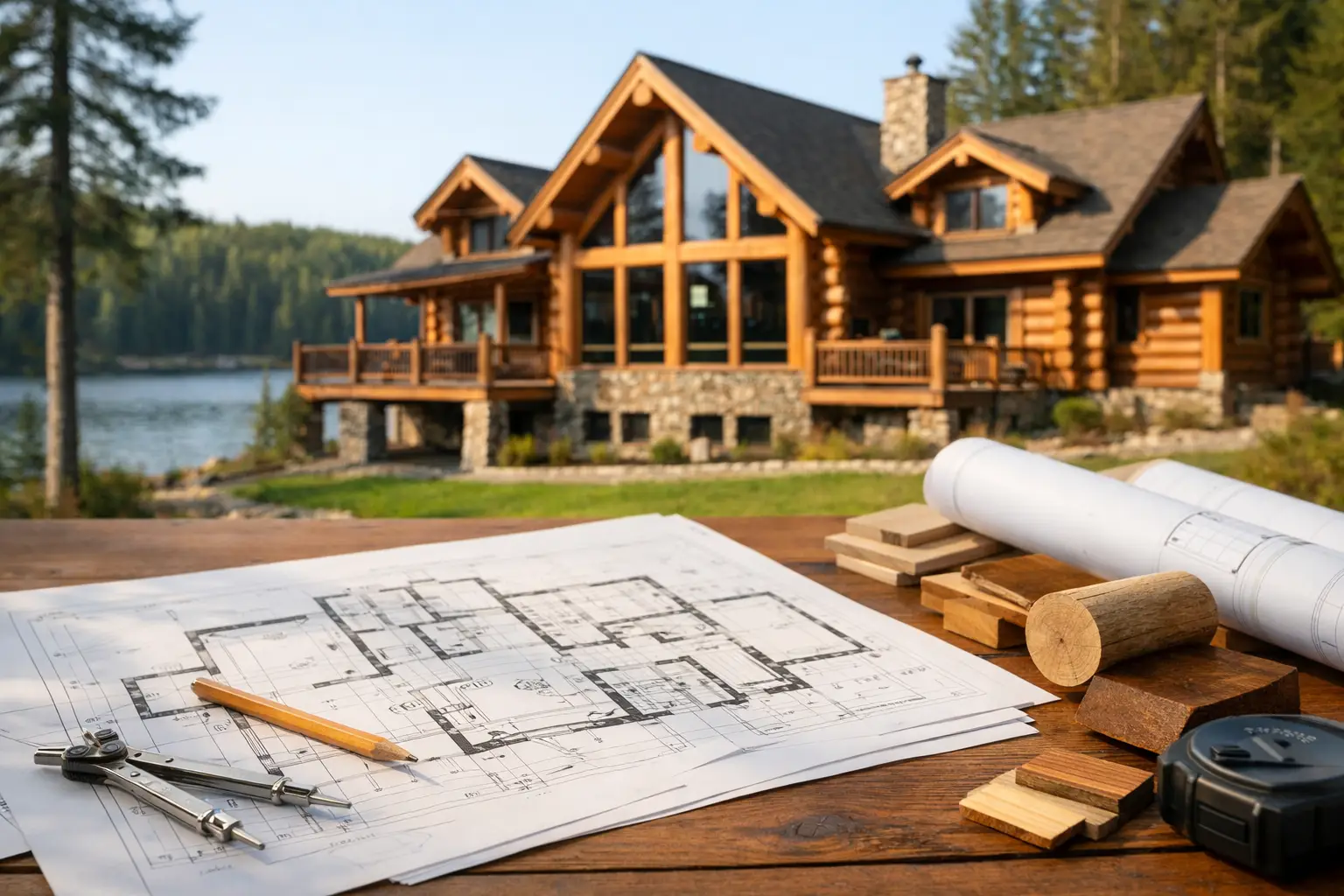
A pretty sketch on paper does not mean much if the house fights your land, your weather, or the way your family actually lives. That is why custom log home floor plans matter so much. In the Southeast, a good plan has to do more than look right. It has to handle heat, humidity, storms, storage needs, and daily traffic patterns without wasting space or driving up long-term costs.
For many buyers, the mistake starts with choosing a plan because it looks good in a brochure. Open great rooms, high ceilings, and long porches all have their place. But if the home is going in Florida, Georgia, or North Carolina, the floor plan needs to be shaped around the site, the local weather, and the way a log home performs in a southern climate. That is where custom work pays off.
Why custom log home floor plans matter
A custom plan gives you control over more than room sizes. It lets you decide how the house sits on the property, where natural light comes in, how people move through the home, and how much square footage is truly useful. That matters in a log home because structure, roof lines, porches, and wall systems all affect cost and performance.
The right floor plan can also help you avoid building space you rarely use. A formal dining room may sound nice until it becomes a room nobody enters except on holidays. A giant two-story space may look impressive until you are paying to cool it in August. Good design is not about adding more. It is about putting the square footage in the right places.
For southern buyers, there is another layer to consider. Wind exposure, sun orientation, moisture control, and porch depth are not side issues. They should be part of the plan from the beginning. A home designed for a mountain postcard is not always the right answer for a Florida homesite.
Start with the land, not the brochure
Every homesite tells you something. Flat ground, wooded acreage, lake frontage, open pasture, and narrow rural lots all call for different floor plan decisions. Before settling on a layout, it helps to look at access, drainage, views, privacy, and how the sun moves across the property.
A rear porch that faces a beautiful tree line may be the best feature in the house. On another lot, that same porch may catch hard afternoon heat and become uncomfortable half the year. A garage entry that works well on paper may create a poor approach if the driveway needs to come in from a different side. Small changes at the planning stage often prevent expensive compromises later.
This is one reason custom log home floor plans are usually a better fit than stock plans. Stock plans are built around averages. Real land is not average. If the home is going to sit on your property for decades, the plan should respond to that property from day one.
The rooms that matter most in a log home
Most families spend the bulk of their time in a handful of spaces: the kitchen, great room, primary suite, porches, utility areas, and whatever room handles work or guests. Those spaces deserve the most attention.
The kitchen should be easy to move through and close to both indoor gathering space and outdoor living space. In a log home, kitchens often work best when they stay open to the main living area but still have enough wall and cabinet layout to be practical. Too much openness can reduce usable storage. Too little can make the home feel chopped up.
The great room is often the visual anchor, but it does not have to be oversized to feel impressive. Proportion matters more than raw square footage. A well-planned room with strong sight lines, natural light, and a sensible relationship to the kitchen and porch usually feels better than a giant room that wastes conditioned space.
The primary suite should be private without feeling disconnected. Many buyers want split-bedroom layouts, and that can make sense, especially for families or owners who expect frequent guests. But there is a trade-off. Spreading bedrooms too far apart can increase hallway square footage and complicate the roof system. A smart custom plan balances privacy with efficiency.
Custom log home floor plans for southern climates
In the Southeast, climate should shape the plan. Deep porches are not just a style choice. They help shade walls and windows, protect entry points, and create useful outdoor living areas. Covered walkways, practical mudroom entries, and well-placed utility spaces also make everyday life easier when rain and humidity are part of the routine.
Ceiling height is another place where good judgment matters. Tall ceilings can be beautiful, but bigger volume means more air to cool. Sometimes a vault in the main living area paired with standard ceiling heights in secondary rooms gives you the best balance of appearance and efficiency.
Window placement should also be handled with care. More glass is not always better, especially where heat gain and storm exposure are concerns. The right custom plan uses windows to frame views and bring in light without turning the home into an energy burden.
When buyers work with experienced designers and suppliers who understand southern conditions, those decisions get made with real-world performance in mind. That is especially important in areas where hurricane winds, moisture, and long summers are part of the building equation.
One story or two
This comes down to land, budget, and lifestyle.
A one-story layout is often easier for aging in place, simpler for daily living, and convenient for owners who do not want stairs. It can also make sense on wider lots where the footprint is not a problem. The trade-off is that spreading out on one level may require a larger foundation and roofing area.
A two-story home can reduce the footprint and may work better on narrower sites. It can also create separation between public and private spaces. But stairs are a long-term consideration, and second-floor rooms can introduce extra framing and mechanical planning.
There is no one-size-fits-all answer here. The best floor plan is the one that fits how you intend to live in the home five, ten, and twenty years from now, not just how it looks on move-in day.
Avoiding expensive design mistakes
The most common floor plan mistakes are not dramatic. They are the little things that irritate owners year after year.
Too little storage is a big one. So is poor laundry placement, undersized pantries, weak traffic flow from garage to kitchen, and oversized rooms with no furniture logic. Another common problem is pushing for too many corners, bump-outs, and complicated roof lines. Those features can add cost fast without adding equal value.
A well-designed custom log home keeps the structure clean and purposeful. That usually means better build efficiency, fewer problem areas, and a stronger end result. Fancy does not always mean smarter.
Material choice matters too. In southern climates, the floor plan and the building material should work together. A home built with heart-cut cypress gives buyers a real advantage in durability, insect resistance, and lower maintenance compared to more common softwood options. That becomes even more valuable when the design includes the porches, overhangs, and wall systems needed for long-term performance.
Designing for builder support or owner-builder success
Some customers want a turnkey path with direct builder guidance. Others plan to manage the project themselves or handle part of the work. The floor plan should reflect that.
If you are going the owner-builder route, simpler layouts often make the process smoother. Clear spans, practical roof structures, and straightforward room arrangements can reduce complications during construction. If you are hiring a builder, you still want a plan that is engineered properly and easy to execute without surprises.
That is where experience matters. A company like Log Home Guys understands that buyers are not just shopping for a pretty layout. They need plans that can be engineered, stamped, supplied correctly, and built with confidence in southern conditions. No sales hype or pressure is needed when the plan itself makes sense.
What a good planning process looks like
A solid design process starts with questions, not promises. How will you live in the home? Is this a primary residence, retirement home, weekend place, or family property? Will you need office space, guest quarters, wider halls, or easy outdoor access? How much porch space will you truly use? Where do you want your views?
From there, the best custom work narrows in on priorities. Not every wish list item belongs in the final plan. Good planning is partly about knowing what to leave out. A home that is easier to build, easier to maintain, and better suited to your climate is usually the better investment.
If you get the floor plan right, the whole project tends to go better. The house lives better. The budget holds together better. And years later, you are still glad you made decisions based on common sense instead of showroom talk.
The best custom log home floor plans do not try to impress everybody. They are built to serve the people who will actually live there, on the land they actually own, in the climate they actually face.