
If you are planning a log home in Florida, Georgia, or North Carolina, the wood you choose is not a small detail. It will affect how your home handles humidity, insects, storms, maintenance, and aging over the next few decades. That is why heart cut cypress benefits matter so much. In southern climates, the right material can save you money, headaches, and a lot of future repair work.
Too many buyers fall in love with the look of a log home and only later start asking hard questions about rot, termites, shrinking, and weather exposure. Those questions should come first. A beautiful home that fights you every year on upkeep is not a bargain. A well-built cypress log home, on the other hand, starts with a wood species that is naturally better suited to the South.
Why heart cut cypress benefits stand out in the South
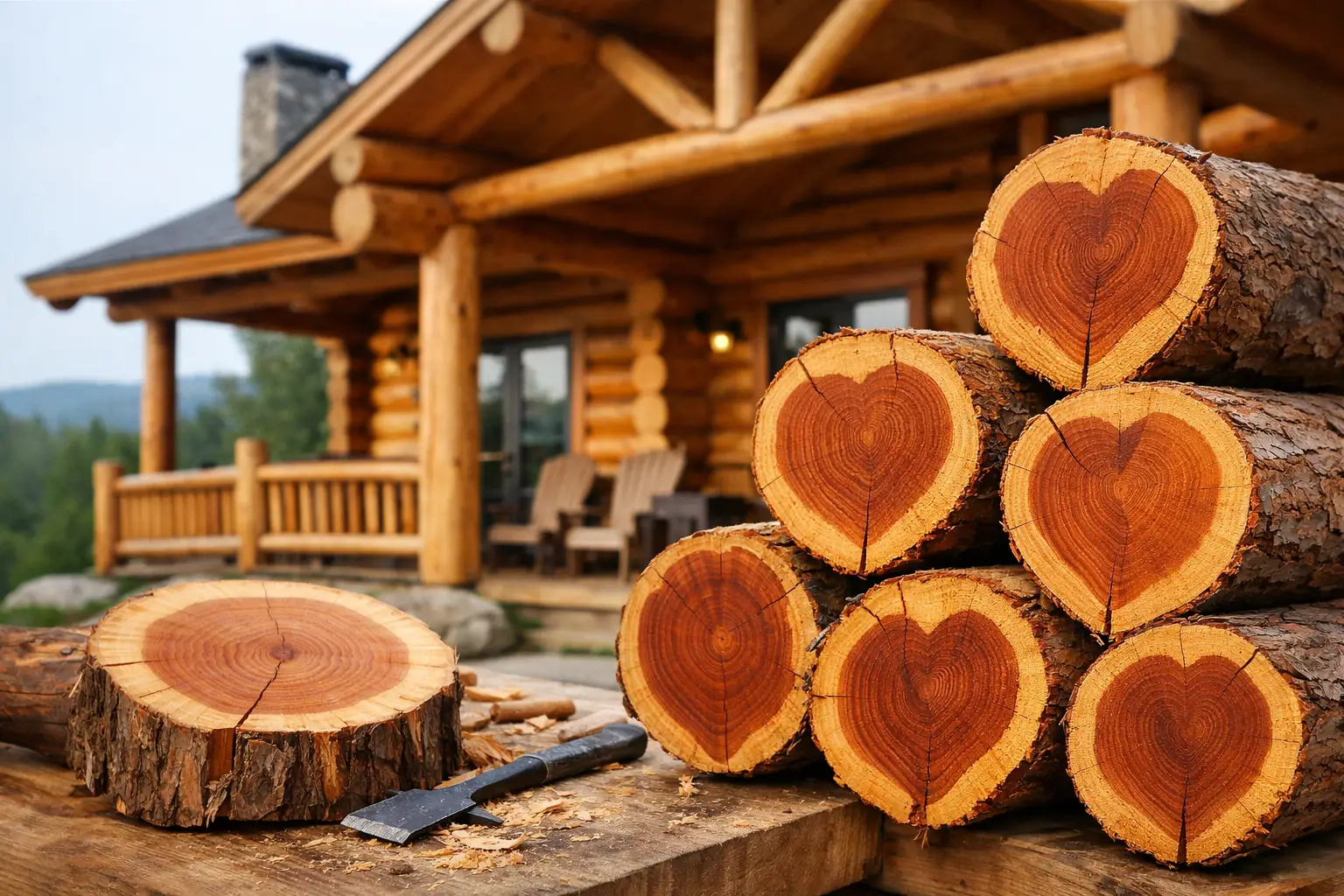
Heart cut cypress comes from the dense inner heartwood of the tree. That matters because the heartwood contains the natural oils and preservative qualities that made cypress famous long before modern chemical treatments became common. When people talk about old cypress structures lasting for generations, this is the part of the tree they are talking about.
For southern homebuyers, this is more than a nice historical fact. Florida and the broader Southeast create real stress on a house. High humidity, driving rain, termites, heat, and seasonal storm pressure can expose weak materials fast. Pine and other common softwoods may cost less upfront, but they often demand more attention later. Heart cut cypress starts with an advantage because nature already built durability into it.
That does not mean every cypress home is automatically equal. Design, engineering, milling, construction quality, and proper installation still matter. But when the base material is stronger against decay and insects, the entire house starts from a better position.
Natural resistance to rot and decay
One of the biggest heart cut cypress benefits is its natural resistance to rot. In humid climates, wood is always under pressure from moisture. Even homes with good roof overhangs, proper drainage, and smart site prep will deal with damp air and seasonal wet conditions.
Heart cut cypress handles that environment better than many common alternatives. Its heartwood has natural compounds that help slow decay, which is one reason cypress has long been used in demanding outdoor and coastal settings. For a log home owner, that can mean less worry about the wood breaking down over time, especially in shaded, damp, or rain-exposed areas.
There is still a practical side to this. Natural resistance does not mean neglect-proof. A cypress home still needs proper finish systems, sound construction details, and normal care. But there is a big difference between maintaining good material and constantly fighting bad material. That is where cypress earns its reputation.
Strong termite and insect resistance
Ask almost any southern property owner what keeps them up at night, and termites will be near the top of the list. This is another area where heart cut cypress benefits are easy to understand. The heartwood is naturally less appealing to insects than many other species used in log construction.
That matters in Florida especially, but it matters across the Southeast. Insect pressure is simply part of the environment. Choosing a wood with natural resistance gives you a better starting point than depending entirely on chemical treatments or hoping routine pest control will solve everything.
Again, common sense applies. No wood home should be built carelessly around moisture, standing water, wood-to-ground contact, or poor drainage. Termite prevention is always a full-system issue. Still, when your primary building material has natural insect resistance, that is a real advantage, not a marketing slogan.
Lower maintenance over the life of the home
Many buyers focus on initial package price and forget to think about long-term ownership. That can be a costly mistake. One of the most practical heart cut cypress benefits is lower maintenance pressure over time.
A wood that naturally resists decay and insects generally asks less from the owner. That does not mean zero maintenance. No honest builder should promise that. Exterior wood homes need inspection, care, sealing, and attention to water management. But with heart cut cypress, you are not starting with a species that is more vulnerable from day one.
This is especially important for retirees, second-home buyers, and families who do not want every season to turn into another repair project. Lower maintenance does not just save money. It protects your time and reduces the stress that can come with owning a home in a harsh climate.
Stability and performance in humid weather
Southern climates are hard on building materials because they rarely stay in a narrow comfort zone. Heat rises, humidity swings, storms move in fast, and wet-dry cycles keep repeating. That is where the dense nature of heartwood becomes valuable.
Among the key heart cut cypress benefits is better overall performance in these conditions when compared with less durable woods commonly used in lower-end log packages. Cypress has a long track record in wet and humid regions for a reason. It is not a trendy material. It is a proven one.
That said, every log home still needs proper engineering and construction practices. Good material cannot make up for poor design. Wall systems, joinery, fastening methods, drying, settling allowances, and wind-load engineering all matter. But when you pair sound engineering with heart cut cypress, you are giving the structure a better chance to perform well over the long haul.
Better fit for storm-conscious buyers
In the Southeast, storm resistance is not optional. Buyers are right to ask how a log home will perform under hurricane winds, lateral loads, and severe weather conditions. Wood species alone is not the whole answer, but it is part of the bigger picture.
Heart cut cypress brings durability to the wall system itself. Combined with properly engineered plans, stamped drawings, and construction methods built for regional demands, it supports a stronger finished home. This is where experienced design and supply make a real difference. A pretty log shell is one thing. A log home engineered for real southern weather is another.
If your goal is a home that looks authentic but is also built with common sense for modern storm conditions, cypress deserves serious attention. It gives you traditional beauty without forcing you into a material choice that works against your environment.
The look buyers want without the pine problems
A lot of buyers are drawn to log homes for the warmth, texture, and character of real wood. They want the classic look, but they also want confidence that the house will hold up. This is where cypress separates itself from cheaper alternatives.
Pine can be attractive, and it is widely used because it is easy to source and often less expensive upfront. But lower upfront cost can come with trade-offs in maintenance, insect vulnerability, and long-term durability. For some buyers in mild climates, those trade-offs may be acceptable. In the Southeast, they are harder to ignore.
Heart cut cypress gives you the visual appeal people want in a log home while offering a much better material story behind the walls. That is why experienced builders who understand southern conditions keep coming back to it. The choice is not just about appearance. It is about whether the wood matches the demands of the place where the home will stand.
Why material choice affects overall value
Value is not the same as lowest price. A cheaper home package can become more expensive if it brings higher maintenance, more treatments, earlier repairs, or shorter service life. When you look at heart cut cypress benefits through that lens, the material often makes financial sense.
A home built from premium heartwood may cost more than a bargain package built from common pine. That is the trade-off. But buyers who plan to stay long term, pass property down to family, or avoid constant upkeep often see the difference clearly. Better material helps protect the investment.
That is one reason practical buyers across the Southeast continue to choose heart-cut cypress. It is not about paying extra for bragging rights. It is about paying for performance where performance matters.
Log Home Guys has built its reputation around that simple idea. Use the right wood, engineer the home correctly, and treat customers straight. There is nothing flashy about that, but it works.
If you are serious about building a log home in the South, do not get distracted by surface appearance or sales talk. Ask what the wood will be like after years of humidity, storms, insects, and sun. The right answer is usually the one that still makes sense long after move-in day.