
"The Dirty Little Secret Of The Log Home Industry"
LogHomeMyths.com
LogHomeWoodTruth.com
LogHomeWoodTruth.com
This page is a must read for anyone considering building a log home or log cabin home. This webpage was designed to educate and shed light on Log Home Insects, Carpenter Boring Bees, Boring Bee's and the structural damages caused by Woodpeckers feeding on the Bee larva in Log Cabin Homes

"We're going to show you what the Pine & Cedar Log Home companies don't want you to know, The Truth !"
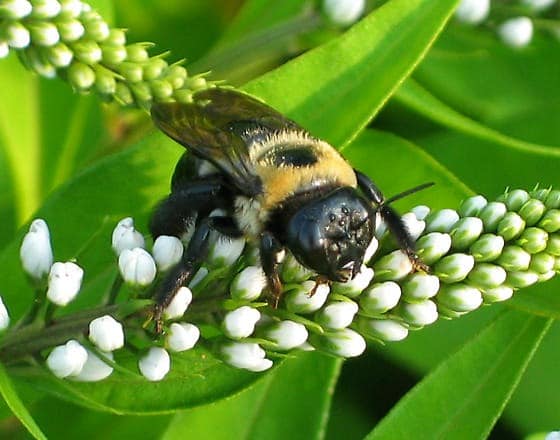
Carpenter bees also referred to as boring bees resemble bumble bees but excavate tunnels in wood to make a nest whereas bumble bees nest in soil. This nest building damages log home wood and attracts woodpeckers which in turn damage the wood even more.
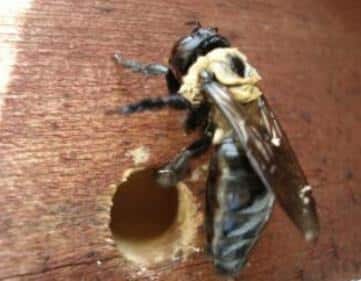
Carpenter bees very often construct nests in exterior structural wood, decorative wood such as siding, fascia boards, trim, and log homes. A round hole (1/2" diameter) is chewed in the wood surface then a tunnel is bored, usually at 90 degrees to the entrance.The female will bore a channel from 6 inches to as long as 4 feet. This channel serves as a main corridor from which she will drill small chambers a few inches deep. These chambers become egg holders. She will deposit an egg, bring in some food, and then seal it off with plugs of saliva and wood fiber to ensure the egg's development. Larvae hatch and feed on the "bee bread." Usually one generation per year.
Carpenter bee tunnels. Original drawing from Wood-Inhabiting Insects in Houses by Harry B. Moore, 1979. USDA, Forest Service and HUD.


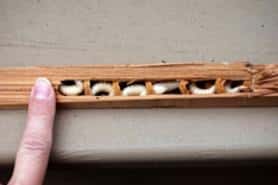
Most people look at the 1/2 inch hole and don't give much thought and think that by plugging the hole the problem is solved. We'll think again, your problems are just starting!
Not only does the tunneling structurally damage the wood, that is least of the problems. The female fills the tunnels with larvae, food product and saliva also introducing water and rot fungi. As the groups of larvae mature they produce liquids and feces in the tunnels. This concoction is the silent unseen problem penetrating the wood core and causing the wood to rot from the inside out. You as a customer are never aware of the destruction that's happening to your home.
Now The Second Problem
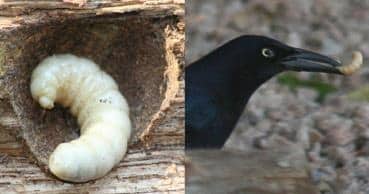
Carpenter bee larvae are noisy and tend to attract woodpeckers, Blue-jays, Crows and many other bird species who will drill holes along the tunnels feeding on the larvae. The birds also recognize the bees nesting hole which's represents food just below the woods surface.