
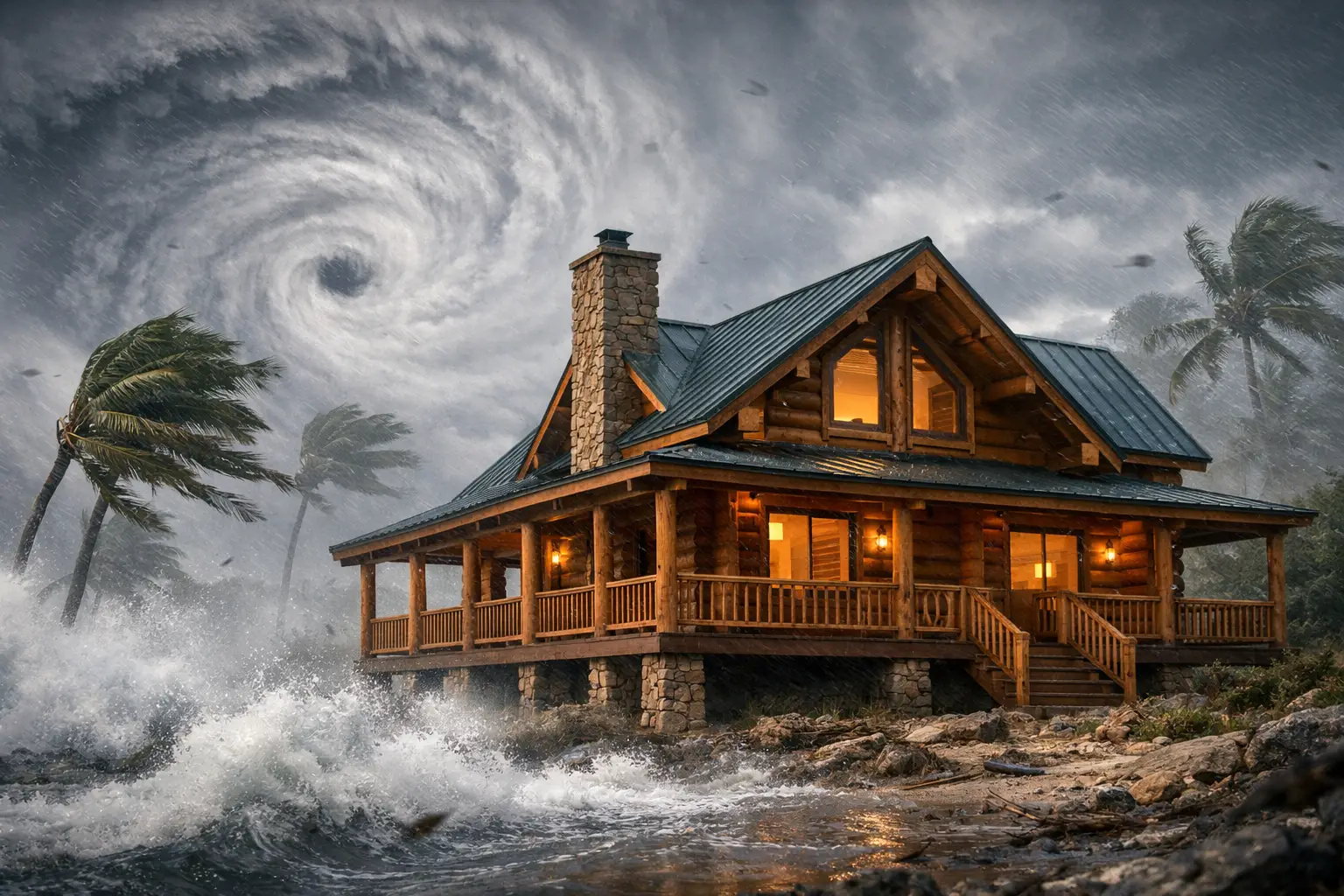
A lot of folks love the look of a real log home right up until they picture 140 mph wind pushing against it. That is usually the moment the question comes up – are hurricane resistant log homes actually possible, or is that just sales talk? The honest answer is yes, they are possible, but not by accident. In the Southeast, storm performance comes from engineering, materials, fastening, roof design, and a builder who understands local wind loads.
That matters because a log home is not automatically storm-ready just because it is made of heavy wood. Weight helps in some situations, but hurricanes test the whole structure. Uplift pressure attacks the roof. Wind-driven rain looks for weak points around windows and doors. Lateral loads push on walls and connections. If a home is going to perform well in Florida, coastal Georgia, or parts of the Carolinas, every one of those forces has to be addressed on the front end.
What makes hurricane resistant log homes work
The first thing to understand is that storm resistance is a system, not a single feature. People sometimes ask whether logs themselves are strong enough. The better question is how the home is designed and tied together from the foundation to the ridge.
A well-designed log home starts with engineered plans based on the specific wind zone, exposure, and local code requirements. That means the foundation anchoring, wall connections, roof framing, fastener schedules, and shear resistance are all accounted for before construction begins. Without that level of planning, even a beautiful home can end up vulnerable where it matters most.
In high-wind country, the load path is everything. Wind hits the roof, the roof transfers force into the walls, and the walls transfer that force into the foundation. If any link in that chain is weak, the storm will find it. This is why stamped blueprints and structural engineering are not extras for southern log homes. They are part of the job.
Why material choice matters more than most buyers think
Not all log homes are built from the same wood, and that is a bigger deal in the South than many buyers realize. Hurricane performance is not only about surviving one storm. It is also about how the structure holds up through years of humidity, insects, and wet-dry cycles that can wear down weaker materials.
Heart-cut cypress has a real advantage here. It is naturally resistant to decay, naturally resistant to insects, and far better suited to hot, damp climates than common pine. That does not mean maintenance disappears, because every wood home needs proper care. It does mean you are starting with a material that belongs in southern conditions instead of one that fights them.
That long-term durability affects storm resistance in practical ways. A home that stays sound, stable, and less prone to rot is better able to do its job when severe weather hits. If wall members, trim areas, or structural components have been weakened over time by moisture or termites, hurricane strength on paper may not mean much in the real world.
The roof is where many storm failures begin
If you want to know whether a log home is serious about hurricanes, look hard at the roof design. In major storms, roof failures often start before wall failures. Once the roof covering or framing is compromised, water intrusion and internal pressure can quickly make things worse.
Shape matters. Simpler rooflines generally perform better than complicated ones with too many valleys, dormers, and intersecting sections. That does not mean a custom home has to be plain. It means smart design usually beats flashy design in high-wind areas.
Attachment matters just as much. The roof system needs to be properly connected to the wall system with the right hardware and fastening schedule. Overhangs also need to be handled carefully. Deep overhangs can look great and provide shade, but in hurricane country they need to be designed with wind uplift in mind.
Then there is the issue of coverings. Roofing materials vary in wind ratings, installation methods, and life span. The right choice depends on budget, local code, and exposure. A house tucked inland on a protected site may have different needs than one in an open area where wind can build speed across flat ground.
Windows, doors, and openings are part of the structural picture
A strong shell can still be put at risk by weak openings. Garage doors, entry doors, sliders, and large window walls all need to be selected with the local hazard level in mind. During a hurricane, an opening that fails can allow pressure to build inside the home, and that can put far more stress on the roof and walls.
This is one reason custom planning matters. A buyer may want large glass areas to capture a view, and that is understandable. But in storm-prone regions, bigger openings often require stronger products, better detailing, and careful placement. Good design does not ignore those trade-offs. It works through them.
Hurricane resistant log homes still depend on site conditions
Even the best home package can be helped or hurt by where it sits. Homes built in exposed coastal zones, open pastures, ridge tops, or flood-prone sites face different risks than homes with better natural protection. Wind exposure, drainage, elevation, and soil conditions all affect how the house should be engineered and built.
This is where practical buyers usually make better decisions than dream-only buyers. A beautiful house on the wrong site can cost more to build, more to insure, and more to protect. Sometimes a small adjustment in placement, elevation, or orientation can improve storm performance without changing the overall home you want.
Flood risk also needs to be treated separately from wind risk. A home can be designed for excellent wind performance and still be vulnerable if it is placed too low or in the wrong flood zone. In the Southeast, storm planning means thinking about both.
Why the builder and package supplier matter
A lot of trouble starts when buyers assume all log home companies are basically the same. They are not. Some sell stock packages with very little regard for the realities of southern weather. Others rely on high-pressure sales and generic plans that do not fit local engineering demands.
If you are considering hurricane resistant log homes, ask direct questions. Is the plan engineered for your location? Are the blueprints stamped when required? Is the fastening system specified? Is the company used to dealing with Florida and southeastern wind conditions? Can they support your builder or owner-builder process with practical answers instead of sales language?
That is where experience shows up. A company that has spent decades working in the Southeast knows that storms, humidity, termites, and code requirements are not side issues. They are part of the design brief from day one. At Log Home Guys, that kind of planning is not treated as an upgrade. It is simply how a southern log home should be approached.
What buyers should expect – and what they should not
There is no such thing as a hurricane-proof house. Anyone who says otherwise is selling fantasy. The real goal is a home that is engineered and built to resist severe wind forces, manage weather exposure, and perform far better than a poorly planned structure.
That means buyers should expect trade-offs. Some floor plans are easier to harden than others. Some architectural details may need to be simplified. Some product choices may cost more upfront but save money over time through lower maintenance and better durability. In many cases, that is money well spent.
The good news is that a true log home does not have to give up its character to gain storm strength. With the right wood, the right engineering, and the right support, you can have authentic log-home appeal without pretending you live in a mild climate.
If you want a log home in the Southeast, do not ask whether it looks strong. Ask whether it is designed to carry wind loads, resist moisture, and stay sound for the long haul. That is the kind of home you can feel better about when the forecast starts to turn.