
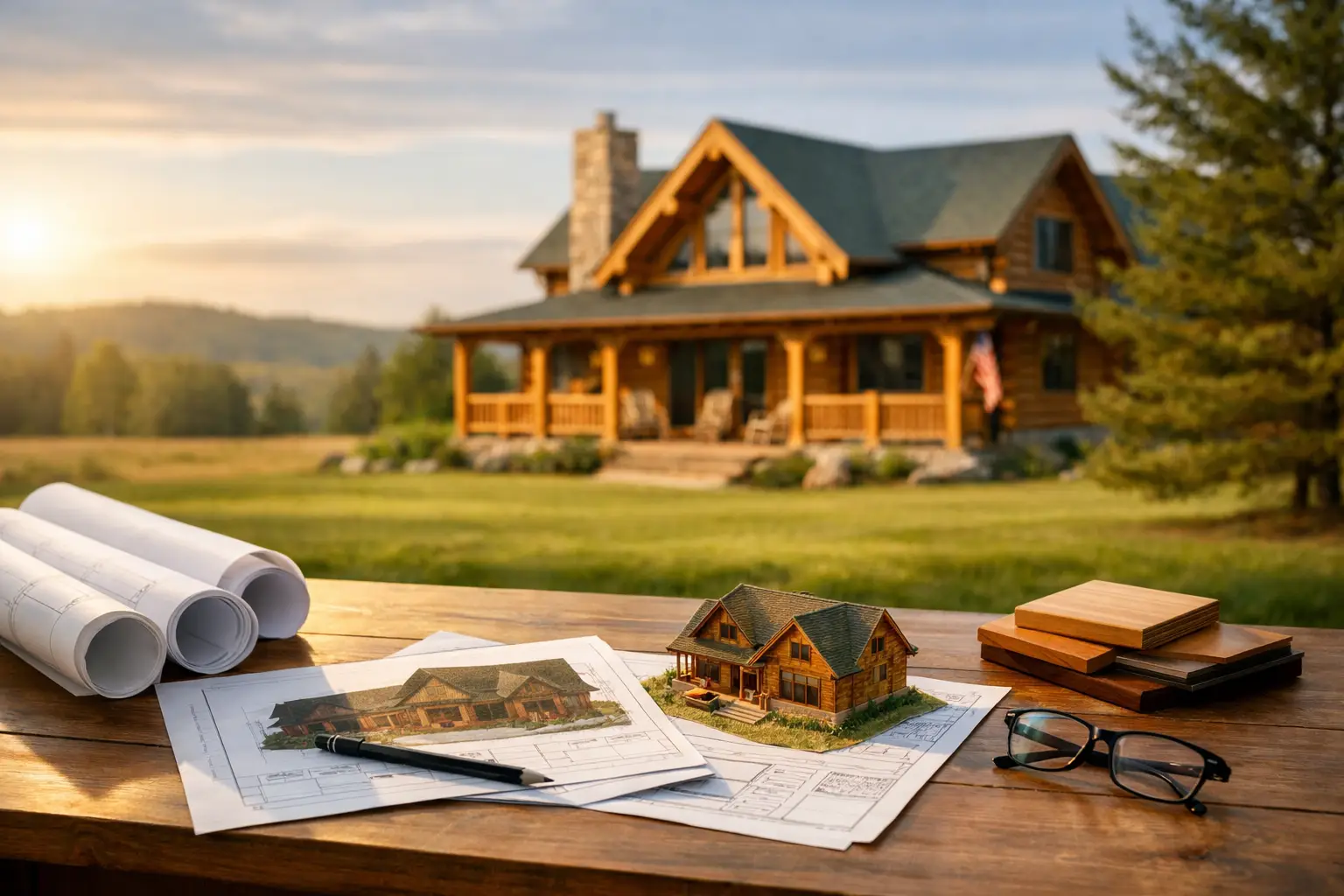
A good country style log home model should feel right the moment you see the floor plan. Not because it looks rustic in a brochure, but because it fits the way you live, the land you own, and the weather it has to stand up to year after year. For buyers in Florida, Georgia, and North Carolina, that matters more than marketing language or stock cabin photos.
A lot of people start with the look. They picture a wide porch, exposed timbers, a stone fireplace, maybe a metal roof and a long driveway lined with pines or pasture fence. There is nothing wrong with that. The look matters. But if you are building in the Southeast, the right model has to do more than look like a country home. It needs to handle humidity, insects, heavy rain, and in many cases hurricane-force wind loads. That is where smart design and the right wood separate a real home from a problem waiting to happen.
What makes a country style log home model work
At its best, a country style log home model combines traditional character with practical planning. The country style side shows up in the proportions and layout. You usually see broad porches, simple rooflines, comfortable living areas, and a floor plan built around everyday use instead of wasted square footage. These homes feel grounded. They are made for family meals, muddy boots, overnight guests, and quiet mornings outside.
The log home side should be just as honest. Real wood walls, structural integrity, and details that are built for long service matter far more than decorative trim meant to imitate a log home. A true log home should feel solid and permanent. It should not leave you wondering how much maintenance is hiding around the corner.
For many buyers, the sweet spot is a custom plan rooted in country design rather than a one-size-fits-all package. A stock plan may give you a starting point, but real life usually demands changes. You may want a larger pantry, a safer stair layout, a screened porch, a first-floor primary suite, or a mechanical room placed where it makes sense for your site. Those are not small details. They shape how well the house works for the next twenty or thirty years.
Country style log home model plans should match Southern living
Southern living is different from mountain postcard living, and your house should reflect that. In the Southeast, people use porches for shade and airflow. They need roof overhangs that protect walls and openings from hard rain. They need layouts that account for wet gear, utility needs, and everyday traffic in and out of the home. A flashy design from another region may look appealing on paper but perform poorly in a humid, storm-prone climate.
That is why room placement matters. Open living spaces remain popular, but they work best when they are balanced with storage, mudroom access, and practical bedroom separation. Retirees may want everything essential on one level. Families may need a split-bedroom layout so parents and children each have privacy. Second-home buyers often want guest space without paying to heat and cool more house than they need.
There is always a trade-off. A soaring great room looks impressive, but it can reduce usable second-floor space. A large wall of glass can bring in beautiful views, but it also needs to be engineered and detailed properly for your climate and exposure. A wraparound porch adds outdoor living value, but it has to be designed as part of the structure, not tacked on as an afterthought. Good planning means weighing those choices before the build starts.
Why material choice matters more than style alone
This is where many buyers get steered wrong. They focus on style first, then settle for whatever wood the package company happens to sell. That approach can cost you later. In the South, wood selection is not a cosmetic decision. It affects maintenance, longevity, insect resistance, and overall performance.
Heart-cut cypress has a strong reputation for a reason. It is naturally resistant to decay and insects, and it holds up exceptionally well in humid conditions. That makes it a far better fit for Southern log homes than softer, more common species that demand more upkeep and give less peace of mind. If you are building in a region where termites, moisture, and heat are part of life, that is not a small advantage.
A country style home is supposed to age with dignity. The wood should support that goal. You want a home that keeps its character without turning into a maintenance project every season. Buyers who understand that early usually make better decisions, because they stop comparing plans only by square footage and start looking at long-term value.
Engineering is part of the design, not an extra
A country style log home model may look relaxed, but the structure behind it should be serious. In hurricane-prone and high-wind areas, engineering is not optional. It is part of building responsibly.
That means the home should be designed for the site, the span loads, the roof system, and the wind conditions it will face. Open floor plans, lofts, porches, and large roof systems all place demands on the structure. The right company accounts for those loads from the beginning with engineered plans and stamped blueprints where required. That protects your investment and helps avoid expensive revisions later in the process.
This is especially important for buyers who are comparing national package companies to experienced regional specialists. A pretty rendering can sell a dream. It cannot guarantee the house was designed with Florida wind exposure, Georgia humidity, or North Carolina site conditions in mind. Those details matter in the real world, where homes either hold up or they do not.
The best layout is the one you will still like in ten years
A lot of buyers ask for the biggest porch, the tallest ceiling, or the most dramatic great room. Those features can be worthwhile, but the better question is simpler. Will this home still serve you well after the excitement of the build is over?
That usually points back to daily function. Is the kitchen central without becoming a hallway? Is there enough storage for tools, seasonal items, and pantry overflow? Can laundry be reached easily from the primary bedroom? Is there a bathroom placed where porch traffic or guest traffic makes sense? If you are owner-building, are the plan details straightforward enough to help the construction go smoothly?
Smaller homes often answer these questions better than oversized ones. A well-designed 1,500 to 2,200 square foot country log home can feel generous if the plan is disciplined. A larger home with wasted corners and awkward circulation can feel frustrating no matter how pretty the rendering is. Bigger is not always better. Better is better.
A custom country style log home model gives you more control
This is one reason custom design continues to matter. Buyers have different land, different budgets, and different priorities. Some want a full-time residence with room to age in place. Some want a cabin for weekends and holidays. Some need a material package and builder support because they plan to manage the project closely themselves. Others want turnkey guidance so the process stays organized from design to completion.
A custom model gives you room to make the house fit your life instead of forcing your life into a prepackaged plan. You can adjust roof pitch, porch depth, bedroom count, traffic flow, and utility spaces without losing the country character that drew you in to begin with. That flexibility is especially valuable when building on rural or semi-rural land, where setbacks, grades, views, and driveway approaches all affect the final design.
Companies like Log Home Guys built their reputation on exactly that kind of practical service – real guidance, engineered plans, and premium cypress homes designed for Southern conditions without showroom pressure or inflated overhead. That old-fashioned approach still means something to buyers who want straight answers.
Price matters, but value matters longer
Most buyers are cost-conscious, and they should be. A country style log home model has to fit the budget. But low upfront pricing can be misleading if it leaves out structural value, better materials, or the support needed to get the home built correctly.
The better way to judge value is to look at the full picture. What wood are you actually getting? Is the plan engineered for your region? How much maintenance should you expect over time? Are you paying for dealer markup and sales commissions, or for the house itself? Those answers tell you more than a headline package price ever will.
The right home is not the cheapest drawing on the table. It is the one that gives you honest design, sound structure, and materials that belong in your climate.
If you are serious about building, slow down long enough to choose a model that earns its keep. A country home should be comfortable to live in, tough enough to last, and simple enough to trust. When you find that balance, you are not just buying a style. You are building a place your family can depend on.