
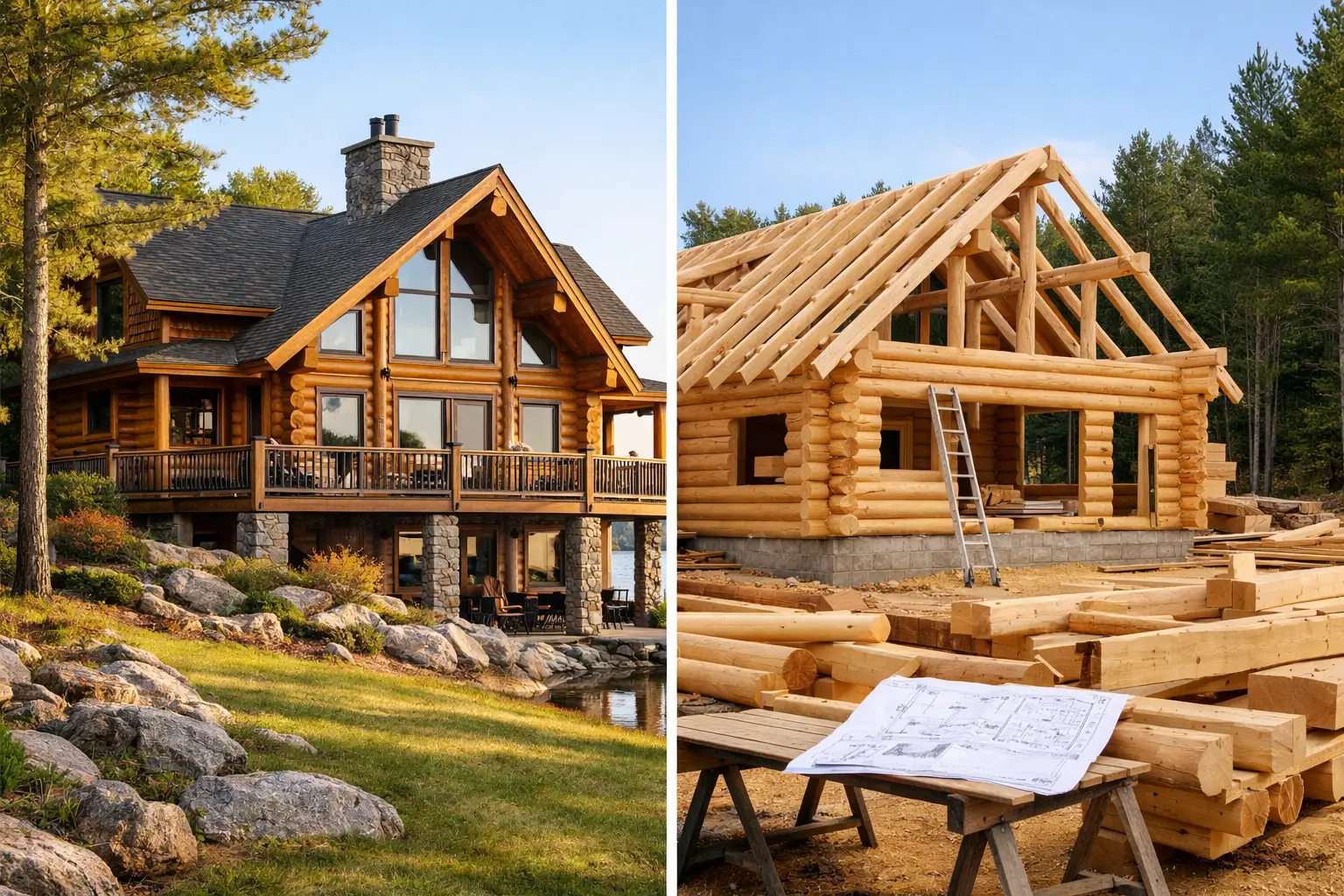
A turnkey cabin or material package is not a small decision about how your home arrives on the jobsite. It determines who controls the construction, how clearly responsibility is defined, and whether the finished home is built with the long view in mind. For a retirement home, family compound, or legacy property, the wrong arrangement can create years of avoidable frustration.
The right choice depends on your property, your involvement level, and the kind of builder you have available. What should not be negotiable is the quality of the structure, the material, the engineering, and the support behind the home.
What Does Turnkey Really Mean?
The word turnkey is used loosely in the homebuilding business. Some companies use it to mean they provide a shell. Others mean they will coordinate portions of construction. In the fullest sense, a turnkey home is one where the home is complete and ready for you to move into, including the foundation, log structure, roof, windows, mechanical systems, interior finishes, and site-related work defined in the contract.
That sounds simple, but the details matter. Driveways, wells, septic systems, utility connections, land clearing, landscaping, appliances, generator systems, porches, and permitting responsibilities may or may not be included. A customer should never assume that a turnkey label answers those questions.
Before choosing a turnkey route, ask for a clear written scope of work. You need to know who is responsible for every major phase, what allowances or selections are involved, and what happens when site conditions require a change. This is not being difficult. It is being careful with a home that should serve your family for decades.
A good turnkey arrangement can be the right fit for an owner who wants one primary point of coordination and does not intend to manage subcontractors, inspections, deliveries, and construction scheduling. It can also work well when the builder has proven experience with log construction rather than treating a log home like an ordinary framed house with decorative siding.
What Is a Material Package?
A material package, often called a log home kit or log cabin kit, supplies the primary components needed to build the home. The exact contents vary by company and design, so buyers need to look past the word “package.” At a minimum, it commonly includes the logs and the materials required for the log wall system. Depending on the design, it may also include roof-system components, fasteners, windows, doors, trim, porch materials, engineered plans, and other specified items.
A material package does not mean you are left alone to figure things out. The best approach combines a well-designed package with complete engineered and stamped blueprints where required, builder training, clear construction details, and direct technical support when questions arise in the field.
For many customers, this arrangement offers a better balance of control and confidence. You can select a qualified local builder, stay involved in decisions that affect your property, and still receive the specialized log home knowledge that general contractors may not have. That matters in Florida, Georgia, and throughout the Southeast, where wind loading, humidity, drainage, insects, and long-term moisture management deserve serious attention.
Turnkey Cabin or Material Package: The Real Difference
The main difference is not whether one option is “easy” and the other is “hard.” The difference is where responsibility sits.
With a turnkey cabin arrangement, the builder or construction team takes responsibility for coordinating the complete build within an agreed scope. This reduces the owner’s day-to-day construction burden, but it also requires deep trust in the people managing the work. If the team cuts corners on site preparation, flashing, roof details, fastening, or mechanical coordination, the owner may not see the consequences until years later.
With a material package, the owner has more direct control over who performs the work and how the project is managed. That can be an advantage when you already know a dependable builder or have a contractor who understands your local area and permitting process. It does require more involvement, especially in selecting the right builder and keeping the construction schedule moving.
Neither route is automatically better. A turnkey project may be the sensible choice for an owner living out of state or someone who does not want to oversee construction. A material package may be the stronger choice for an owner who has a trusted local builder and wants a custom home without being forced into a pre-packaged construction arrangement.
The mistake is choosing based only on initial convenience. Your home must be designed and built around the realities of the site, the climate, and the way you plan to live in it.
The Material Matters More Than the Label
Whether you choose turnkey construction or a material package, ask what kind of logs are actually going into your walls. A home can have a handsome brochure and still be built from lower-grade material chosen mainly because it is cheap and readily available.
Heart-Cut Cypress is different. Cypress heartwood has a long-established natural resistance to decay and insects, which makes practical sense in the hot, humid Southern climate. It is also a beautiful material, but appearance is only part of the story. The right log species can reduce maintenance concerns and help protect the investment you are making in your home.
Cheap pine alternatives may appear attractive at the beginning, especially when a company is selling a standardized kit. But a log home should not be selected like a weekend shed. The customer building a final home, a second home, or a property meant for children and grandchildren needs to consider how the material will perform after years of heat, rain, humidity, and exposure.
This is why Log Home Guys builds with premium Heart-Cut Cypress rather than lower-cost pine logs. It is a decision based on durability, maintenance, and long-term ownership, not a sales slogan. If we would not use a material for our own family’s home, we have no business recommending it to yours.
Engineering Should Be Part of the Design From Day One
A custom log home is not simply a floor plan with logs added to the outside. Open spans, window walls, porch connections, rooflines, fastening systems, and load paths all need to work together. In hurricane-prone areas, that work becomes even more critical.
Meeting the minimum required load is not always the same as building with good judgment. There are often practical opportunities to increase structural capacity, improve shear resistance, strengthen connections, and make a home better prepared for extreme winds. Those decisions need to be made early, before materials are ordered and before the crew is standing on the foundation.
The same thinking applies to water management. Proper roof overhangs, drainage planning, flashing, wall details, and site orientation can prevent maintenance problems that no homeowner wants to deal with later. A good design is not just pretty on paper. It should make structural, practical, and maintenance sense.
For owners considering backup power, protected mechanical equipment, storage, workshops, or a generator-ready layout, these should be discussed during design. Retrofitting important systems later is usually more disruptive than planning intelligently from the start.
Choosing the Right Path for Your Build
Start with an honest look at your situation. If you want one team to manage the full process and have complete confidence in that team’s experience, a clearly defined turnkey arrangement may be right for you. Be sure the scope is detailed, the builder understands real log construction, and the material and engineering meet the standard you expect.
If you have a capable local builder, want more involvement, or need flexibility around your property and construction schedule, a material package supported by experienced log home professionals can be an excellent route. The package should be custom-designed, not pulled from a shelf and forced onto your land.
In either case, do not settle for vague answers. Ask to see homes under construction. Ask how the log system is assembled, how the design handles wind and moisture, and who answers the phone when a builder has a question. Personal support during construction can prevent a small question from becoming an expensive mistake.
A well-built Cypress log home should feel solid, comfortable, and personal from the day you move in. More importantly, it should keep making sense years from now, when the weather turns hard and your family is relying on the decisions made before the first log was set.