
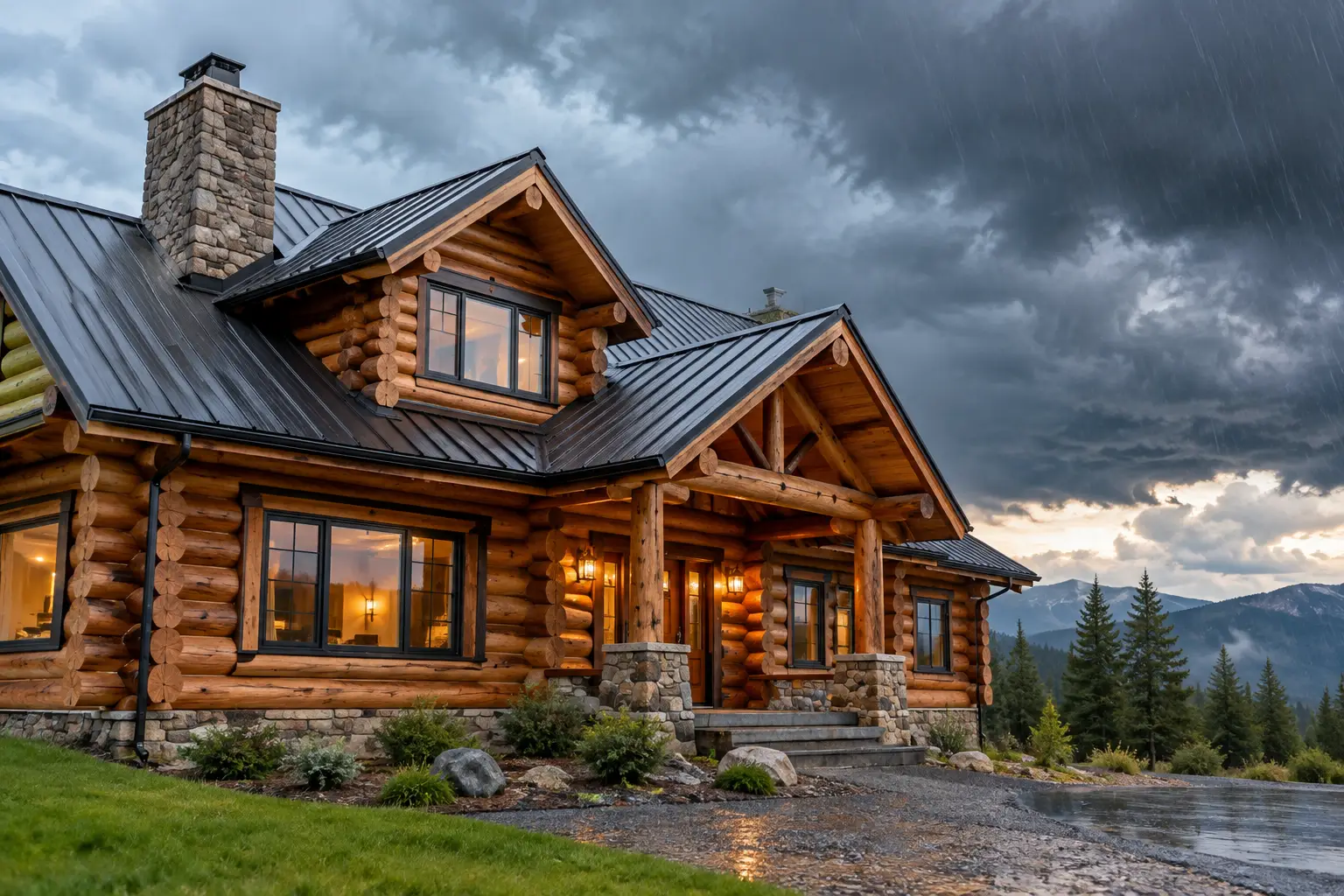
A hurricane does not care whether a home is conventional framing, masonry, or a beautiful log home. It looks for weak connections, exposed openings, poor drainage, and systems that fail when power is gone. The top upgrades for storm durability are the ones that strengthen the whole house as a system, not just one visible feature. For Florida log homes, Georgia log homes, and homes throughout the Southeast, that means making sound decisions before construction begins, when upgrades are practical and built into the design.
A well-designed Cypress log home already starts with an advantage. Heart-Cut Cypress, also called Bald Cypress heartwood, has natural resistance to decay and insects that cheap pine alternatives simply do not offer. But good logs alone do not make a hurricane-ready home. The foundation, roof, openings, drainage, mechanical systems, and the way every part is tied together deserve the same careful attention.
Start With Hurricane-Focused Engineering
The most valuable storm upgrade is not something you add at the end. It is a custom structural plan designed for the actual property, home shape, roof geometry, and expected wind exposure. Minimum code is a baseline, not a finish line. When practical opportunities exist to improve load paths and structural capacity, they should be considered while the home is still on paper.
A continuous load path matters because wind pressure moves through the home. The roof must be connected to the walls, the walls must be connected to the floor system, and the floor system must be securely connected to the foundation. If one part of that chain is weak, the strength of the other parts can be wasted.
For a log home, this calls for experienced engineering and properly detailed connections. Hold-downs, anchors, straps, fasteners, shear walls, and roof-to-wall connections must work together. The right approach depends on the home, but the principle does not change: design the structure as though it will face real weather, because in the Southeast it eventually will.
Choose a Roof Shape and Covering That Make Sense
The roof is often the first place a storm tests. Complex rooflines may look impressive on a drawing, but every valley, transition, and exposed edge adds detailing requirements and potential maintenance points. That does not mean a custom home must be plain. It means the roof should be designed with a clear understanding of wind, water, and long-term upkeep.
A simpler roof form, properly engineered and securely fastened, often performs better than a complicated roof with more vulnerable transitions. The roof deck attachment, underlayment, flashing, edge details, and fastener schedule all matter. So does selecting a roof covering rated and installed for the local wind conditions.
A secondary water barrier beneath the roof covering is also worth serious consideration. Shingles, metal panels, and other exterior roof coverings can be damaged in a major storm. A properly installed secondary barrier may help keep wind-driven rain from entering the home if the outer covering is compromised. It is not a substitute for a sound roof, but it is sensible protection where storms are part of life.
Top Upgrades for Storm Durability at Openings
Windows, exterior doors, garage doors, and large glazed areas are common points of failure. Once wind breaches an opening, pressure inside the home can increase dramatically and place added stress on the roof and walls. Protecting openings is not an appearance upgrade. It is structural protection.
Impact-rated windows and doors are a strong choice for many coastal and high-wind locations. They can reduce the risk of flying debris breaking glass during a storm. In some cases, properly designed storm shutters may be the better fit, particularly for an owner who prefers certain window styles or wants another layer of protection. The right answer depends on local requirements, the home’s exposure, and how the owner intends to use the property.
Garage doors deserve special attention. A large garage opening can become a major weak point if the door is not rated for the wind load it may face. Choose a properly rated door, with correct track, bracing, and attachment details. For a log garage or a larger family compound, do not treat this as an afterthought.
Exterior doors should have strong frames, quality hardware, proper locks, and secure installation. The best door in the world will not perform as intended if it is poorly attached to the structure. This is another reason to avoid treating a custom log home as a collection of products rather than one engineered building.
Build on a Foundation That Manages Water
Storm durability is not only about wind. Long stretches of rain, saturated ground, runoff, and wind-driven water can cause problems long after the hurricane has passed. Proper site planning is one of the most overlooked ways to protect a home.
The finished grade should carry water away from the foundation. Gutters, downspouts, swales, drains, and hardscape should be planned as a water-management system rather than added later wherever there is room. Roof runoff needs a clear path away from the home, especially where large roof areas shed a great deal of water in a short time.
Foundation design also needs to fit the property. Soil conditions, elevation, drainage patterns, and flood considerations should be addressed early. A beautiful set of log home plans is not enough if the building site was not understood first. Good custom design makes structural, practical, and maintenance sense for decades.
Use Heart-Cut Cypress Where Durability Counts
Humidity, rain, insects, and heat are hard on building materials. That is why we use premium Heart-Cut Cypress for Cypress log homes and log cabin kits rather than lower-cost pine logs. Heartwood from Bald Cypress has earned its reputation over generations because it naturally resists decay and insects better than many common alternatives.
That natural durability does not mean a log home can be neglected. Every wood home needs proper detailing, finishes, roof overhangs, and routine inspection. The difference is that starting with Heart-Cut Cypress gives the owner a better material for the climate and reduces dependence on chemical treatment or constant worry about what is happening behind a finish.
Generous roof overhangs, correctly detailed porches, careful flashing, and a foundation that keeps logs well above splash-back zones all protect the wood. These choices may not be as exciting as selecting interior colors, but they are the decisions that help a log home remain attractive and serviceable years from now.
Plan for Life After the Storm
For many owners, especially those building a retirement home or family legacy property, storm readiness also means being able to stay comfortable and independent when utilities are disrupted. A permanently installed generator, sized and planned correctly, can keep essential systems operating during an outage. That may include refrigeration, selected lighting, well equipment, security systems, internet equipment, and a portion of heating or cooling, depending on the design.
Generator planning works best when it is done early. The location, fuel source, transfer equipment, electrical loads, ventilation, access for service, and noise considerations should all be addressed in the home plan. A portable generator has its place, but it is not the same as a well-designed backup system for a home you expect to use through extended outages.
Water and communications deserve thought as well. A well may need backup power. A home served by municipal water may still benefit from stored drinking water and a clear plan for temporary service disruptions. Battery backup for internet and communications equipment can be a small upgrade with real value when conditions are unsettled.
Spend Upgrade Dollars in the Right Order
If the budget requires choices, protect the structure and weather envelope first. Fancy finishes can be changed later. Foundation preparation, engineered connections, roof details, impact protection, drainage, and durable materials are difficult and expensive to correct after the home is built.
A practical order of priorities is:
- Site elevation, drainage, foundation design, and anchoring
- Engineered roof, wall, and connection details
- Impact protection for windows, doors, and garage openings
- Roof water protection, flashing, and durable exterior detailing
- Generator and essential-system backup planning
This is not about adding every possible feature because it sounds impressive. It is about choosing improvements that serve a real purpose for the location, the home, and the people who will live there. A modest Country-Style Log Home may need a different approach than a large custom residence with multiple garages and guest spaces, but both deserve the same honest thinking.
A storm-ready home is built one sound decision at a time. Before finalizing any log home or log cabin design, walk the property, talk through how you intend to live there during an outage, and ask whether each major detail will still make sense ten or twenty years from now. That is how a home becomes more than a place to ride out a storm. It becomes a place your family can count on.