
A cabin shutter can look right on a drawing and become a maintenance problem within a few seasons. That is especially true in Florida, Georgia, and other Southern locations where strong sun, wind-driven rain, humidity, and hurricanes put every exterior detail to a real test. When you choose cabin window shutters, begin with what they must do for the house, not simply what looks good in a photo.
The right shutters should suit the scale and character of the home, work with the window system, resist the local weather, and avoid creating water traps or weak attachment points in the log wall. A good choice adds lasting character. A poor one can fade, warp, loosen, rattle in high wind, or create a repair you did not need.
Start With the Job the Shutters Must Do
The word “shutter” gets used for several different products. Some are decorative fixed panels mounted beside a window. Some are functional exterior shutters that close over the opening. Others are interior shutters used for light control, privacy, and insulation. They do not belong in the same decision category.
Decorative exterior shutters are primarily an architectural feature. They should be properly sized, securely fastened, and built from materials that can live outdoors. Functional storm shutters have a much more serious job. They need an engineered attachment method, dependable hardware, and a system appropriate for the opening and wind exposure. Interior shutters must hold up to daily use while complementing the warmth of a Cypress log home or Country-Style Log Home.
Do not assume that a pair of decorative wood shutters provides hurricane protection. It generally does not. In high-wind areas, window protection should be planned as part of the overall structural and code strategy, not added as an afterthought because it resembles an old cabin.
Choose Cabin Window Shutters for the Home’s Scale
A small shutter beside a large window is one of the most common design mistakes in log homes and log cabins. If exterior shutters are intended to look functional, each panel should be close to half the width of the window opening so the pair appears capable of covering it when closed. This proportion matters more than ornate cutouts, heavy strap hinges, or decorative hardware.
Height matters as well. Shutters should generally align with the visible window opening, not the entire trim package, unless the design calls for a different treatment. A properly proportioned shutter makes the window look intentional. An undersized one makes even a well-built custom home look like someone added a catalog accessory late in the job.
Think about the elevation as a whole. A modest cabin may look best with simple board-and-batten shutters and straightforward hardware. A larger Cypress log home with broad porches, tall glass, stonework, and substantial timber details may need wider panels, heavier construction, or no exterior shutters at all. Not every window needs them. A clean elevation often has more value than a crowded one.
Match the Style to the Architecture
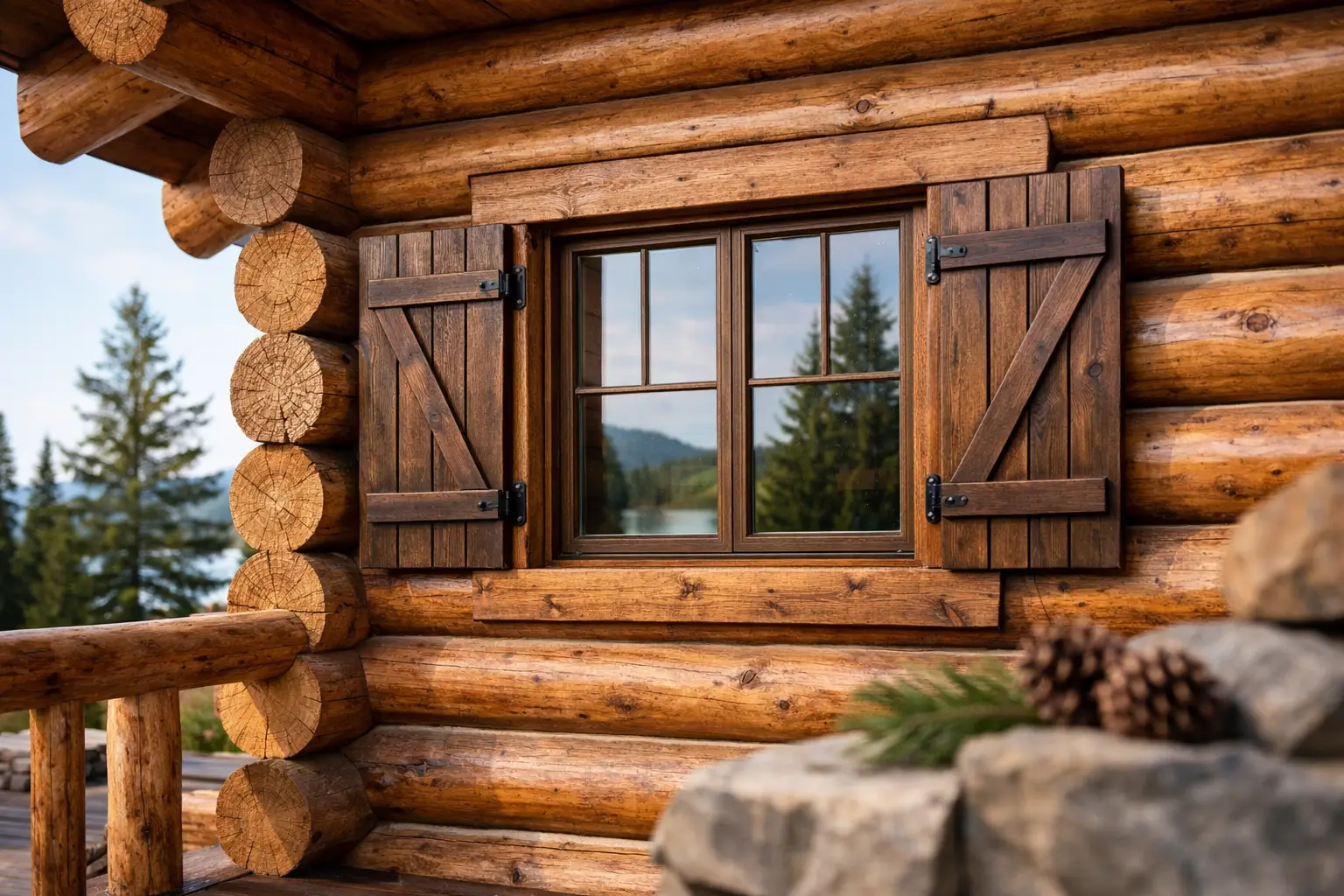
Board-and-batten shutters are usually the safest fit for authentic log cabins and rustic homes. Their vertical boards echo the honest, practical construction that people expect from a cabin. Raised-panel shutters can work on more formal Country-Style Log Homes, particularly where the design includes traditional trim and painted accents.
Louvered shutters allow airflow and create a lighter appearance, but they come with more edges, joints, and surfaces to maintain. They can be a good choice in protected locations, yet they are not always the best answer for a hard-weather Southern exposure. Simpler construction is often easier to inspect, repaint, repair, and keep looking right over time.
Material Matters More Than Most People Think
For exterior shutters, material selection is not a minor finish decision. It determines how much maintenance you accept and how the shutters will behave after years of heat, moisture, insects, and movement.
Heart-Cut Cypress is a natural fit for a premium Cypress log home when a homeowner wants real wood shutters with authentic character. Bald Cypress heartwood has natural resistance to decay and insects, which is one reason we build with it instead of cheap, lower-cost pine alternatives. It is not maintenance-free, because no exterior wood truly is, but it begins with a better foundation for a humid climate.
Pine shutters can be attractive when new, but they often demand more attention in Southern conditions. Lower-grade wood may check, move, hold moisture, or deteriorate sooner if the coating system and end-grain protection are neglected. Saving money on the material at the beginning can turn into repeated scraping, painting, and replacement later.
Composite and cellular PVC shutters can reduce routine painting concerns and can be sensible for decorative applications. The trade-off is appearance and heat movement. Some products can look overly manufactured beside genuine logs, while darker colors and intense sun can cause expansion or warping if the shutter is not made and installed correctly. Aluminum shutters are practical where functional storm protection is the priority, but their look belongs more naturally with a planned hurricane-protection system than as a rustic decorative feature.
The best material depends on the shutter’s job. For genuine wood character, properly built and finished Heart-Cut Cypress is hard to beat. For dependable storm protection, choose an engineered system designed for that purpose. Trying to make one lightweight product do both jobs often leaves the homeowner with neither the look nor the protection they expected.
Plan for Water, Movement, and Fasteners
This is where good-looking shutter installations often fail. Wood siding, log walls, window trim, and shutters all move differently as temperature and moisture conditions change. The installation needs room for that movement without loosening fasteners or crushing the shutter against the wall.
Exterior shutters should be mounted so water can drain and air can circulate behind them. Tight, flat contact against a wall can hold moisture where you do not want it. The bottom edges, end grain, screw holes, and cutouts need careful sealing. Hinges and fasteners should be corrosion-resistant, especially near the coast or in areas with frequent wet weather.
On a log home, fastening must be thought through before the wall is finished. Logs settle and shrink across their width as they acclimate. A shutter secured without regard for that natural movement can bind, pull out of position, or interfere with trim. This does not mean shutters cannot be used on log homes. It means the details must be designed for the actual wall system, not copied from a conventional framed house.
For operational shutters, avoid decorative hardware that only looks substantial. Use hinges, holdbacks, slide bolts, and latches rated for the panel weight and expected exposure. A shutter that bangs in the wind can damage itself, the window trim, and the log wall around it.
Color Should Support the Home, Not Fight It
Many homeowners are drawn to black, deep green, charcoal, navy, or a traditional red accent. All can work beautifully with Cypress. The question is whether the color supports the roof, trim, porch materials, stone, and the surrounding property.
Dark colors make a stronger statement and can provide handsome contrast against lighter-toned Cypress. They also absorb more heat, which matters with some composite materials and certain paint systems. Light colors are less demanding in the sun but can show dirt and mildew more readily in humid, shaded locations.
If you want painted Cypress shutters, use a finish system made for exterior wood and keep up with inspection. Pay particular attention to lower edges, joints, and areas sheltered behind shutters where moisture can linger. A small touch-up done early is far easier than allowing coating failure to expose the wood for several years.
Keep Hurricane Protection Separate From Decoration
For Florida log homes and other homes in hurricane country, this distinction deserves plain language. Decorative shutters should not be presented as storm shutters unless they have been specifically designed, tested, and installed to meet the applicable protection requirements for that opening.
A home may use impact-rated windows, engineered panels, roll-down protection, or another approved system depending on the design, location, and code requirements. The right choice depends on wind zone, exposure, opening size, budget priorities, and how the family intends to use the home during storm season. Homeowners planning a retirement home or family compound often prefer protection that can be put in place without a complicated last-minute effort.
At Log Home Guys, we look beyond minimum requirements whenever practical. That does not mean adding unnecessary features for the sake of selling more material. It means considering how the home will perform when conditions are at their worst, and choosing details that reduce future worry and repairs.
Make the Decision Early in the Design Process
Window shutters affect more than curb appeal. They can influence trim dimensions, window placement, wall framing or log layout, exterior lighting, porch posts, drainage, and the hurricane-protection plan. Bring the subject up while the home is being designed, not after all window and trim decisions are final.
A custom plan allows you to decide where shutters add value and where the architecture is better left open. It also gives you time to choose materials that make sense for the climate and the level of maintenance you are willing to accept. That is the difference between decorating a home and designing one to serve your family for decades.
Before settling on a shutter style, stand back and picture the house five, ten, and twenty years from now. Choose the option that still looks honest, performs well in your weather, and gives you one less thing to worry about when the wind starts to rise.