

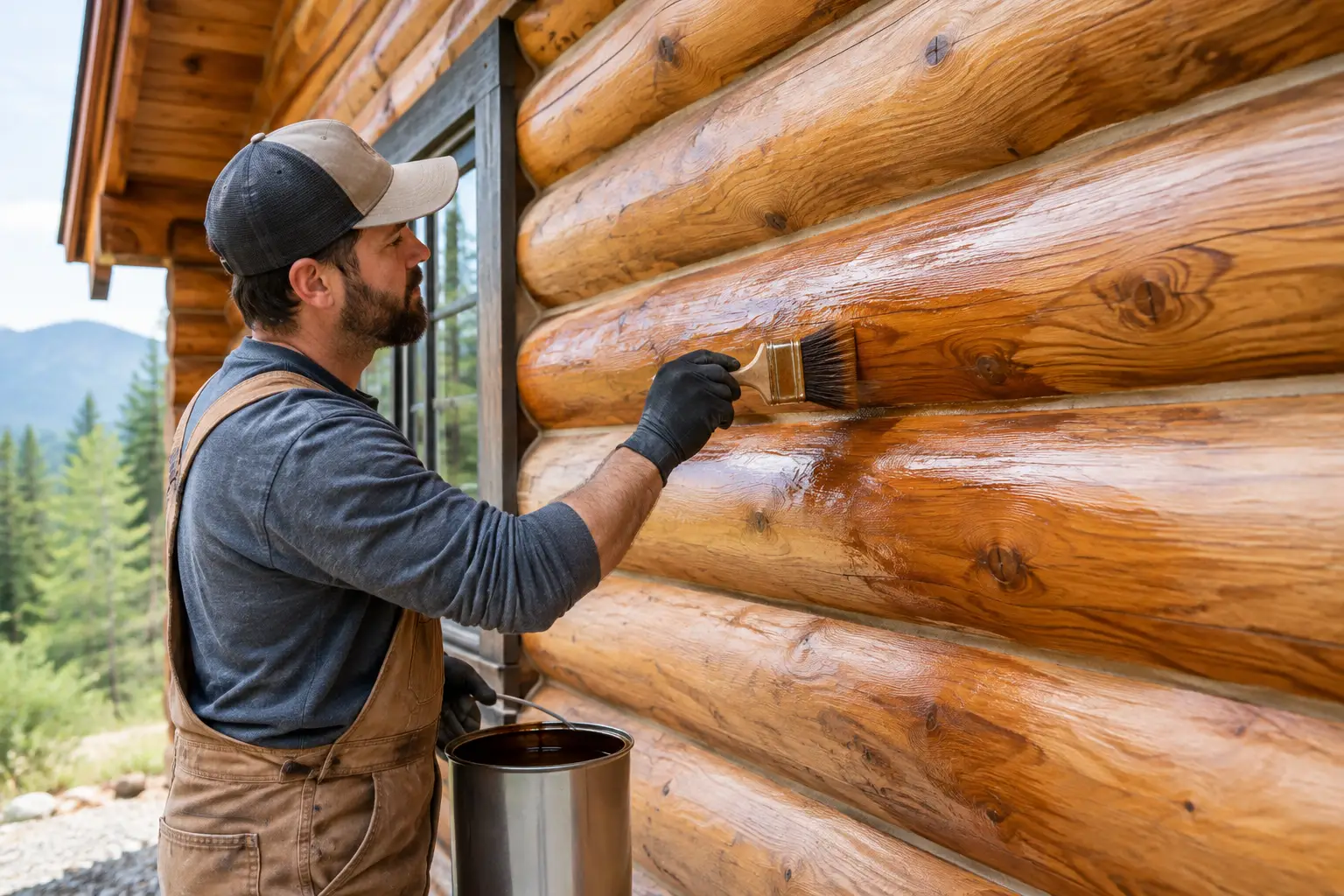
A Cypress log home shouldn’t be sealed just because a calendar says it is time. It should be stained to protect the wood’s beauty from natural weathering. Knowing how to stain & seal cypress log homes properly protects the natural character of the logs while helping prevent moisture, sun damage, and unnecessary maintenance problems that can shorten the life of any exterior wood system.
Heart-cut cypress gives homeowners a better starting point than cheap, industry-standard pine logs. Bald Cypress heartwood has natural resistance to decay and insects, which is one reason it has been trusted in southern construction for generations. Still, natural durability is not a license to ignore the exterior. Sunlight breaks down finishes. Wind-driven rain tests every joint and opening. High humidity can keep walls damp longer than they should be. A good sealing plan respects what Cypress already does well and gives it the protection it needs to remain handsome for generations.
Why Seal Cypress Log Walls?
The first job of an exterior finish is to manage water. It should help shed rain, slow moisture absorption, and protect the wood from ultraviolet exposure without trapping water inside the logs. That last point matters in Florida, Georgia, and across the Southeast, where heat and humidity can turn a small maintenance issue into a larger one if the wood cannot dry properly.
Stain & Sealing also helps preserve the color and appearance of the logs as well as the other wood materials present on the home. Unprotected Cypress will weather naturally, and some owners like that silvery-gray look. Most owners of custom Cypress log homes, however, want to retain the warm grain and rich color that made them choose real logs in the first place. A quality exterior stain and clear protective topcoat, selected as a compatible system, can do that while reducing surface checking and finish breakdown.
There is a difference between protecting logs and coating them heavily. A thick, film-forming product may look good at first, but if it fails, it can peel, crack, or hold moisture where it does not belong. The goal is not to put the walls in a plastic shell. The goal is to use a finish system designed only for log homes, that allows sensible vapor movement, and that can be maintained without turning every future touch-up into a major restoration project.
Start With the Right Cypress and the Right Details
No sealer can correct poor material selection or weak construction details. That is why Heart-Cut Cypress matters. The heartwood comes from the dense, naturally durable center of the Bald Cypress tree. It is a premium material chosen for long-term ownership, not a low-bid substitute chosen to make a package look less expensive upfront.
A properly designed log home also needs roof overhangs, sound flashing, wide rain gutter systems, careful window and door installation with flashing, drainage away from the foundation, and solid log-to-log connections. These details reduce the amount of weather the log walls must fight every day. We design homes as if they were being built for our own family, because the easiest maintenance issue to solve is the one prevented before construction begins.
Pay particular attention to horizontal surfaces and exposed ends. The upper side of a projecting log, log corners, a rail connection, a window sill, and log end grain can take more water than the broad face of a wall. End grain absorbs moisture more readily, so it often deserves additional treatment during the finishing process. We like to use Log End Seal in these areas before staining. This is simple craftsmanship, but it makes a real difference.
Do Not Seal Wet or Dirty Logs
A finish is only as good as the surface beneath it. Before applying stain or sealer, the logs must be clean, dry, and free of loose finish, dirt, mildew, pollen, and construction residue. Applying a new coating over a contaminated surface is a common shortcut, and it is one that often leads to early failure.
If the home is new, allow the logs to reach the moisture condition recommended by the finish manufacturer and the construction plan. If the home has been standing for years, inspect the walls before deciding whether they need a simple maintenance coat or a more thorough cleaning and preparation. Dark stains, mildew, soft wood, repeated water marks, or peeling finish should be addressed before new product goes on.
Cleaning should be firm but not abusive. Excessive pressure washing can roughen the wood fibers, force water into joints, and leave a surface that does not accept finish evenly. Use methods appropriate for log walls, then allow enough dry time before coating. Rushing this part to take advantage of a weekend forecast is not good workmanship. See PermaChink.com, “Resources for Homeowners,” for a step-by-step guide from cleaning to applying Energy Seal and Stain.
Choosing a Finish System That Makes Sense
For most Cypress log homes, a quality exterior stain is a practical choice because it protects the wood while allowing the natural grain to show. Log Home Guys has had great success for over two decades utilizing Perma-Chink Systems as outlined. Designed for long-lasting performance in a semi-transparent finish, Lifeline Ultra-2 enhances the natural beauty of wood grain while offering unparalleled protection against UV rays. The right color can help reduce ultraviolet damage, with more pigment generally providing more UV protection than a nearly clear finish. Clear products can be attractive, but they often need more frequent attention in sunny exposures.
A compatible clear topcoat is part of the selected system. This is where Perma-Chink Lifeline Advance exterior wood finishes highlight the appearance of your cypress log home while extending the life of the finish, especially where added water shedding and finish durability are desired. Follow the product system exactly as outlined by Perma-Chink Systems Home Owners Guide. Mixing a stain from one manufacturer with a topcoat from another can create adhesion problems, even when both products appear suitable on their own.
Avoid choosing a finish solely because the label promises the longest possible interval between coats. Every wall faces different conditions. A protected porch wall may look excellent for years, while the west-facing wall that catches afternoon sun and storms may need attention much sooner. Good ownership means watching the house and maintaining it based on actual exposure, not wishful thinking.
Paint of any kind is never recommended for log homes. It traps moisture and causes decay and deterioration very quickly. Cheap stains from big-box stores can cause many problems and generally don’t last long.
A Practical Process for Sealing Log Walls
The work should be organized around weather, preparation, and proper application. Choose a period with stable temperatures and no expected rain during the product’s required drying time. Do not coat walls that are hot from direct sun if the manufacturer advises against it. A finish that dries too fast may not penetrate or level as it should.
First, walk the entire home. Look closely at corners, window and door openings, log ends, under roof edges, porch walls, and the wall most exposed to sun and prevailing rain. Be sure to check that the Energy Seal application is complete at all locations before you begin staining.
Next, clean the logs with Wood Renew and Log Wash. Then check bare, wet logs with PH test strips and let them dry completely before applying the stain. You can find all the log home staining and restoration products you need at one location, see https://www.permachink.com/. Protect glass, stone, metal roofing, decking, and landscaping from overspray or drips. Then apply the stain according to the manufacturer’s directions. Work in manageable sections and keep a wet edge to avoid lap marks. Back brushing is a must even when applying with a spray gun. Brushwork is often useful around joints, corners, and detailed areas even when larger wall sections are sprayed or rolled.
Give special attention to end grain, checks that face upward, and areas around penetrations. Checks are a normal part of log construction, but they should be inspected for places where water may sit or travel inward. Not every check needs to be filled. The right answer depends on its size, location, and whether it is actually holding water to create a problem.
Finally, apply the compatible protective coats of Lifeline Advance exterior wood finish. Don’t stretch the material too far, skip coats, or assume a heavier coat is always better. Proper coverage and proper dry time matter more than trying to finish the job quickly.
Maintenance Is Cheaper Than Restoration
The best time to inspect a Cypress log home is before the finish has failed badly. Walk the exterior at least once or twice a year, and always after a major storm. Look for dull or faded areas, water no longer beading on the surface, mildew growth, open joints, damaged flashing, or vegetation holding moisture against the walls.
Keep shrubs and vines away from the logs. Make sure gutters and downspouts move water away from the house. Trim limbs that scrape the finish or keep a wall shaded and damp. These are ordinary home-care steps, but they protect a premium structure from unnecessary wear.
A small maintenance coat on a sun-beaten wall is usually straightforward. The job becomes harder when you wait until the finish is peeling, the logs are heavily discolored, or moisture has worked into vulnerable areas. Long-term value comes from paying attention early, not from gambling that one more season will not matter.
For owners building a final home, a family retreat, or a legacy property, sealing is not just a cosmetic chore. It is part of taking care of a real wood home built to stand through hard weather and years of family use. Choose premium Heart-Cut Cypress, use a finish system that respects the wood, and address small concerns while they are still small. That is how a Cypress log home keeps earning its place on the property year after year.
Reviewed 9-14-26 by: Bill Mathews, Owner & Founder of Log Home Guys