
A log home is not a purchase you make from a shelf. It has to fit your land, your family, your budget, and the weather it will face for decades. That is why the choice between log home kits versus custom deserves more than a quick price comparison. A kit can be a smart, economical route. A custom home can solve problems a standard package never anticipated. The right answer depends on what you are building, where you are building it, and how much control you want over the finished home.
For buyers in the Southeast, the decision carries extra weight. Humidity, termites, heavy rain, hurricane winds, and local code requirements can turn a cheap-looking package into an expensive lesson. A good log home should be engineered for its location, built from the right wood, and supported by people who understand the construction process.
What a Log Home Kit Usually Includes
A log home kit is generally a pre-planned material package based on a standard floor plan. Depending on the supplier, it may include the logs, framing lumber, roof system, windows, doors, fasteners, sealants, and plans. Some kits are basic shell packages. Others are more complete and arrive with most of the materials needed to dry in the home.
The main appeal is straightforward: much of the design work has been done already. You can see a plan, know the general materials list, and begin pricing the project sooner. For a hands-on owner-builder, or for someone building a modest cabin with a simple footprint, that can be a good fit.
But the word “kit” can create the wrong impression. It does not mean every cost is included or every construction question is settled. Site work, foundation, utility connections, permits, labor, interior finishes, and freight can be major parts of the budget. In coastal or high-wind areas, engineering and code-specific details may also be necessary beyond what a generic kit provides.
A responsible supplier should clearly explain what is and is not included. No sales hype or pressure is needed when the numbers are laid out honestly.
Where Standard Kits Can Fall Short
A standard kit is designed to serve many buyers. That is efficient, but it can leave little room for the realities of your property. Your land may have a slope that calls for a different foundation approach. Your view may be in the wrong direction for the plan. Your county may require stamped engineering, wind-load calculations, or a roof system designed for conditions the original plan was not built around.
In Florida especially, a log home cannot simply look the part. It must perform. Hurricane exposure, uplift forces, moisture management, and connections between the roof, walls, and foundation all matter. A beautiful cabin package that was intended for a mild mountain climate may not be the right starting point for a Florida homesite.
Material choice is another issue. Many mass-market kits use pine because it is widely available and less expensive upfront. Pine can be used properly, but it demands more attention in a hot, humid environment where insects and decay are constant concerns. Heart-cut cypress offers natural resistance to rot and insects and has a long history in Southern construction. It is not a shortcut around proper maintenance, but it is a better foundation for a low-maintenance log home.
Log Home Kits Versus Custom: The Real Differences
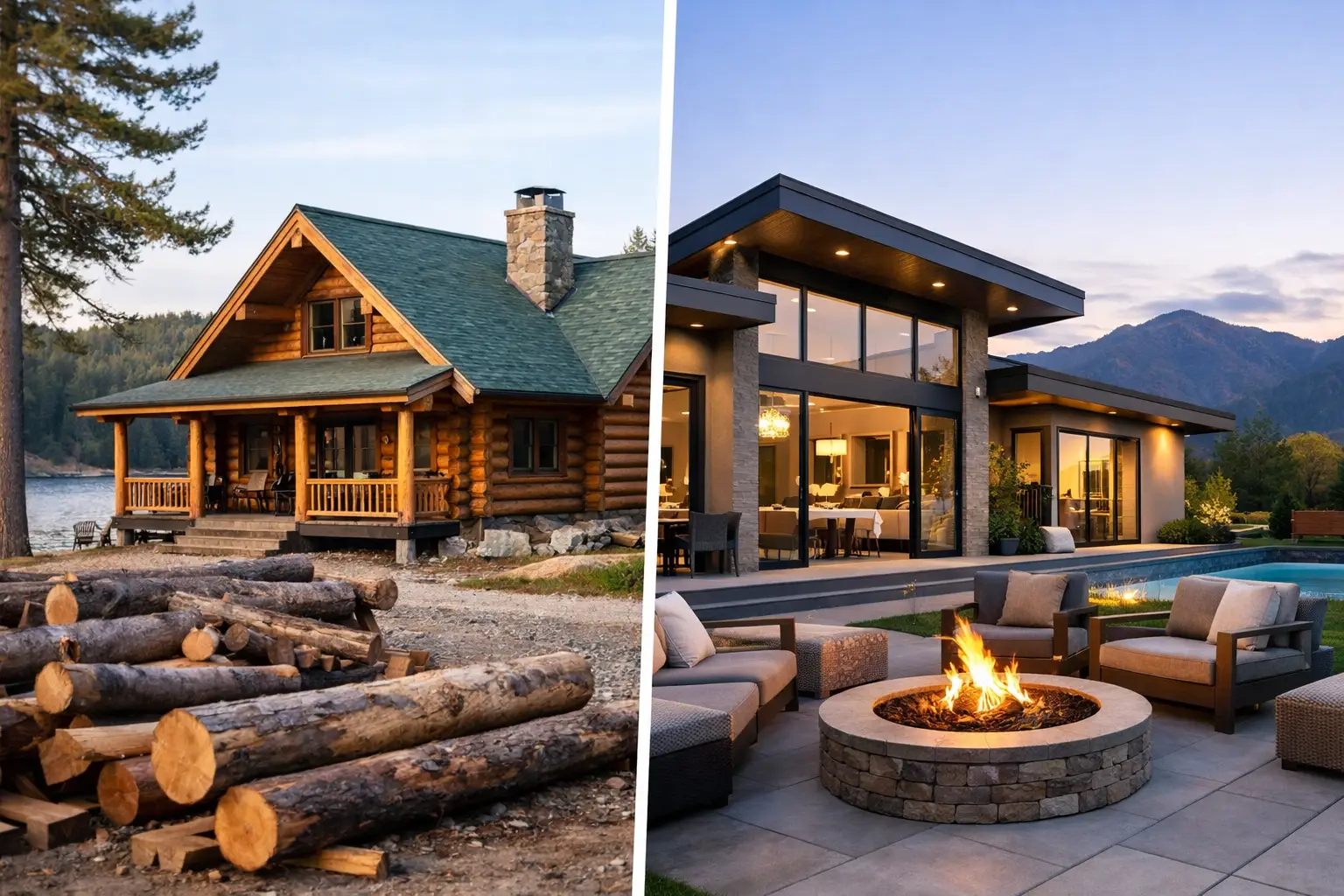
The decision is not simply prepackaged versus expensive. A well-designed material package can be customized, and a custom log home can still be priced with discipline. The meaningful differences come down to design freedom, engineering, material selection, and personal support.
Design freedom
With a standard kit, you usually begin with someone else’s floor plan and make limited changes. Moving a window or changing a porch may sound minor, but it can affect wall layout, structural loads, roofing, and material quantities. Some companies welcome those changes. Others treat them as costly exceptions.
A custom home begins with how you plan to live. Maybe you need a first-floor primary suite for retirement, a wide covered porch for afternoon shade, a mudroom for acreage living, or a bunk room for visiting grandchildren. Maybe the best view is off the back of the property, not the front. Custom design lets the home follow the land and the family rather than forcing both to fit a catalog page.
Engineering and code readiness
This is where buyers should be careful. A floor plan is not automatically an engineered construction document. Before construction, your local building department may require stamped blueprints and structural details specific to your site and wind zone.
A custom-designed package can account for required loads from the beginning. That means the log wall system, roof framing, connectors, foundation details, and openings are considered together. It is a practical matter, not a fancy upgrade. Proper engineering helps your builder build with confidence and helps protect your investment when storms come through.
Materials and long-term maintenance
The lowest kit price is not always the lowest cost of ownership. Wood species, log profile, moisture content, finish systems, overhangs, and construction details all affect how much maintenance a log home will need over time.
For Southern climates, heart-cut cypress gives a homeowner an advantage that common pine packages cannot match. Cypress is naturally durable, insect-resistant, and well suited to humidity when it is properly designed and finished. Deep roof overhangs, good drainage, sensible detailing around windows and doors, and regular inspection are still part of owning any wood home. The goal is not to pretend maintenance disappears. The goal is to avoid fighting the material and climate every year.
Support during construction
A kit can be ideal for an experienced builder or a capable owner-builder who understands how the system goes together. Yet many buyers need more than a shipment of materials. They need help answering builder questions, reviewing the plan, coordinating details, and keeping the project moving when field conditions differ from the drawing.
That support has real value. A local builder may be excellent at conventional construction but have limited experience with log walls, settling details, log connections, or specialty materials. Clear documentation and direct access to knowledgeable people can prevent costly guesswork before it reaches the jobsite.
When a Kit Makes Good Sense
A log home kit may be the best choice if your project is simple and your needs line up closely with an existing plan. It can work particularly well for a small cabin, hunting retreat, guest house, or owner-built project where the footprint is straightforward and the buyer is prepared to manage the details.
A kit is also worth considering when you have a trusted builder who has reviewed the package, understands local requirements, and is comfortable pricing the work before you commit. The key is to compare complete project costs, not just the package price. Ask about freight, foundation requirements, engineering, finishes, equipment, labor, permits, and the materials needed to complete the home.
There is nothing wrong with choosing a kit. The mistake is assuming all kits are equal or that a low entry price tells the whole story.
When Custom Is Worth the Investment
Custom is usually the better route when the home is your primary residence, when your site presents challenges, or when you want a home tailored to a specific way of living. It is also the stronger choice when local wind requirements, engineering needs, or material performance are high priorities.
Custom does not have to mean extravagant. It can mean making sound decisions early: keeping the footprint efficient, stacking plumbing areas, choosing a roofline that builds cleanly, and putting your money into the parts that matter most. A well-planned custom cypress home may avoid the change orders, material waste, and compromises that can make an altered stock kit more expensive than expected.
For many families, the best middle ground is a custom-engineered material package. You get a plan built around your site and needs, premium logs selected for Southern conditions, and the flexibility to work with your own builder or take on parts of the work yourself. That is not a one-size-fits-all kit, and it is not a blank-check custom build. It is a practical path built around the actual project.
Questions to Settle Before You Choose
Before signing for any log package, get clear answers about the wood species, log dimensions, moisture condition, engineering, plan modifications, and what the quoted price includes. Ask who will be available when your builder has a question. Ask whether the package is designed for your wind zone and whether the plans can be stamped for your jurisdiction.
Also consider the home ten years from now. Will the layout still work when stairs are harder to manage? Is there enough covered outdoor space? Are roof overhangs protecting the walls? Does the material make sense for the humidity and insects where you live? Those questions matter more than whether a brochure calls the package “complete.”
The best choice is the one that gives you a home built honestly for your land, your climate, and your life. Start with the plan, the engineering, and the wood – then let the package follow.