
If you’re pricing a log home, the question usually comes fast – how much does a cypress log cost? The honest answer is that a single number will mislead you. Cypress logs are priced by size, quality, cut, moisture condition, availability, and what you actually need them to become. A rough log in a yard is one thing. A heart-cut cypress log selected, milled, and engineered for a home package is something else entirely.
That matters because many buyers start by asking about the price of one log when the real budget question is the cost of usable material. In log home construction, waste, grading, milling, drying, and freight can change the number just as much as the wood species itself.
How much does a cypress log cost in real terms?
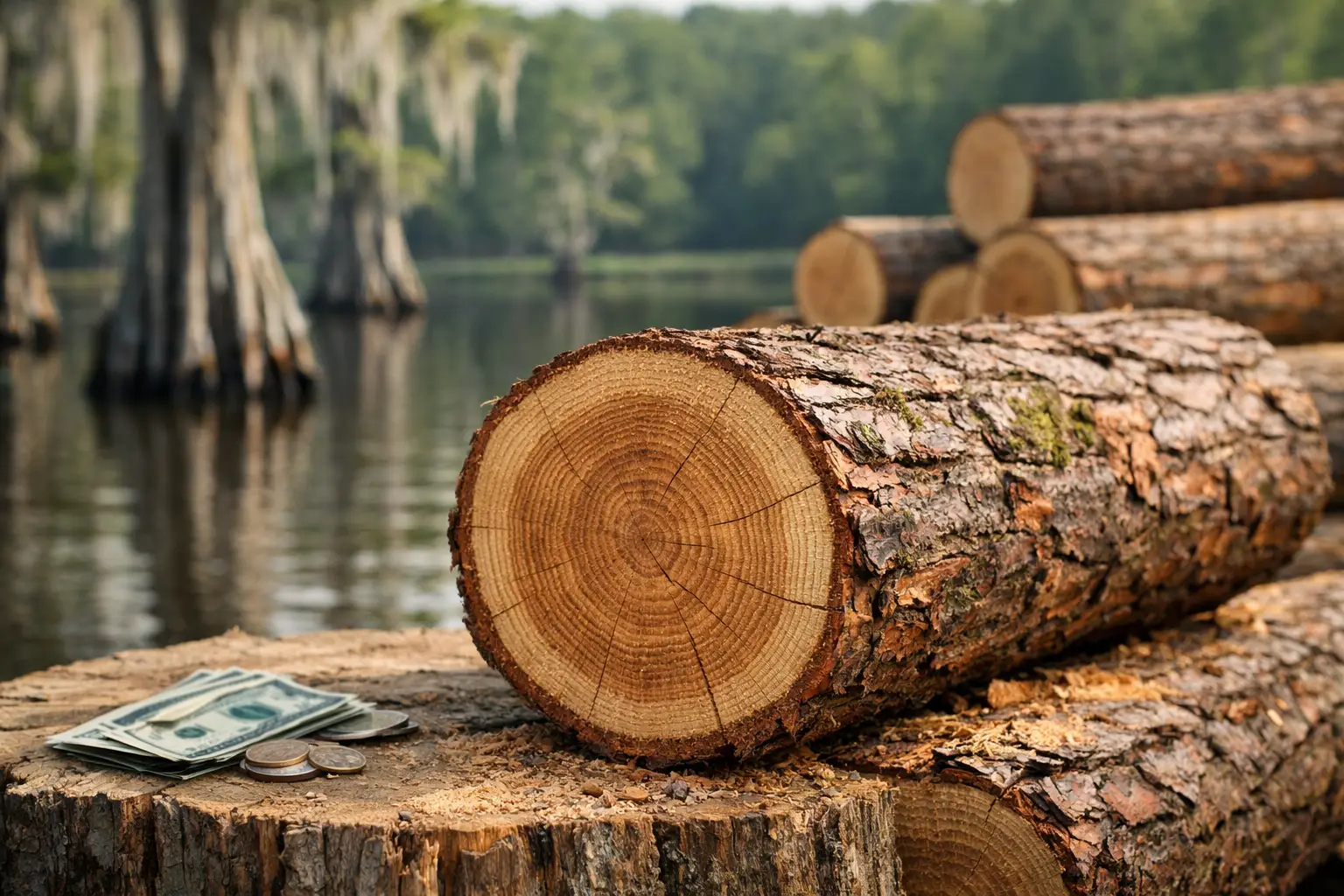
For raw market pricing, a cypress log might sell anywhere from a few hundred dollars to well over a thousand dollars per log depending on diameter, length, straightness, and heart content. Small or lower-grade logs bring less. Large, straight, high-quality logs with good heartwood bring more, especially when they are suitable for structural or visible log home use.
If you’re looking at cypress for a home or cabin, that raw-log number is only the starting point. Most homeowners are not buying random logs off a landing. They are buying selected material that has to be suitable for walls, spans, openings, settling details, corner systems, and weather performance. Once you move from stumpage or yard pricing to home-ready material, the cost rises because the labor and selection standards rise with it.
That is why price-per-log can be the wrong way to shop. One oversized, premium cypress log may yield far more usable wall material than two cheaper, lower-quality logs. A bargain log with sweep, shake, sapwood issues, or poor diameter consistency can cost more in waste, labor, and disappointment than a better log bought up front.
What drives cypress log prices?
The biggest factor is the amount of heartwood. Heart cypress is the premium portion of the tree and the reason cypress has such a strong reputation in the Southeast. It naturally resists decay, insects, and moisture problems far better than common softwoods used in many packaged log homes. If you’re comparing prices and one cypress product is noticeably cheaper, ask how much true heartwood is in it.
Diameter and length also matter. Larger logs are more valuable because they are harder to source and can produce more substantial wall stock or specialty components. Long, straight logs with minimal taper are especially desirable. Those are the logs that give builders cleaner runs, more consistent appearance, and better yield.
Condition matters just as much. Freshly harvested logs, air-dried logs, and milled log components all fall into different price categories. Add in peeling, shaping, planing, notching, or custom profiling, and the number goes up again. Freight is another major line item, especially for large-diameter cypress moving across states.
Then there is regional supply. Cypress is not treated the same way as commodity pine. Good cypress, especially heart-cut cypress suitable for premium homes, is more selective by nature. Supply can tighten. Weather, harvest conditions, mill schedules, and transportation costs all affect availability and price.
Raw logs versus milled home logs
This is where many people get crossed up. A raw cypress log may look affordable compared to a finished wall log, but those are not equal products. A raw log still has to be inspected, handled, milled, and fitted into a system that works in the field.
Milled home logs cost more because you’re paying for yield, consistency, and buildability. The right cuts reduce waste. Proper selection improves fit and appearance. Better milling speeds installation and helps the finished home perform the way it should in wind, rain, and humidity.
For a serious homebuyer, the better question is not just how much does a cypress log cost, but how much does usable, structurally appropriate cypress cost for the house you want to build. That shifts the conversation from raw material guessing to actual project planning.
Why cypress usually costs more than pine
Cypress often carries a higher price than pine, and there is a good reason for it. Pine may be easier to source in volume and cheaper at the front end, but lower first cost is not the same as better value. In southern climates, the wood species matters.
Cypress has a long-standing reputation for standing up to humidity, insects, and decay. That is one reason buyers in Florida, Georgia, and North Carolina keep coming back to it. When your home has to deal with heat, storms, termites, and moisture year after year, the wood choice is not cosmetic. It affects maintenance, lifespan, and peace of mind.
That does not mean every cypress product is automatically worth any premium. You still need to know what grade you’re getting, how much heartwood is in the package, and whether the logs are being used in a system engineered for your region. But when buyers compare quality for quality, cypress often proves its value over time.
Price per log is less useful than price per project
Homeowners naturally ask for a unit price. It feels simple. The trouble is that log homes are not built by lining up identical sticks off a shelf.
A home package depends on floor plan, wall height, log profile, corner style, engineering requirements, and how much custom work is involved. Window and door openings affect material use. Roof design affects loads. Local code requirements affect structure. The same species can produce very different budgets depending on how the house is designed.
That is why experienced companies price the system, not just the individual log. If you focus only on single-log cost, you may miss the larger savings in design efficiency, reduced waste, easier assembly, and lower long-term upkeep.
What buyers in the Southeast should watch for
In southern states, wood has to do more than look good on move-in day. It has to hold up through wet seasons, high humidity, insects, and in many areas hurricane exposure. That means the cheapest log on paper can become the most expensive one after a few years of repairs and maintenance.
Ask whether the logs are primarily heartwood or mixed with a high percentage of sapwood. Ask how the material is milled and how it is intended to perform in your climate. Ask whether the home package is engineered for high wind and shear demands. Those questions tell you more than a casual price quote ever will.
This is where an old-fashioned, direct approach still works best. No sales hype. No inflated promises. Just clear information about what you’re buying and why it costs what it costs.
A realistic budgeting approach
If you’re early in the process, use cypress as a premium line item, not a bargain-basement placeholder. Expect quality cypress to cost more than common alternatives, especially if you want heart-cut material for a true log home rather than a look-alike package.
From there, get specific. The size of the home, the level of customization, the amount of visible log work, and the degree of engineering all matter. A modest cabin and a large custom residence will not have anything close to the same cost structure, even if both use cypress.
For many buyers, the smartest move is to start with a complete material or home-package quote instead of chasing the lowest raw-log number. That lets you compare apples to apples. It also exposes where some companies keep prices low by cutting corners in wood quality, design help, engineering, or support.
A company such as Log Home Guys builds around heart-cut cypress because it fits the climate and the long view. That is not the cheapest path on day one, but for many southern homeowners it is the sounder one.
So, how much should you expect to pay?
As a rough rule, expect broad variation. Lower-grade or smaller raw cypress logs may come in at the low end of the range. Premium logs with strong heart content, larger diameters, better lengths, and home-grade suitability can cost substantially more. Once logs are selected, milled, and prepared as part of a home package, the price is no longer best measured log by log.
That may sound less tidy than a quick online number, but it is the truth. Cypress is a premium material, and premium materials should be judged by performance and yield, not just sticker price.
If you are planning a cabin, retirement home, or family place in the Southeast, the right question is not simply what one cypress log costs. The better question is what kind of cypress you’re getting, how much of it is true heartwood, and whether the finished home will stand up to the climate you live in. Get those answers first, and the price will make a lot more sense.