
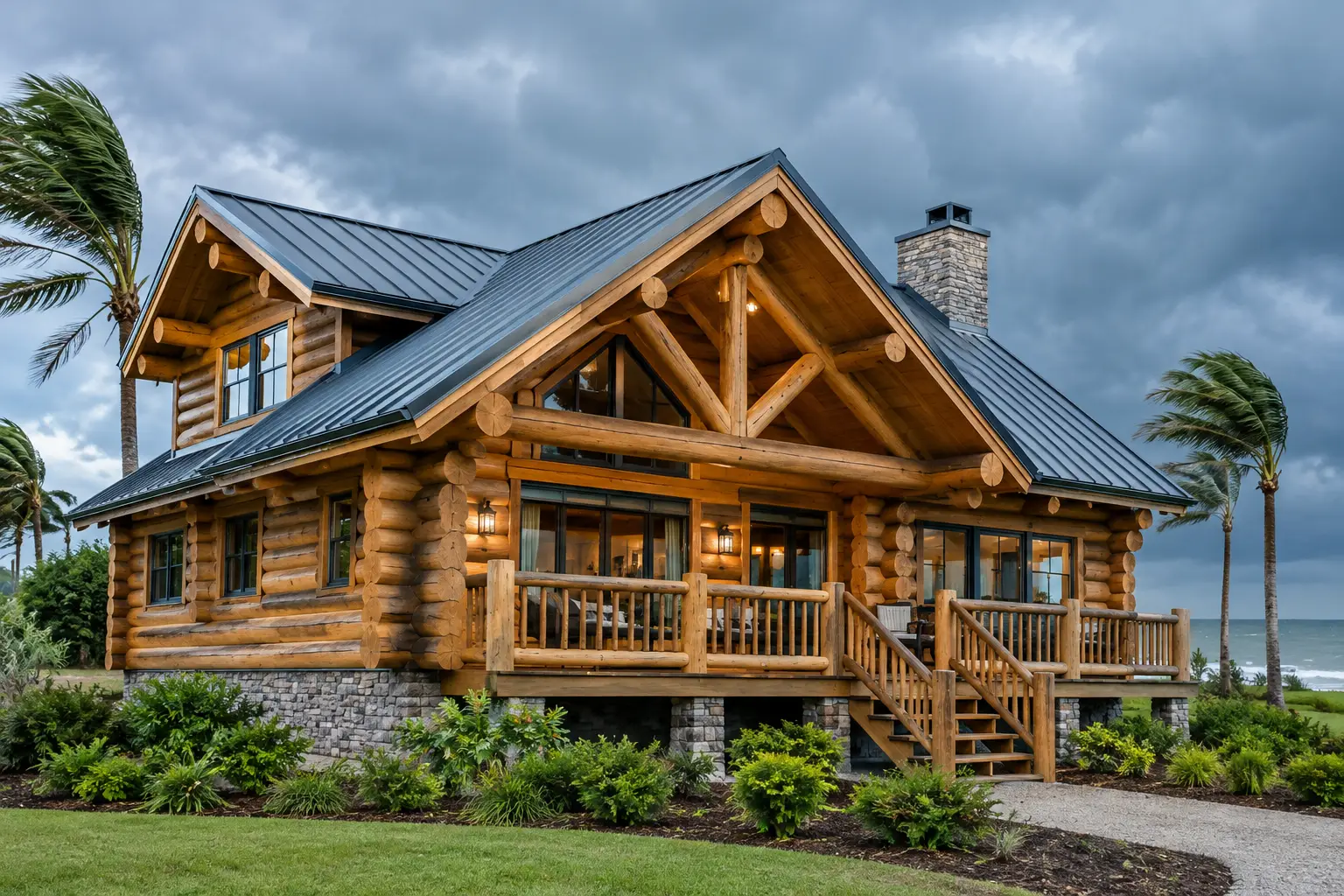
A hurricane does not test one part of a house. It tests the whole chain: roof, walls, connections, windows, doors, foundation, drainage, and the systems your family depends on after the power goes out. The best hurricane ready home features are not add-ons chosen at the end of a project. They are decisions made early, when the home is being designed and engineered.
For a Florida or Georgia log home, that matters even more. A home can look strong and still have weak links where wind and water find their way in. The goal is not simply to satisfy a minimum requirement on paper. It is to build with sound materials, practical details, and additional structural capacity where it makes sense for the customer and the property.
Best Hurricane Ready Home Features Start With the Structure
A hurricane-ready home needs a continuous load path. That is the plain-language term for making sure wind forces have a clear route from the roof, through the walls, into the floor system and foundation. If one connection is weak, the rest of the structure may never get the chance to do its job.
Engineered foundations and hold-down connections
Foundation design depends on the soil, flood conditions, home layout, elevation, and local wind requirements. A properly designed foundation does more than hold up the home. It anchors it. Engineered hold-downs, anchors, straps, bolts, and connection details help transfer uplift and lateral loads into the foundation rather than allowing sections of the house to work against one another.
This is not the place to guess or use a one-size-fits-all package. A custom home should be engineered for its actual site and intended design. Open floor plans, large porches, high ceilings, tall wall sections, and wide window openings can all change how a building handles wind.
A roof system designed as a system
Roof failures often begin when wind gets under an edge, through an opening, or beneath loose roofing material. A well-designed roof needs more than attractive shingles or metal panels. It needs properly sized framing, secure sheathing attachment, engineered roof-to-wall connections, protected edges, and details that keep wind-driven rain from reaching vulnerable areas.
Roof shape is worth discussing during design. A hip roof often performs well because it has fewer broad vertical ends exposed to direct wind pressure. That does not mean every home must have a hip roof. Gables can be engineered successfully, but they need proper bracing and connection details. The right answer depends on the architectural plan, the site, and the desired look.
Overhangs, porches, and covered outdoor areas also deserve careful attention. They are useful in the South and can make a Country-Style Log Home more enjoyable year-round, but they must be designed for wind loads rather than treated as decorative afterthoughts.
Impact Protection for Windows, Doors, and Openings
Once a window, exterior door, or garage door fails, wind can enter the house and sharply increase pressure on the roof and walls. Protecting openings is one of the most practical hurricane-ready decisions a homeowner can make.
Impact-rated windows and exterior doors are built and tested to resist both wind pressure and impacts from flying debris. In locations where approved shutters are appropriate, they can also provide effective protection when correctly selected, installed, and closed before the storm. The best choice depends on code requirements, the home’s exposure, appearance, and how easily the homeowner can secure the house.
Do not overlook the garage door. Large garage openings take serious wind pressure, and a weak door can become a major point of failure. A rated, properly installed door and reinforced track system are a sensible part of the overall plan.
Good opening protection should be paired with careful flashing, water-resistant barriers, sealants, and installation practices. A window may be impact-rated, but poor water management around it can still create expensive trouble later.
Materials That Belong in a Humid, Storm-Prone Climate
Hurricanes bring rain as surely as they bring wind. That is why material selection matters long after the storm has passed. A home built for the Southeast should be ready for high humidity, repeated wetting, insects, and the normal movement that comes with seasonal weather.
For Cypress log homes, we choose premium Heart-Cut Cypress, also called Bald Cypress heartwood. It has natural resistance to decay and insects, qualities that make practical sense in Florida and Georgia. Heart-Cut Cypress is not selected because it is the cheapest route. It is selected because a home intended to serve a family for decades should not be built around cheap, lower-grade pine alternatives that can demand more attention over time.
That does not mean any wood product is maintenance-free. Every exterior home needs reasonable care, particularly around finishes, caulking, roof drainage, and areas exposed to repeated sun and rain. The difference is starting with a premium material that has a long history of performing well in Southern conditions.
Water management should also be designed into the property. Proper roof drainage, gutters where appropriate, grading that carries water away from the foundation, protected wall details, and sensible landscaping all reduce the chance that a hard rain turns into a long-term moisture problem.
The Hurricane-Ready Features That Keep Life Going
A structurally capable house is the first priority. After that, many customers building their retirement home, family compound, or getaway property want the ability to remain comfortable and independent when utilities are interrupted.
A practical resilience plan may include:
- A properly planned generator connection or standby generator system sized around the household’s real priorities.
- Space for fuel storage and equipment placement that follows applicable safety requirements.
- A well or water system plan with backup power where the property depends on one.
- Surge protection for electrical equipment and a protected location for essential communications equipment.
- Refrigeration, lighting, selected heating or cooling, and medical or mobility needs identified before electrical decisions are finalized.
The point is not to run every appliance exactly as if nothing happened. It is to decide what your family truly needs during an extended outage, then build the electrical plan around those needs. A customer who plans ahead can avoid scrambling for temporary solutions after the home is complete.
Smart Design Reduces Risk and Future Maintenance
The best hurricane ready home features are often quiet details that never make a sales brochure. Keeping large trees at a sensible distance from the structure, locating mechanical equipment above likely water levels, choosing durable exterior details, and providing clear access for maintenance all matter.
Simple rooflines generally have fewer vulnerable intersections than complicated ones. That does not mean a custom home must be plain. It means every dormer, valley, wall transition, porch roof, and decorative feature should earn its place. A beautiful design that creates unnecessary leak points or maintenance headaches is not doing the homeowner a favor.
The same thinking applies to site placement. A home should sit appropriately on the property with attention to drainage, access, prevailing exposure, tree cover, utilities, and the way the family will use the land. Custom design is more than making a floor plan look good. It is making structural, practical, and long-term decisions as if the home were being built for our own family.
Engineering Matters More Than Hurricane Labels
Be careful with broad claims that a house is “hurricane proof.” No honest builder can promise that a home will be untouched by every storm, falling tree, flood event, or tornado. Storm intensity, debris, site exposure, maintenance, and conditions outside the home all matter.
What a responsible builder can do is design and supply a home with hurricane-focused engineering, stamped plans where required, quality materials, and carefully considered connections. At Log Home Guys, we also look for practical ways to increase capacity and reduce future repair concerns rather than stopping at the minimum whenever there is a sensible opportunity to do better.
That approach is especially valuable for people building a final home or a legacy property. You are not merely choosing a log cabin kit or selecting a pretty set of elevations. You are deciding how the home will carry your family through wet summers, hurricane seasons, power outages, and the ordinary wear of decades.
Before finalizing a plan, talk through the structure, openings, roofing, drainage, generator needs, and maintenance expectations in plain language. A well-built Cypress log home should give you more than a place to ride out a storm. It should give your family confidence in the home long after the skies clear.