
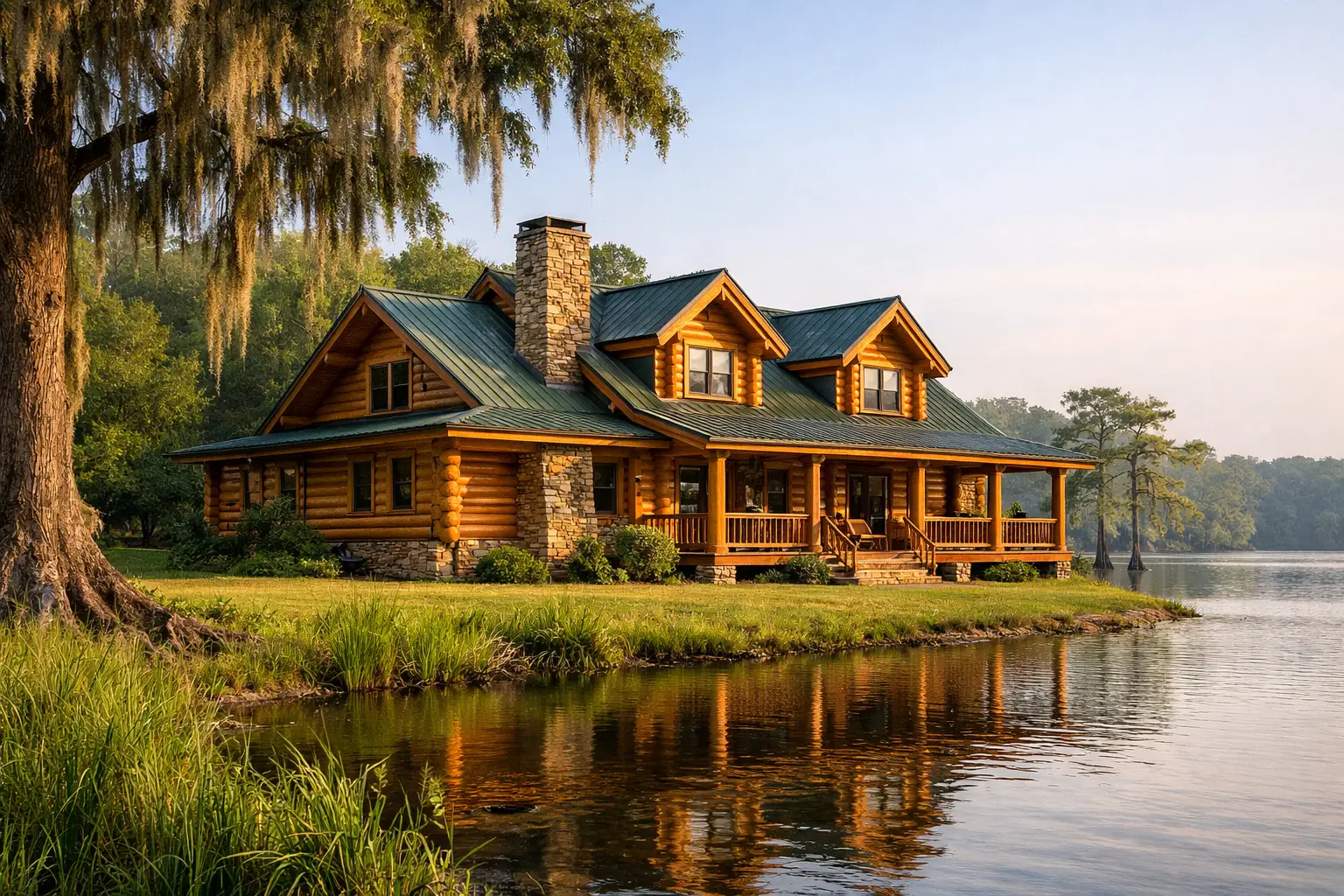
A log home in Florida or along the Southeast coast has to do more than look good on a brochure. It has to stand up to wind, heat, humidity, termites, heavy rain, and years of hard weather. That is exactly why cypress log homes have earned the respect of practical buyers who want the look of a real log house without taking on a maintenance burden that never seems to end.
For Southern landowners, material choice is not a small detail. It is one of the biggest decisions in the whole project. You can build a beautiful home from many species, but not every wood is right for the climate. In the Southeast, the difference between a smart choice and a cheap choice often shows up years later in repairs, rot problems, insect damage, and constant upkeep.
What makes cypress log homes different
Cypress has a long track record in wet, demanding environments. It is naturally resistant to decay, naturally resistant to insects, and well suited to high-humidity conditions that are common across Florida, Georgia, and North Carolina. That matters because a home is not judged only by how it looks when it is finished. It is judged by how it performs after storm season, after summer heat, and after year upon year of exposure.
Heart-cut cypress is especially valuable because it comes from the most durable part of the tree. That gives homeowners a premium material with real staying power. Compared with softer and more common alternatives, it offers a stronger case for long-term value. A lower price on the front end can look attractive, but if the material is less stable and less durable in Southern conditions, that early savings can disappear fast.
This is where many buyers start to see the difference between a true Southern log home approach and a one-size-fits-all package. A log home designed for mountain climates is not automatically a good answer for coastal or high-humidity regions. The South asks more from a wood home, and cypress is one of the few species that answers that challenge honestly.
Cypress log homes and the reality of Southern weather
If you are building in the Southeast, weather is not a side issue. It is the issue. High winds, storm exposure, moisture, and shifting conditions all have to be taken seriously from the start. A home should be engineered for the area where it will stand, not just adapted after the fact.
That is one of the strongest reasons buyers look at cypress log homes in the first place. The wood itself is a smart fit for the climate, but the full value comes when that material is paired with proper engineering, stamped plans, and structural design that accounts for wind loads, shear forces, and site-specific requirements. A good-looking cabin is easy to sell. A well-designed log home that performs in hurricane-prone regions takes more experience.
There is no magic material that removes every risk. Good design still matters. Proper foundation work still matters. Roof systems, fastening methods, moisture management, and construction quality all matter. But when the base material already brings natural resistance to decay and insects, you are starting from a better position.
Why many buyers choose cypress over pine
Pine is common in the log home world because it is widely available and often less expensive. That does not make it the best choice for every region. In Southern climates, buyers have to think beyond the initial package price and ask what ownership will feel like ten or fifteen years from now.
Cypress gives you a different kind of value. It is not about flashy claims. It is about fewer headaches. Better natural durability can mean less concern about rot, less concern about insect pressure, and less dependence on chemical treatments to compensate for what the wood does not do on its own.
That does not mean every pine home fails, and it does not mean cypress is maintenance-free. Any real wood home needs attention. Finishes have to be maintained. Water has to be managed. Construction details have to be right. But if you are comparing species for a home in a humid, termite-prone environment, cypress makes a strong practical case.
Buyers who understand long-term ownership usually recognize that quickly. They are not shopping for the cheapest possible package. They are trying to build once and build right.
The look people want, with performance they need
Most people are drawn to log homes because they want warmth, character, and the kind of honest craftsmanship you can see from the driveway. They want exposed wood, solid lines, and a home that feels established the day it is built. Cypress delivers that natural beauty, but the appeal goes deeper than appearance.
A well-designed cypress home can be anything from a modest cabin on acreage to a full-time custom residence with open living areas, deep porches, vaulted ceilings, and practical floor plans for retirement or family living. The material works across a wide range of designs because it brings both visual character and functional strength.
That flexibility matters in the real world. Some buyers want a turnkey path with builder support and detailed guidance. Others want to act as owner-builders and handle part of the process themselves. Some are building a primary residence. Others are planning a second home, retirement home, or family place to keep for generations. The right cypress home package should support those different goals instead of forcing everyone into the same plan.
Good value is not the same as cheap
A lot of buyers have grown tired of the log home sales game. Too much pressure. Too many inflated claims. Too many package prices that look simple until the real costs start stacking up. People who have worked hard for their land and their money usually want straight answers, not a showroom performance.
That is one reason the old-fashioned, direct way of doing business still matters. When you work directly with experienced specialists instead of feeding a big dealer network, there is usually more room for honest pricing, better communication, and a home that is actually tailored to your site and budget. That does not mean every custom project is inexpensive. It means the money is more likely to go into the house instead of the overhead.
With cypress log homes, value should be measured in more than just the starting number. It should include the quality of the logs, the engineering behind the plans, the support you receive during construction, and the long-term cost of maintaining the home. When buyers look at the full picture, premium material often makes more financial sense than it first appears.
Who cypress log homes are best for
These homes are a strong fit for buyers who want real wood construction and are building in climates where moisture and insects are part of everyday life. They make sense for retirees who want a durable, lower-upkeep home. They make sense for families who want a long-term place on rural land. They make sense for second-home buyers who do not want to spend every visit worrying about what the weather has done since the last trip.
They are also a good fit for buyers who appreciate custom work. Not everybody wants a prepackaged house dropped onto their property with little thought for orientation, lot conditions, or local code demands. A custom-engineered cypress home gives you more control over floor plan, porch design, room layout, and structural requirements.
For many customers in Florida especially, that combination is hard to beat. They want the log home look, but they also want a house built for Florida realities. Those are not competing goals if the project is handled the right way.
What to ask before you build
Before committing to any log home package, ask direct questions. What species is being used, and why is it right for your climate? Are the plans engineered for your wind zone and local conditions? What kind of support will you get during construction? How much flexibility do you have to customize the plan? What maintenance should you realistically expect over time?
If the answers are vague, that tells you something. A good company should be able to explain the material, the design approach, and the structural thinking in plain language. No hype, no pressure, no fancy talk to cover weak details.
That is where experience shows. Companies that have spent decades working with cypress in Southern conditions understand what buyers are up against and what a home must do to earn its keep. Log Home Guys has built its reputation around that straightforward approach, pairing premium heart-cut cypress with real engineering and personal service.
A home like this should feel right on the land, look right to your eye, and hold up to the climate you live in. If you are building in the South, cypress is not just a beautiful option. It is one of the few choices that respects the weather as much as you do.