
If you’re planning a log home in Florida, Georgia, or North Carolina, the cypress vs pine log homes question is not a small detail. It affects how your house handles humidity, termites, driving rain, and the kind of upkeep you will deal with year after year. In the South, a log home has to do more than look good on day one. It has to keep performing when the weather turns rough.
That is where a lot of buyers get tripped up. Pine is common, and because it is common, many people assume it is the standard choice for any log home. But common does not always mean best. In Southern climates especially, the wood species matters a great deal.
Cypress vs Pine Log Homes in Southern Conditions
If you were building in a colder, drier region, pine might be a more reasonable conversation. But the Southeast is different. High humidity, intense sun, heavy storms, fungal exposure, and insect pressure all change the equation.
Cypress has long been respected in the South for a reason. Heart-cut cypress contains natural oils and properties that help resist decay and insects. That does not make it magic, and no wood home is maintenance-free, but it does give homeowners a real advantage. Pine, by comparison, is generally more vulnerable and often relies more heavily on chemical treatment, coatings, and ongoing vigilance.
For a buyer who wants a true log home look without signing up for unnecessary maintenance headaches, that difference matters.
Durability Is Where Cypress Pulls Ahead
When people compare cypress vs pine log homes, durability is usually the biggest concern, and rightly so. A log home is not just a finish material. The logs are a major part of the structure and the character of the home. If the wood does not hold up well, every future repair becomes more expensive and more disruptive.
Heart-cut cypress is known for long-term durability in wet and humid environments. That reputation was not created by marketing. It was earned over generations of real-world use in Southern construction. Cypress has been used for siding, trim, structural applications, and exterior woodwork because it stands up well where moisture is a constant concern.
Pine can certainly be used in log home construction, and many homes have been built from it. But pine generally has less natural resistance to the conditions that punish wood in the South. That means more dependence on treatment systems and more concern if maintenance schedules slip.
For some buyers, that trade-off may be acceptable if short-term cost is the only driver. For many families planning a retirement home, a forever home, or a second home they cannot monitor every week, cypress often makes more sense.
Moisture, Rot, and Humidity
Moisture is the quiet enemy of wood homes. Not every problem shows up fast. Sometimes it builds slowly through trapped humidity, repeated wetting, and poor drying cycles.
This is one of the strongest arguments for cypress. It has natural decay resistance that gives it a built-in advantage in damp conditions. In a Southern climate, where heat and moisture work together for months at a time, that is not a luxury. It is a practical benefit.
Pine is more likely to need extra protection to hold the line against those same conditions. If coatings fail, if water intrusion is ignored, or if the home sits vacant for stretches, pine can become a riskier material. Good design, sound engineering, and proper overhangs help either species, but the wood itself still matters.
Insects and Termites
Ask any Southern homeowner what they worry about, and termites will be near the top of the list. Cypress has a natural edge here as well. Its heartwood is known for better insect resistance than pine, which makes it especially appealing in termite-heavy regions.
That does not mean you skip proper site prep or termite prevention around the foundation. It means your log package starts from a stronger position. Pine, on the other hand, is generally more inviting to insects and more dependent on treatment and maintenance systems to compensate.
For buyers who want to reduce avoidable vulnerabilities, this is another reason cypress stays at the front of the line.
Appearance and Character
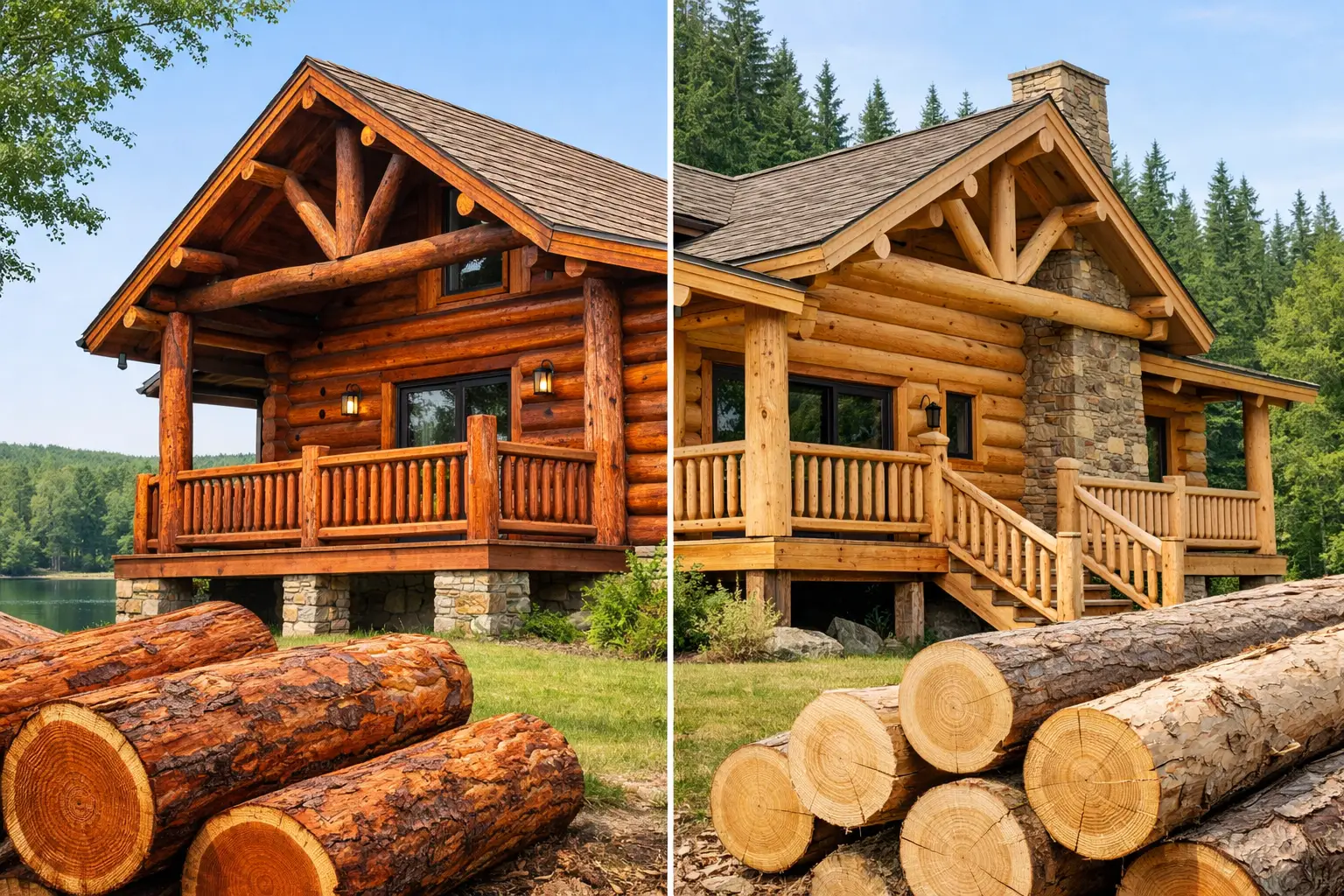
Both woods can produce an attractive log home, but they do not weather and age the same way. Cypress offers a rich, authentic look with strong grain character and a substantial feel. It tends to fit what many people picture when they think of a premium Southern log home or cabin.
Pine has its own appeal and can look good, especially when new. But appearance is only part of the story. The real question is how that home looks after years of sun, rain, seasonal movement, and maintenance cycles. A material that starts out cheaper can become less attractive over time if it checks more, takes on more wear, or demands more corrective work.
For buyers investing serious money into a custom home, that long view matters.
Maintenance Is Not a Small Issue
This is where many log home buyers learn hard lessons too late. Every wood home needs maintenance. Anyone who tells you otherwise is selling hype. But there is a real difference between reasonable upkeep and constant chasing.
Cypress tends to reduce the maintenance burden because of its natural resistance to decay and insects. That does not remove the need for proper finishing, inspections, and care. It does mean you are starting with a wood species that is better suited to the climate.
Pine often asks more from the homeowner over time. More attention to coatings. More concern about vulnerable spots. More sensitivity to prolonged moisture exposure. If the home is a full-time residence and the owner is very diligent, that may be manageable. If it is a retirement property, vacation cabin, or family place that is not occupied every day, lower-maintenance materials become much more valuable.
The cheapest path at the beginning is not always the least expensive path over twenty years.
Storm Performance Matters Too
In the Southeast, buyers should not look at wood species in isolation. A good log home has to be engineered properly for wind loads, shear forces, and storm exposure. That includes the plans, connections, fastening systems, roof design, and overall structural package.
Still, the wood choice is part of the larger performance picture. A durable species that stands up well to moisture and long-term exposure supports the home’s ability to hold its value and structural integrity. Cypress fits that mission well. For coastal and high-wind regions, especially in Florida, choosing a naturally resilient material is just common sense.
This is one reason practical buyers often prefer companies that understand Southern engineering instead of selling a one-size-fits-all package designed for some other region.
Cost vs Value
Pine often gets attention because the upfront number can look lower. That is real. If you compare initial material price alone, pine may appear to save money.
But smart buyers look past the first invoice. They ask what the home will cost to protect, maintain, repair, and preserve over time. They ask what happens after years of sun, humidity, insect exposure, and storm season. They ask whether the wood itself is helping them or working against them.
That is where cypress often proves its value. You may spend more upfront for a better species, but in return you get stronger natural resistance, lower long-term hassle, and a better fit for Southern living. For many homeowners, that is not an added expense. It is money spent in the right place.
Which One Makes More Sense for You?
The honest answer is that it depends on where you are building, how long you plan to own the home, and how much maintenance you are willing to take on. If a buyer is focused almost entirely on initial budget and is comfortable with more upkeep, pine may stay in the conversation.
But if you want a premium log home designed for Southern weather, Southern insects, and Southern humidity, cypress is usually the stronger choice. It offers real-world advantages that go beyond looks. It is better aligned with the conditions your home will face every year.
That is why experienced Southern builders and suppliers who know this region well tend to put so much weight on the species itself. At Log Home Guys, that belief comes from decades of seeing what works and what holds up.
A log home should give you confidence, not another long maintenance list. If you are building for the long haul, choose the wood that respects the climate you’re building in.