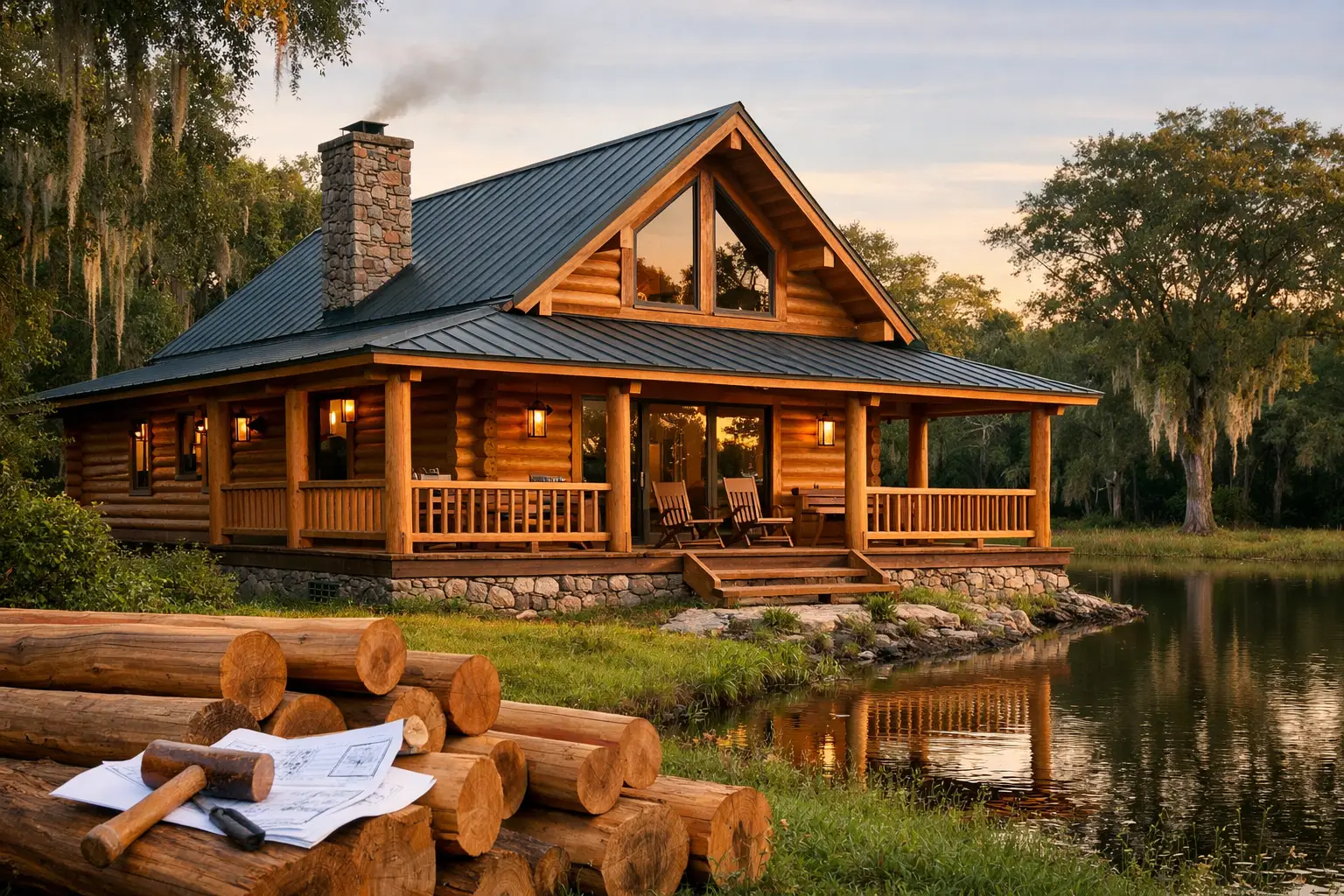
A log cabin in Florida, Georgia, or North Carolina has to do more than look good from the driveway. It has to stand up to wind, humidity, termites, and years of hard weather. That is exactly why more buyers are looking closely at cypress log cabin kits instead of settling for the same pine packages sold everywhere else.
For Southern property owners, the material matters as much as the floor plan. A cabin kit can save time and simplify the building process, but the wrong wood can turn that convenience into years of maintenance, repairs, and frustration. If you want the real log home look with long-term performance in a Southern climate, cypress deserves serious attention.
What makes cypress log cabin kits different
Not all log cabin kits are built around the same assumptions. Many national kit companies design for broad appeal first and regional performance second. That may work fine in mild or dry climates, but the Southeast asks more from a wood home.
Heart-cut cypress is different because it is naturally suited to this region. It has long been valued for its resistance to decay, insects, and moisture-related wear. Those are not minor benefits in the South. They are core issues that affect how your cabin looks, how often you maintain it, and how well it holds up over time.
That is where a lot of buyers get misled. They compare kits based on square footage, window counts, or brochure pricing without looking hard enough at species, engineering, and regional suitability. A cheaper package can become an expensive home if it was not designed for the conditions on your land.
Why cypress makes sense in Southern climates
Florida and much of the Southeast are tough on buildings. Heat, damp air, driving rain, and insect pressure can wear out inferior materials in a hurry. Pine is common because it is easy to source and market, but common is not the same as best.
Cypress has a natural advantage. Heart-cut cypress contains properties that help resist rot and insect damage, which can reduce the maintenance burden that often comes with wood construction. That does not mean any wood home is maintenance-free. Nothing honest can make that promise. It does mean cypress gives you a stronger starting point.
For homeowners planning a full-time residence, retirement home, or family getaway cabin, that matters. You want the warmth and character of a true log structure, but you also want something practical. In the Southeast, practical means choosing materials that fit the climate instead of fighting it.
The case for heart-cut cypress
There is an important distinction between cypress in general and heart-cut cypress in particular. The heartwood is the portion most valued for durability and long-term performance. If you are comparing options, ask exactly what part of the tree is being used and how the material is milled.
That level of detail may sound technical, but it affects the life of the home. Better raw material usually means better resistance, better stability, and fewer headaches down the road. Buyers who plan to keep a cabin for decades should pay close attention here.
A kit should simplify the build, not lower the standard
A good cabin kit is not a shortcut around quality. It is a way to organize the project, control costs, and move construction forward with fewer surprises. The best kits are built around careful planning, accurate material packages, and sound structural design.
That is especially important if your home will be built in a high-wind area or in a county with strict code requirements. In those cases, engineered plans and proper structural detailing are not optional extras. They are part of building responsibly.
Some buyers want a turnkey path with builder support. Others are hands-on and want to manage parts of the job themselves. Either approach can work if the package is well thought out. The key is knowing whether you are getting a real construction system or just a pile of logs and a sales pitch.
What to look for in cypress log cabin kits
The best cypress log cabin kits are not defined by one feature. They come together through material quality, engineering, and support. If you are shopping seriously, look beyond glossy renderings and ask direct questions.
Start with the wood species and grade. Then look at whether the package is designed for your local wind load and site conditions. Review what is included in the plans, what support is available during construction, and how much customization is allowed.
That last point matters more than people expect. Many buyers start with one idea and revise it once they think through porches, rooflines, loft space, storage, or aging in place. A rigid pre-packaged design may not serve you well if your property, budget, or long-term needs call for adjustments.
Engineering matters more than brochure promises
A log cabin in hurricane country should be engineered like it belongs there. That means accounting for uplift, lateral loads, fastening systems, and the realities of severe weather. It also means the plans should work with local permitting and inspection requirements.
This is one place where cheap kits often show their limits. They may look affordable up front, but if they need redesign work, added structural upgrades, or major field changes, the savings can disappear fast. Paying for proper engineering at the start usually costs less than correcting weak planning later.
Custom versus pre-packaged cabin kits
There is no single right answer here. Some buyers do well with a standardized plan if the layout already fits their needs and the package is built to a high standard. Others need more flexibility because of lot shape, flood elevation, view orientation, family size, or financing requirements.
Custom work usually gives you a better fit, but it may involve more design decisions early on. Pre-packaged plans can move faster, but only if they truly fit the site and the way you intend to live. If a plan looks attractive on paper but forces compromises in daily use, it is not really saving you money.
For many Southern buyers, the best path is a kit that combines custom-engineered planning with a clear material package. That keeps the process manageable while still respecting local conditions and personal priorities.
Cost, value, and the truth about price
Price matters. Any honest builder knows that. But with log homes, the lowest package price rarely tells the full story.
You have to consider what you are getting for the money. Better wood, stronger engineering, and more complete support may cost more at the start, yet save money through reduced maintenance, fewer repairs, and a smoother build. That is real value, especially if this is your retirement home or a property you expect to keep in the family.
There is also overhead to think about. Some large brands build dealer networks, expensive showrooms, and heavy marketing into the selling price. Buyers end up paying for layers that do not improve the home itself. A more direct company model often keeps the focus where it belongs – on the materials, the plan, and the service.
Who cypress log cabin kits are best for
These kits make the most sense for buyers who want the character of an authentic log home but need it to perform in a demanding climate. That includes rural homeowners, retirees building their final home, second-home buyers, and owner-builders who want a dependable material package instead of guesswork.
They are also a strong fit for people who are tired of flashy sales talk. If you prefer clear answers, realistic expectations, and direct access to experienced people, this type of approach will feel a lot more comfortable than a polished pitch from a national chain.
Log Home Guys has built its reputation around that old-fashioned way of doing business. No pressure, no showroom theater, just premium heart-cut cypress homes designed for Southern conditions and backed by practical support.
A better way to judge cabin kits
When you compare options, do not start with the brochure cover. Start with the climate, the wood, and the structural plan. Ask how the home will perform five, ten, and twenty years from now. Ask what kind of maintenance burden you are buying. Ask whether the company understands the Southeast or is simply shipping a generic package into it.
A beautiful cabin should still be beautiful after the storms, after the wet seasons, and after years of real use. That is the standard worth holding.
If you are building in the South, a cabin kit should be more than attractive. It should be honest about the conditions it faces and strong enough to meet them. That is why cypress keeps earning its place. It is not hype. It is a material with a record, and for the right buyer, it is a smart foundation for a home that feels right from the day it is built and keeps proving itself long after move-in.