
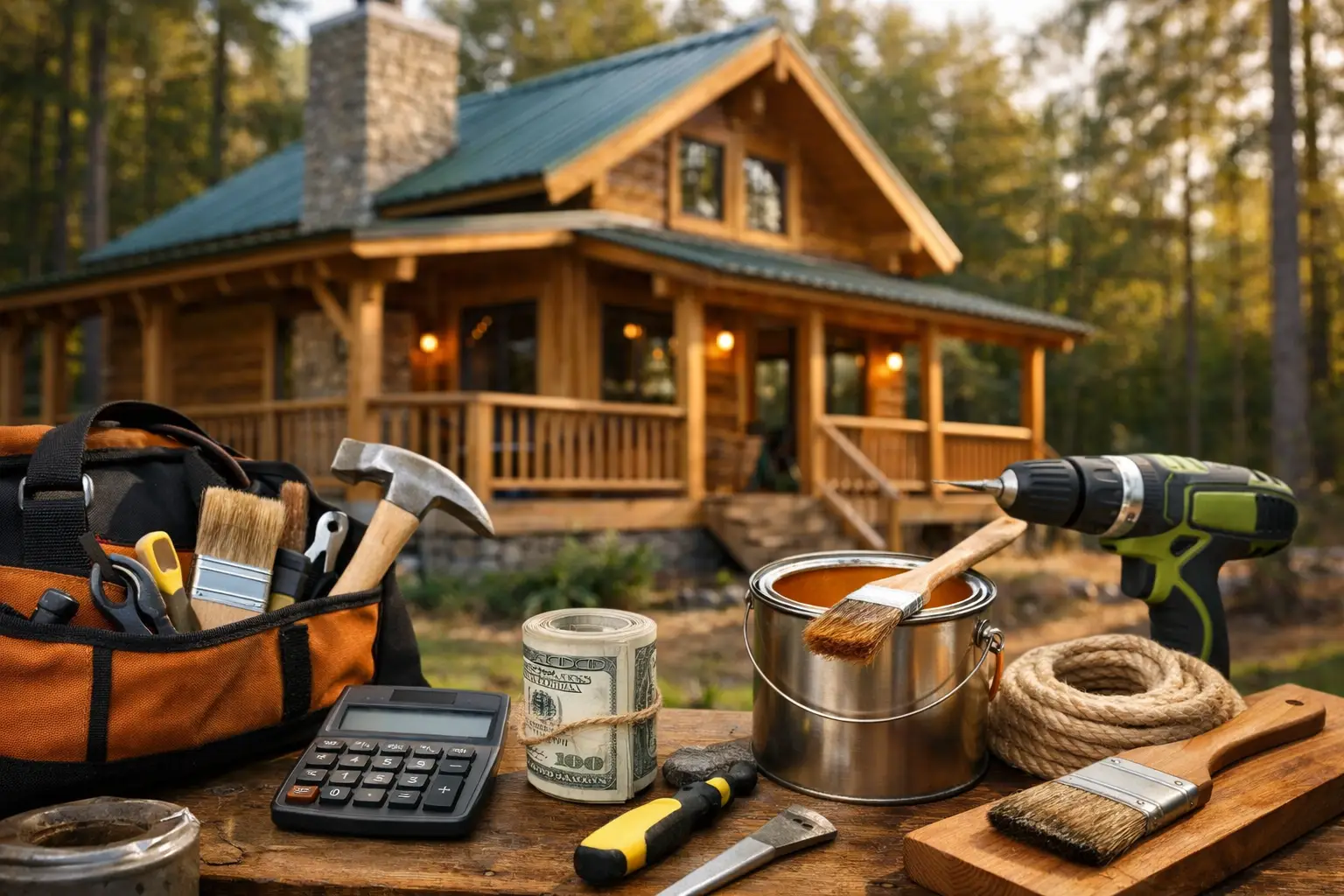
A cabin can look affordable on the day the contract is signed and become expensive a few years later if the wood, roof, drainage, and finish were not chosen wisely. That is why cypress cabin maintenance costs deserve a close look before you build. The right cabin material does more than create a handsome rustic exterior. It affects how often you work on the home, what repairs you face, and how well the structure holds up through heat, humidity, termites, and hard weather.
Heart-cut cypress has a strong reputation in the South for good reason. It contains natural oils that help resist decay and insects, and it handles damp conditions far better than many common softwoods. That does not mean a cypress cabin needs no care. No real wood home is maintenance-free. It does mean the maintenance plan can be simpler, more predictable, and less costly than a cabin built with lower-grade or less durable materials.
What Drives Cypress Cabin Maintenance Costs?
The annual cost of owning a cypress cabin depends less on a single number and more on four practical matters: the quality of the original materials, the exposure of the home, the design details that move water away from wood, and the owner’s willingness to inspect small issues before they become big ones.
A well-designed cypress cabin with wide roof overhangs, sound gutters, proper flashing, good site drainage, and quality initial finish will usually cost less to maintain than a cheaper cabin package that leaves those details as afterthoughts. This is especially true in Florida and other humid Southern areas, where sun, wind-driven rain, and moisture can punish exposed surfaces.
Labor is also a major factor. An owner who is comfortable washing exterior walls, clearing gutters, checking caulk, and applying touch-up stain can keep out-of-pocket costs low. A turnkey owner may prefer to hire those jobs out. Neither approach is wrong. The important thing is to budget for regular attention rather than waiting until the cabin shows visible damage.
Routine Costs You Should Plan For
Most cypress cabin maintenance is preventive. A yearly inspection is the best money an owner can spend because it catches failed sealant, loose flashing, clogged gutters, and early finish wear before water gets behind the wood.
Cleaning and inspection
Plan to inspect the exterior at least once a year and after major storms. Look closely at log ends, window and door openings, corners, deck connections, roof valleys, and areas near ground level. These are the places where water can linger or find a path into the wall system.
A gentle exterior wash may be needed every one to three years, depending on shade, pollen, coastal air, and mildew pressure. Use methods suitable for wood. High-pressure washing can damage fibers, force water into joints, and create more trouble than it solves. A basic owner-performed cleaning costs little beyond supplies. Professional cleaning costs vary with cabin size, height, access, and the amount of buildup.
Stain, sealer, and finish renewal
Finish renewal is generally the largest recurring exterior expense. How often it is needed depends on the product used, the amount of direct sun, the cabin’s elevation, and whether walls are protected by generous overhangs. South- and west-facing walls often need attention before shaded walls do.
Many owners should expect to apply a maintenance coat every three to five years, with selective touch-ups sooner in high-exposure areas. A full strip-and-refinish job should not be the normal routine for a properly maintained cypress home. Keeping a quality finish in good shape is far less expensive than allowing it to fail completely and then paying for heavy preparation work.
For a modest cabin, owner-applied materials may run from several hundred dollars to more, depending on the finish system and the amount of surface area. Hiring experienced wood-home finishers can move the project into the thousands. Get estimates based on actual wall area, log profile, access, and prep work, not just square footage of the floor plan.
Caulking, chinking, and weather seals
Cypress is stable, but every wood home has joints, penetrations, windows, and doors that need checking. Inspect flexible sealants around exterior openings and utility penetrations annually. Replace cracked or separated material promptly.
Not every cypress cabin uses traditional chinking, and the amount required depends on the wall system and log profile. Where chinking is part of the design, expect periodic spot repairs rather than automatic full replacement. A small separation handled early is a simple maintenance item. Left alone, it can invite moisture, air leaks, and insect activity.
Roof, gutters, and drainage
A cypress wall system can only perform as well as the roof and drainage around it. Keep gutters clear, extend downspouts away from the foundation, and make sure splashback does not repeatedly soak the lower logs. Trim branches that scrape the roof or trap damp leaves against the cabin.
Roof maintenance is not unique to a log cabin, but it directly protects your investment in the wood below. In hurricane-prone areas, annual roof checks and post-storm inspections are sensible. Loose shingles, damaged metal panels, or failed flashing should be addressed before the next hard rain.
The Cost Difference Between Prevention and Repair
The expensive part of cabin ownership is rarely the regular inspection or the gallon of stain. It is delayed maintenance. A finish that has worn thin can allow repeated moisture exposure. A clogged gutter can rot trim and create stains on the wall below. Poor drainage can keep the bottom courses wet and turn a manageable repair into a larger project.
Cypress gives the owner more forgiveness than pine because of its natural resistance to decay and insects, particularly when heart-cut material is used. But natural durability is not permission to neglect the house. Wood exposed to standing water, constant shade, or failed finishes will eventually need attention regardless of species.
This is where cheaper cabin materials can become costly over time. Initial savings on less durable logs may be offset by more frequent treatments, greater vulnerability to insects and moisture, and more extensive repair work. A lower purchase price is only a bargain if the home remains economical to own.
Budgeting for Cypress Cabin Maintenance Costs
Rather than guessing at a fixed annual number, build a reserve based on the home itself. A smaller, well-protected cabin may require only routine supplies and occasional professional help in a typical year. A large home with tall walls, expansive decks, complex rooflines, waterfront exposure, or heavy sun will need a larger reserve.
A practical approach is to set aside money each year for three categories: routine inspection and cleaning, periodic finish maintenance, and unexpected storm or repair work. This keeps a scheduled refinishing project from feeling like a surprise expense.
For buyers comparing cabin packages, ask direct questions before making a decision. What species and grade of wood is being supplied? Is the material engineered for the climate where the home will stand? How are windows, doors, roof connections, and water-management details handled? Are you receiving plans and engineering appropriate for wind loads and local conditions? Those answers have more effect on long-term ownership cost than a sales brochure full of pretty cabin pictures.
Southern Climate Factors That Matter
Florida, Georgia, and North Carolina do not all put the same pressure on a cabin. Coastal salt air, intense UV exposure, tropical storms, mountain shade, and seasonal freeze-thaw cycles each call for different attention. A cabin near the coast may need more frequent washing and closer inspection of metal components. A mountain cabin surrounded by trees may need more aggressive gutter cleaning and mildew control.
The best defense is not a miracle coating. It is proper design combined with common-sense care: roof overhangs that protect walls, adequate ventilation, drainage that moves water away, finished wood that is maintained before it fails, and a structure engineered for local forces.
At Log Home Guys, we believe a cabin should be built to serve a family for the long haul, not just look good in a catalog. Heart-cut cypress is a premium choice because it starts with the right natural qualities for Southern living. Pair it with sound engineering and regular care, and you have a home that can hold its value without demanding constant fuss.
A good maintenance plan is simply part of being a good owner. Walk the property after storms, keep water moving away from the cabin, and handle small finish or sealant issues while they are still small. That kind of steady care protects both the wood and the peace of mind that made cabin living appealing in the first place.