
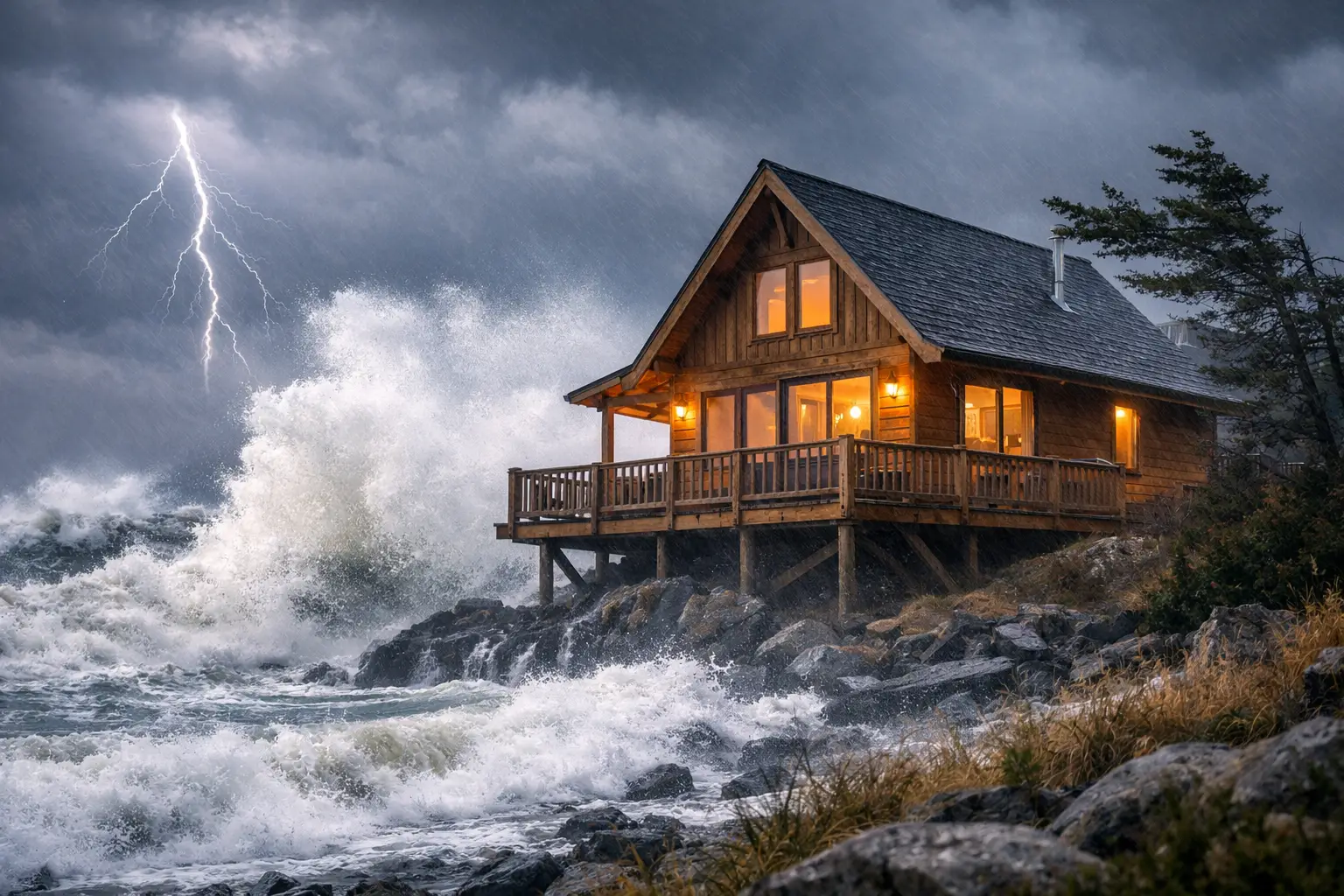
A cabin on the coast has to answer a hard question before it ever earns the view: can cabins handle coastal storms? The honest answer is yes, but not just any cabin, and not by accident. If a structure is going to face hurricane-force winds, wind-driven rain, flying debris, salt air, and long stretches of humidity, it has to be designed and built for that job from the start.
That is where a lot of buyers get tripped up. They picture a cabin as a light-duty retreat, something better suited to the mountains than the shoreline. The truth is simpler than that. A well-engineered cabin can perform extremely well in coastal conditions. A poorly designed one can struggle, whether it is a cabin, a conventional frame house, or anything else.
Can cabins handle coastal storms better than people think?
In many cases, yes. The problem is not the word cabin. The problem is weak design, cheap materials, and builders who treat coastal construction like ordinary construction. Storm performance comes down to engineering, fastening, load paths, foundation design, roof shape, and moisture resistance. If those pieces are right, a cabin can be built to stand up to serious weather.
This is especially true in the Southeast, where storm exposure is not theoretical. Along the Gulf and Atlantic coasts, homes need to deal with repeated wind events, high moisture, termites, and heat that can punish the wrong material over time. That is why material choice matters just as much as appearance.
A true coastal cabin should not rely on looks alone. It needs structural plans stamped for the site, hardware rated for uplift and shear, and a wall system that is built to act as part of a complete engineered package. If one part is weak, the storm will find it.
What actually makes a cabin storm-capable?
The first thing is a continuous load path. That means the roof, walls, floor system, and foundation are all tied together so wind forces travel through the building instead of tearing pieces apart. In coastal storms, uplift is a major issue. A roof does not simply need shingles that stay put. It needs a fastening system and framing plan that keep the whole assembly attached when pressure changes rapidly.
The second factor is lateral strength. High winds do not only pull upward. They also push sideways. That creates shear loads through the walls and connections. A cabin that is engineered for these forces has a much better chance of riding out a storm without major structural failure.
The third is water management. Coastal storms are not just wind events. They are water events. Wind-driven rain can force moisture into places that stay dry during an ordinary thunderstorm. Roof details, overhangs, flashing, drainage planes, window installation, and foundation elevation all matter here. You can have a structure that survives the wind and still suffers expensive damage if water control was treated as an afterthought.
Then there is durability over time. Salt air, humidity, and insects do not make one dramatic appearance and leave. They work on a building year after year. That is why the wood species matters. Some woods demand constant upkeep in southern climates. Others are naturally better suited for the job.
Why wood species matters on the coast
Not all log or timber materials perform the same in harsh climates. This is one place where buyers should slow down and look past brochure language. A coastal cabin needs more than visual appeal. It needs wood that resists decay, handles humidity well, and does not become a maintenance burden after a few seasons.
Heart-cut cypress has long been respected in the South for good reason. It offers natural resistance to decay and insects, and that matters in wet, humid, termite-prone areas. Compared with common pine options, it gives buyers a stronger long-term position on maintenance and durability. That does not mean any species is maintenance-free. Wood homes still require care. But there is a real difference between a material that fights your climate and one that was made for it.
For coastal buyers, that difference shows up in the long run. The wrong material can mean more repainting, more repairs, more concern about rot, and more vulnerability where moisture lingers. The right material helps protect the investment without giving up the authentic cabin look that drew people to wood construction in the first place.
The biggest weak points in coastal cabin construction
If a cabin fails in a storm, it usually does not fail because it was a cabin. It fails because one or more critical areas were underbuilt.
The roof is a common weak point. Complex rooflines may look impressive, but they can create more opportunities for uplift and water intrusion. Simpler roof forms often perform better in high-wind conditions. That is one of those trade-offs buyers should understand. Fancy lines on paper are not always your friend on the coast.
Windows and doors are another pressure point. Large openings can be done, but they need to be specified correctly and installed correctly. The view is important. So is keeping the envelope intact when wind pressure rises and debris starts moving.
Foundations matter just as much. In some coastal areas, elevation is not optional. A cabin may need to be raised to account for flood risk, storm surge, or drainage conditions. That changes the engineering and the budget, but it is far better to solve those issues on the front end than after a storm exposes them.
Connection hardware also deserves more attention than it gets. Bolts, anchors, straps, and fasteners are not glamorous, but they are the hidden workhorses of storm resistance. Good materials with poor connectors are still vulnerable.
Can log cabins handle hurricanes on the coast?
They can, if they are engineered specifically for hurricane conditions. That distinction matters. Buyers should be cautious about broad claims like hurricane resistant if there is no discussion of site-specific engineering, code requirements, wind ratings, or structural details.
A proper hurricane-capable cabin is not based on guesswork. It is based on calculations, stamped plans, proper fastening schedules, and construction practices that respect coastal loads. In Florida and other high-wind areas, this is not a nice extra. It is the baseline for responsible building.
This is where experienced log home design makes a difference. A company that understands southern climates, high humidity, shear loading, and extreme wind design will approach a cabin very differently than a seller pushing a generic package built for a mild inland setting. That experience helps buyers avoid costly mistakes before materials ever hit the site.
The trade-off: storm strength versus cost
There is no honest way to talk about coastal building without talking about cost. Building a cabin to handle coastal storms usually costs more than building the same cabin in a lower-risk location. Engineering, hardware, foundation requirements, impact-rated openings, and better materials all add to the number.
But the cheaper route is not always the less expensive route over time. A lower upfront price can lead to higher maintenance, weaker performance, and harder insurance conversations later. For many buyers, especially retirees and families building a long-term home, the better question is not what is cheapest today. It is what will still make sense ten or fifteen years from now.
That is why value matters more than sticker price. A well-designed cypress cabin built for coastal conditions may cost more upfront than a bargain package, but it may save money and headaches in maintenance, repairs, and durability over the life of the home.
What buyers should ask before building near the coast
Before you move ahead with any cabin plan, ask plain questions and expect plain answers. Has the home been engineered for the exact wind zone and site conditions? What wood species is being used, and how does it perform in humidity and termite country? How are the roof, walls, and foundation tied together? What is being done to manage water intrusion? What support is available to the builder or owner-builder during construction?
If those answers are vague, that is a warning sign. Coastal construction is no place for hand-waving. A trustworthy company should be able to explain how the home is designed to perform, what the trade-offs are, and where your money is going.
At Log Home Guys, that kind of straightforward conversation is part of the job. No sales hype, no pressure, just real answers about what it takes to build an authentic wood home that belongs in southern weather.
A coastal cabin can absolutely be a smart choice, but only when beauty and engineering are treated as partners. If you want the cabin look by the water, build it like it is going to be tested, because sooner or later, it will be.