
If you are building a home where heat, humidity, and insects are part of daily life, asking what wood resists termites best is not a small question. It affects maintenance, repair costs, structural life, and how much worry you carry after the house is built. In the South especially, the wrong wood choice can look fine on day one and become an expensive lesson later.
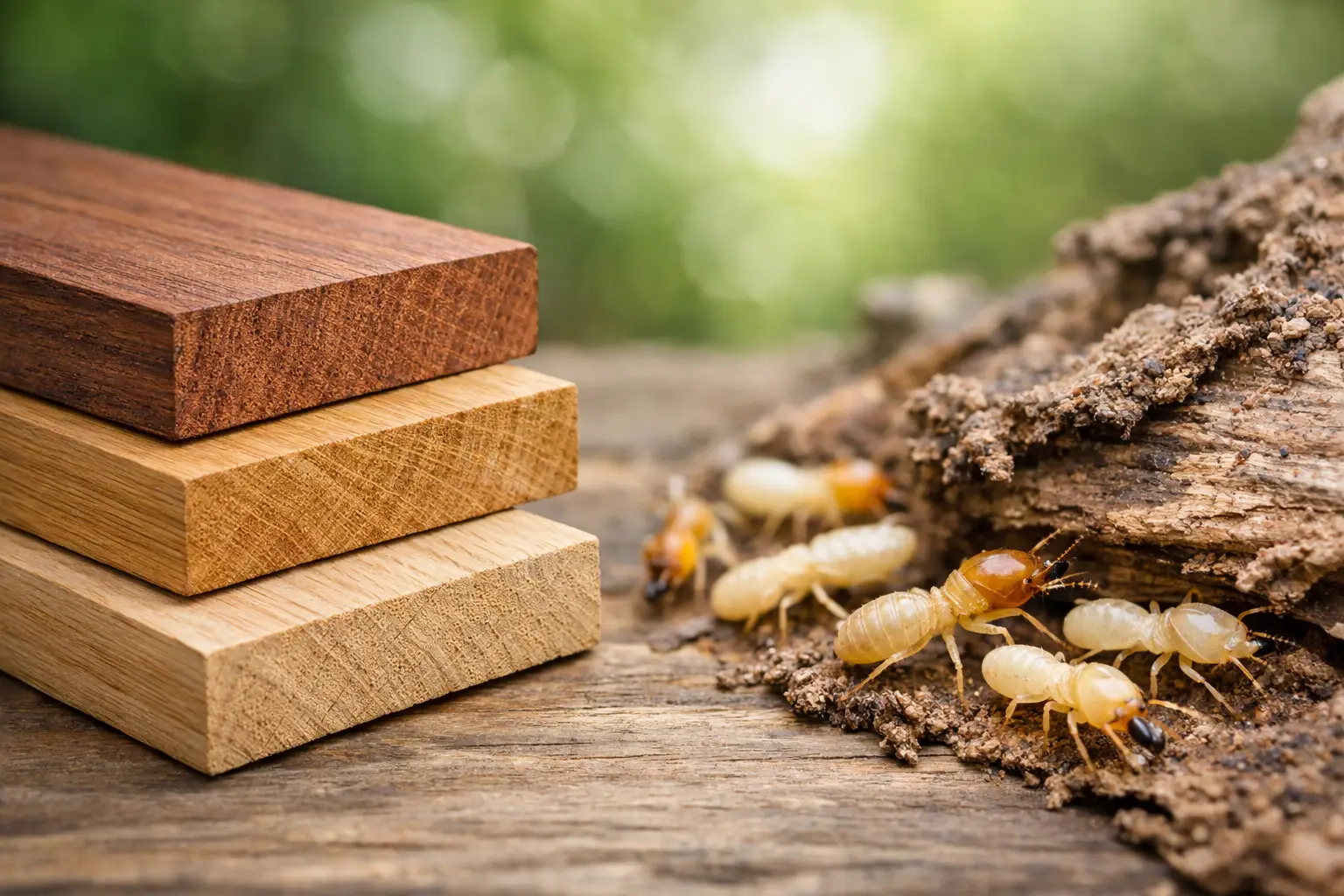
The honest answer is that no wood is completely termite-proof. If termites are determined enough, and conditions favor them, they can attack almost anything made of wood. But some species hold up far better than others because of their natural oils, density, and heartwood chemistry. Those differences matter a great deal when you are choosing material for a log home, cabin, porch, trim package, or exposed exterior wood.
What wood resists termites best in real-world use?
Among natural wood species, heartwood from cypress is one of the strongest choices for termite resistance, especially in warm, damp climates where insect pressure is high. Old-growth heart cypress has long been valued for the natural preservative compounds in the wood. Those compounds help the wood resist termites, decay, and moisture-related breakdown better than many common building woods.
That does not mean every cypress board on the market is equal. The part of the tree matters. Heart-cut cypress is the premium material because the heartwood carries the properties people are paying for. Sapwood is less durable and less resistant. If you are serious about longevity, the phrase to pay attention to is not just cypress. It is heart-cut cypress.
Cedar is often mentioned in the same conversation, and for good reason. It has natural insect resistance and performs better than many softwoods. Teak is also highly resistant, but it is expensive and not a practical choice for most residential structural applications in the US. Redwood can perform well too, though availability, cost, and regional suitability often limit its use.
On the other side of the ledger, pine is where people need to slow down and ask better questions. Pine can be used successfully in construction, especially when pressure treated, but untreated pine is generally not the wood people turn to when termite resistance is the main concern. In a termite-heavy climate, relying on untreated pine as your primary line of defense is asking more from the material than it naturally wants to give.
Natural resistance vs chemical treatment
This is where a lot of buyers get confused. A wood can be naturally resistant, or it can be chemically treated, and those are not the same thing.
Pressure-treated lumber is commonly used because treatment helps protect against insects and decay. For many applications, especially framing near foundations, decks, or utility structures, treated wood makes sense. But treatment does not turn an ordinary wood species into the same thing as naturally durable heartwood. It is a different approach with different trade-offs.
Natural resistance comes from the wood itself. That matters because the protective character is built into the material, not just applied to it. Treated lumber can be effective, but performance depends on treatment quality, cut ends, field modifications, long-term exposure, and maintenance. In some settings, especially where appearance and traditional log home character matter, naturally resistant wood is the better fit.
For homeowners who want a real wood home without constant upkeep battles, this distinction is worth paying attention to.
Why cypress stands out
Cypress earns its reputation the old-fashioned way – by lasting. Builders and property owners in the South have used it for generations because it handles the kind of climate that ruins lesser materials. High humidity, heavy rain, heat, and insect pressure are hard on a home. Cypress is one of the few woods that feels well suited to all of it.
Its advantage is not based on hype. It is based on heartwood properties that make the material naturally less appealing to termites and more resistant to rot. That combination matters because termites and moisture problems often travel together. When wood stays wet, breaks down, or becomes more vulnerable, insects have an easier path in.
Heart-cut cypress helps on both fronts. It resists insect attack better than many common alternatives, and it also resists the kind of decay that shortens the life of wood in southern climates. For log homes and cabins, that is a major benefit. You are not just choosing how the house will look. You are choosing how hard that house will have to fight against the environment year after year.
That is one reason companies like Log Home Guys have stayed committed to heart-cut cypress instead of following the cheaper, more common path. In this business, material choice is not a detail. It is the foundation of long-term performance.
The trade-offs buyers should know
Even the best termite-resistant wood is not a free pass. Site conditions still matter. Construction details still matter. Maintenance still matters.
If wood stays in direct contact with soil, if water is allowed to collect around the home, or if foundation details invite insect activity, termites can still become a problem. A naturally resistant wood gives you an advantage, but it does not replace smart building practices.
There is also the matter of budget. Teak may resist termites extremely well, but most homebuyers are not going to build a structural wood home out of teak. Cedar can be a solid option, but depending on the grade and region, it may not give you the same combination of structural suitability, appearance, and southern-climate performance that heart cypress offers. Treated pine may lower upfront cost, but lower material cost does not always mean better long-term value once maintenance, repair, and replacement are part of the picture.
This is where practical buyers usually land on the same conclusion. It is better to pay for the right material once than to keep paying for the wrong material over time.
What wood resists termites best for log homes?
For a true log home or log cabin in a humid, termite-prone region, heart-cut cypress is one of the best choices available. It offers natural resistance, strong visual character, and a long track record in the South. Just as important, it fits the kind of ownership experience many buyers actually want – lower maintenance, better durability, and fewer avoidable headaches.
That matters even more in places where weather puts constant pressure on a home. Termite resistance should never be looked at in isolation. A wood that resists insects but struggles with moisture, movement, or decay may still create problems. The right material needs to perform as a whole package.
Heart-cut cypress does that well. It is not just resisting one threat. It is helping the home stand up to a climate.
How to choose the right wood for your project
Start with the application. Structural logs, siding, trim, decking, and interior paneling do not all face the same exposure or demand the same performance. A species that works well for one use may not be the smartest choice for another.
Next, ask whether the wood is heartwood or sapwood, naturally durable or chemically treated, and how it will be installed. Those questions are more useful than a simple label at the lumber yard. Two products may both be called cypress or pine and behave very differently depending on grade, cut, and treatment.
Then consider your climate honestly. If your property is in an area where termites are a year-round concern, and where humidity is not a seasonal issue but a constant one, lean toward materials with proven natural resistance. This is especially true for buyers who want a home that looks authentic and stays that way without being babied.
Finally, think in terms of total ownership cost. The cheapest material on paper may cost more if it demands more maintenance, more frequent refinishing, or more repair work after a few hard years.
A straight answer for serious buyers
So, what wood resists termites best? If you are looking at practical residential building materials and not chasing exotic luxury species, heart-cut cypress belongs at the top of the list. It is one of the best natural choices for termite resistance, and it brings added value through moisture and decay resistance that matters just as much in southern homebuilding.
There are other woods that can perform well. There are treated products that have their place. But for homeowners who want real wood, long service life, and less maintenance trouble in a demanding climate, heart-cut cypress is hard to beat.
A good home starts with honest materials. Choose wood that has already proven itself where termites, humidity, and time are all working against you.