

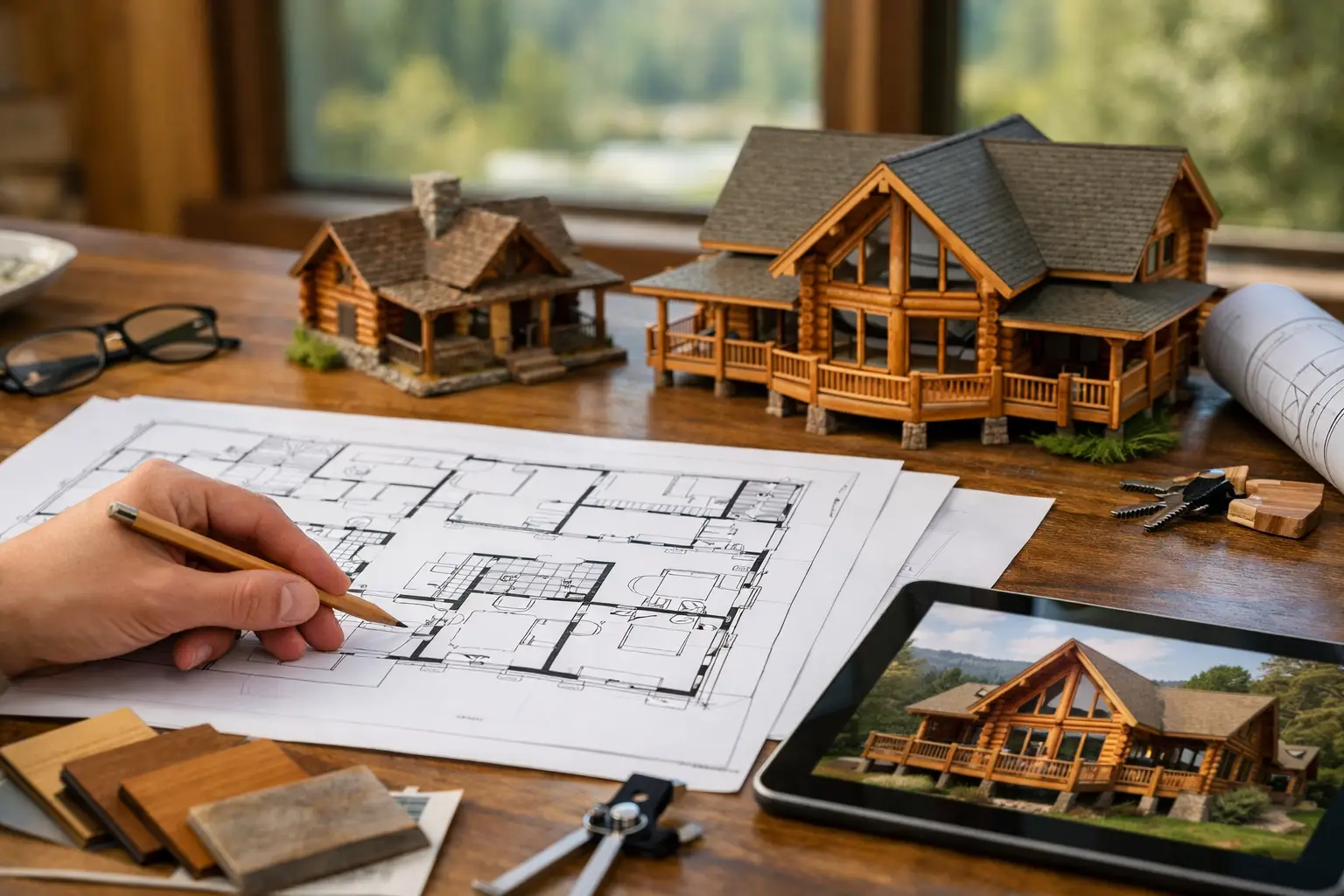
A floorplan can look perfect on paper and still be wrong for the way you live. That is where many buyers get into trouble. If you are trying to figure out how to choose log home floorplans, the right answer is not the biggest plan, the prettiest rendering, or the one with the most dramatic great room. The right answer is the one that fits your land, your budget, your climate, and the way your family will actually use the house ten years from now.
That matters even more with a log home in the South. In Florida, Georgia, and North Carolina, you are not just choosing room sizes. You are making decisions that affect storm performance, maintenance, energy use, and long-term comfort in heat and humidity. A smart floorplan respects all of that from the start.
Start with the way you live, not the way a brochure looks
Most people begin by circling features they like. A wraparound porch, a loft, a cathedral ceiling, a first-floor master, a bunk room for grandkids. There is nothing wrong with that, but those features should come after the practical questions.
How many people will live in the home full time? Will it be a primary residence, retirement home, weekend cabin, or second home? Do you expect regular guests? Are you building for aging in place? Will you want a home office, a mudroom, or extra storage for hunting, fishing, or farm property equipment?
Those answers shape the floorplan more than style ever will. A retired couple on acreage may be happiest with a single-story layout, modest square footage, wide hallways, and a private guest suite. A family with children may need more separation between bedrooms and shared living spaces. A second-home buyer may want simpler upkeep and less square footage that sits unused most of the year.
The best floorplans are not the ones with the most features. They are the ones with the fewest compromises.
How to choose log home floorplans for your land
A good floorplan has to belong on the property. That sounds obvious, but many buyers fall in love with a layout before they understand what their lot will support.
Start with the homesite itself. Is the lot narrow or wide? Flat or sloped? Open pasture or wooded? Are you building in a flood-prone area, on elevated piers, or on a standard slab or foundation? Where will the driveway approach the house? Which direction gives you the best view, breezes, and shade?
These things affect more than placement. They affect the shape of the house. A deep, narrow lot may favor a different footprint than a wide rural tract. A sloped site may make a walkout lower level possible in North Carolina, while a Florida homesite may call for elevation and a more straightforward footprint for code and drainage reasons.
Porches also need to make sense for the land and the climate. In the Southeast, covered outdoor living is not a luxury. It is part of daily life. But porch placement should work with sun exposure and wind, not just aesthetics. A big porch on the wrong side of the home can leave you fighting heat and glare when you should be gaining comfort and shade.
Square footage is only part of the story
People often ask how many square feet they need. The better question is how well the space is used.
A well-designed 1,800-square-foot log home can live larger than a poorly planned 2,400-square-foot one. Wide-open spaces can be beautiful, but too much open area can also waste conditioned space and reduce privacy. Vaulted ceilings create visual impact, but they also change heating and cooling behavior. Large glass areas can bring in views, but in southern climates they need to be planned carefully for solar gain and storm exposure.
That is why efficient design matters. Hallways should earn their keep. Storage should be where you actually need it. Bedrooms should have enough privacy, but not be scattered in a way that makes the home feel disconnected. Kitchens should work for real cooking and real traffic flow, not just for show.
Bigger is not always better. Better is better.
Single-story or multi-level?
This is one of the biggest decisions in how to choose log home floorplans, and there is no one-size-fits-all answer.
Single-story homes are popular for good reason. They are often easier to live in long term, especially for retirees or anyone planning to age in place. Daily living is simpler when the main bedroom, kitchen, laundry, and living area are all on one level. They can also be easier to maintain.
A multi-level plan may make better use of a smaller footprint, offer better separation of private and shared space, or fit a sloped site more naturally. Lofts and second-story bedrooms can create character and help preserve views. But stairs are a real issue for some families, and upper levels add complexity.
The right choice depends on your stage of life, your land, and how often the home will be used. If this is your forever home, convenience should carry real weight.
Think hard about the main living areas
The heart of most log homes is the shared living space. That usually means the kitchen, dining, and great room. Buyers tend to focus on how impressive this area looks, but function matters just as much.
Ask yourself how you entertain, how often you cook, and whether you want sightlines across the whole home or more defined spaces. An open floorplan is still the most common request, and for many families it works well. It keeps the home feeling airy and connected. But too much openness can create noise issues and limit wall space for furniture and storage.
Sometimes a partially open layout works better. You still get flow, but with more definition between spaces. That can be especially useful if you want a home office, a quiet den, or a kitchen that feels connected without being completely exposed.
Bedrooms, bathrooms, and guest space
This is where wish lists often outrun budgets. It is easy to ask for three guest rooms, extra bunks, and multiple full baths. It is harder to justify those spaces if they will be used only a few weekends a year.
Be honest about your real needs. If grandchildren visit often, dedicated guest space may make sense. If guests come twice a year, a flexible room may be the smarter choice. A well-placed bonus room, loft, or office that can double as sleeping space often gives you more value than permanently oversized bedroom counts.
Pay attention to bathroom layout too. A large bathroom in the wrong place is less useful than a modest one with the right access. Think about privacy, traffic flow, and whether guest bathrooms will stay convenient without forcing visitors through private parts of the home.
Do not ignore storage, utility, and everyday work spaces
Pretty floorplans often hide a practical problem. They do not leave enough room for the daily mechanics of living.
You need places for laundry, pantry storage, linens, mechanical systems, cleaning supplies, outdoor gear, and seasonal items. In rural and semi-rural homes, you may also need space for boots, tools, pet supplies, and all the things that come with country living. A mudroom, utility room, or well-designed entry may not be glamorous, but it can make the whole house work better.
This matters even more in southern climates, where humidity control, HVAC planning, and durable building systems are part of the real performance of the home. A floorplan should support those systems, not fight them.
Choose a plan that fits your building budget
A floorplan is not just a design choice. It is a cost decision.
Complex rooflines, excessive corners, oversized porches, lots of dormers, and sprawling footprints can all drive up construction costs. Sometimes that extra cost is worth it. Sometimes it is simply money spent on visual complexity that does not improve daily living.
A straightforward plan with smart proportions often delivers better value. It can be easier to engineer, easier to build, and easier to maintain. That does not mean plain. It means purposeful.
With a quality log home, especially one designed for southern weather conditions, the smartest buyers usually put their money into structural integrity, material quality, and practical comfort before decorative excess. That is the kind of thinking that pays off for years.
Customizing the right base plan
Very few buyers need to start from a blank sheet of paper. In many cases, the best route is to begin with a proven plan and adjust it to fit your needs, land, and budget.
That might mean expanding a porch, moving a wall, changing the primary suite, reworking the kitchen, or making the home better suited to your homesite and local code requirements. The key is to avoid forcing major changes into a plan that was wrong from the beginning. Start with a layout that already matches most of what you need.
A good design team will tell you when a change improves the house and when it only adds cost or complexity. That kind of honesty matters. At Log Home Guys, that practical approach is part of what serious buyers appreciate most.
When you look at floorplans, slow down enough to picture ordinary days, not just move-in day. Think about where groceries come in, where guests sleep, where muddy shoes land, where you sit in the evening, and whether the home will still feel right years from now. If a floorplan works for real life, it will usually be the right one on paper too.