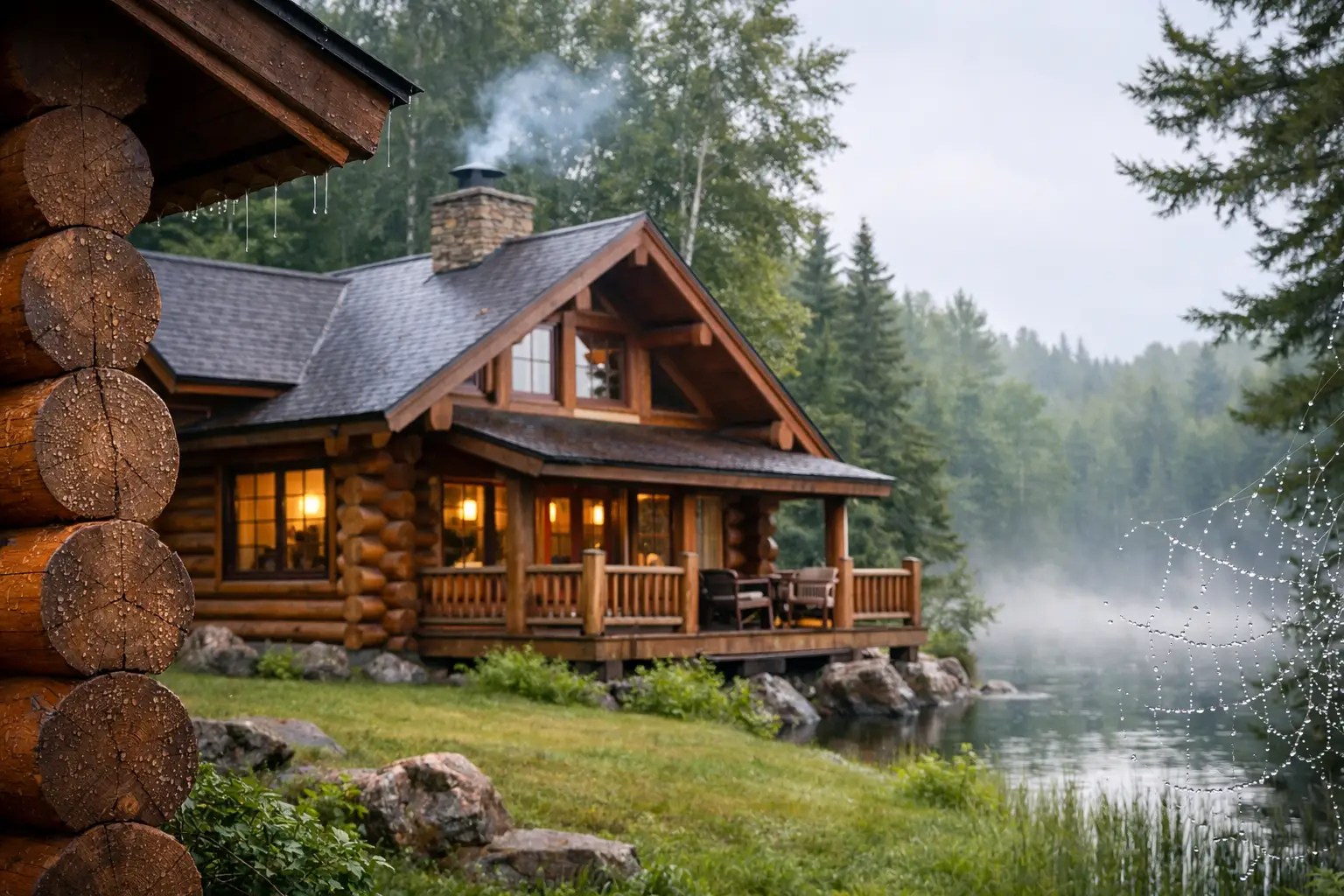
Step onto a homesite in the South after a summer rain and the question comes fast: can log homes handle humidity? It is a fair concern. Warm air, heavy moisture, driving rain, termites, and long cooling seasons will expose weak materials and poor construction in a hurry. But the honest answer is yes, a log home can handle humidity very well if it is built with the right species, engineered for the climate, and maintained with common sense.
That last part matters. Not every log home package is the same, and not every wood species belongs in a hot, damp climate. A lot of confusion comes from people comparing all log homes as if they perform alike. They do not. In humid regions, the difference between a long-lasting home and a high-maintenance headache often comes down to material choice and how the structure is detailed from the start.
Why humidity is hard on any wood home
Humidity does not automatically ruin wood. Wood and moisture have always gone together. The real problem is prolonged trapped moisture. When moisture cannot dry out, you start seeing swelling, shrinking, staining, mildew, decay, and insect activity. That is true for a stick-built home with wood framing, a cabin, a porch, or a full log house.
In the Southeast, the pressure is constant. Outdoor humidity stays high for long stretches, air conditioning creates temperature differences, and storms can dump a lot of water against the outside shell. If the home is poorly designed, moisture can collect around window openings, roof intersections, lower wall sections, and shaded sides of the house. If the wrong wood is used, those areas can age fast.
So the question is not whether humidity exists. It is whether the home is designed to shed water, breathe properly, and resist the effects of that moisture over time.
Can log homes handle humidity in the South?
Yes, but some can handle it far better than others.
A well-built log home in a humid climate should be treated like a serious structure, not a novelty house. That means roof overhangs that throw water away from the walls, proper foundation height, sound drainage around the home, flashing details done right, and a log species that is naturally better suited to damp conditions.
It also means understanding that high humidity does not just test the exterior finish. It tests the whole system. HVAC sizing, ventilation, window and door detailing, stain selection, and even how the home sits on the lot all play a role. When those pieces work together, a log home can perform beautifully in humid regions for decades.
Where people get in trouble is when they buy based on appearance alone. A pretty log profile does not tell you much about long-term performance. In humid Southern climates, the wood itself matters a great deal.
The wood species makes a big difference
This is where many buyers either save themselves years of maintenance or sign up for it.
Some common log home species are more vulnerable to moisture-related problems, insect pressure, and decay than others. Pine is widely used because it is common and often cheaper upfront, but lower-cost wood can become expensive if it needs more attention, more treatments, and more repair over the life of the home.
Heart-cut cypress has a strong reputation in humid climates for a reason. It is naturally more resistant to decay and insects than many other species used in log construction. That natural advantage matters in places where moisture is not an occasional event but part of daily life for much of the year. You are not trying to fight the climate with coatings alone. You are starting with a wood that is already better equipped for the job.
That does not mean any cypress log home can be built carelessly. Good material still needs good design and proper installation. But when you begin with heart-cut cypress, you are stacking the deck in your favor.
What actually helps a log home manage humidity
A strong-performing log home is not relying on one magic fix. It is a combination of smart choices.
Roof overhangs are a big one. If the roof extends far enough to shield the walls, the logs take less direct rain and less sun stress. That reduces moisture cycling and helps finishes last longer. Elevating the home properly above grade also matters. Logs should never sit where splash-back, poor drainage, or standing water can keep them wet.
Wall design and joinery matter too. Well-crafted log systems are designed to account for natural wood movement while still maintaining a tight envelope. If the system is sloppy, humid air and water can find their way into places they do not belong. Proper sealing around windows, doors, corners, and penetrations is part of long-term performance, not an optional upgrade.
Inside the home, humidity control matters just as much. Good air conditioning, balanced ventilation, and proper dehumidification keep interior moisture at healthy levels. In many Southern homes, that is true whether the house is built of logs, brick, or conventional framing. A log home is not exempt from needing a properly planned mechanical system.
Maintenance is real, but it should not be excessive
Any honest builder should tell you that a wood home needs maintenance. The real question is how much, how often, and how costly.
Humidity does not mean you will be sanding and restaining constantly if the home is built with the right material and protected correctly. But you should expect to inspect the exterior regularly, keep gutters and drainage working, watch shaded areas, and touch up finish where needed. That is responsible ownership, not a defect.
The trade-off is straightforward. You get the warmth, character, and authenticity of a real log home, but you do not ignore the exterior for twenty years and hope for the best. Buyers who want the log home look without the upkeep need to be realistic. At the same time, buyers often overestimate the burden because they have heard horror stories tied to poor wood choice, poor detailing, or neglected homes.
A well-built cypress log home is a different conversation than a bargain package built from less durable materials and dropped into a wet climate with little thought for drainage or exposure.
Common humidity problems and how they are prevented
When log homes struggle in humid climates, the causes are usually familiar. Water gets trapped where it should have drained. The finish fails because the wall takes too much weather. Ground moisture stays too close to the logs. Air leaks and poor HVAC planning let indoor humidity stay too high. Insects find wood that stays damp and vulnerable.
The good news is that these are largely preventable problems. Smart site planning keeps water moving away from the structure. Good overhangs and flashing reduce direct exposure. Better wood species provide built-in resistance. Proper engineering and installation keep the wall system tight and stable. Routine care catches small issues before they become repairs.
That is why experience matters. In a humid climate, details are not cosmetic. They are structural and financial.
Humidity, storms, and Southern performance
In places like Florida, humidity is only part of the story. You also have heavy rain, wind-driven weather, and storm seasons that test the house from every angle. A log home built for this environment needs more than rustic charm. It needs real engineering.
That is one reason practical buyers look beyond brochure language and ask harder questions. What species is being used? How is the home engineered? How are the walls protected from repeated wetting? What kind of support is provided during construction? Those answers tell you far more than glossy photos ever will.
Companies with real experience in Southern log construction understand that beauty alone is not enough. At Log Home Guys, that is why the focus has long been on heart-cut cypress, engineered performance, and straightforward guidance instead of showroom talk and sales pressure. In this climate, substance wins.
So, are log homes a bad idea in humid climates?
No. Poorly planned homes are a bad idea in humid climates.
A properly designed log home built from the right material can be an excellent fit for warm, damp regions. In fact, buyers who choose wisely often end up with a home that is not only beautiful, but better suited to moisture, insects, and long-term wear than many people expect. The key is to respect the climate instead of pretending it does not matter.
If you are considering a log home in a humid area, do not ask only whether it can survive. Ask how it is built, what wood it uses, and whether the builder truly understands Southern conditions. That is where the real answer lives – and it is the difference between owning a showpiece and owning a problem.
A good log home should feel solid, honest, and built for where it stands. When the materials and workmanship are right, humidity does not have to be the deal breaker people think it is.