
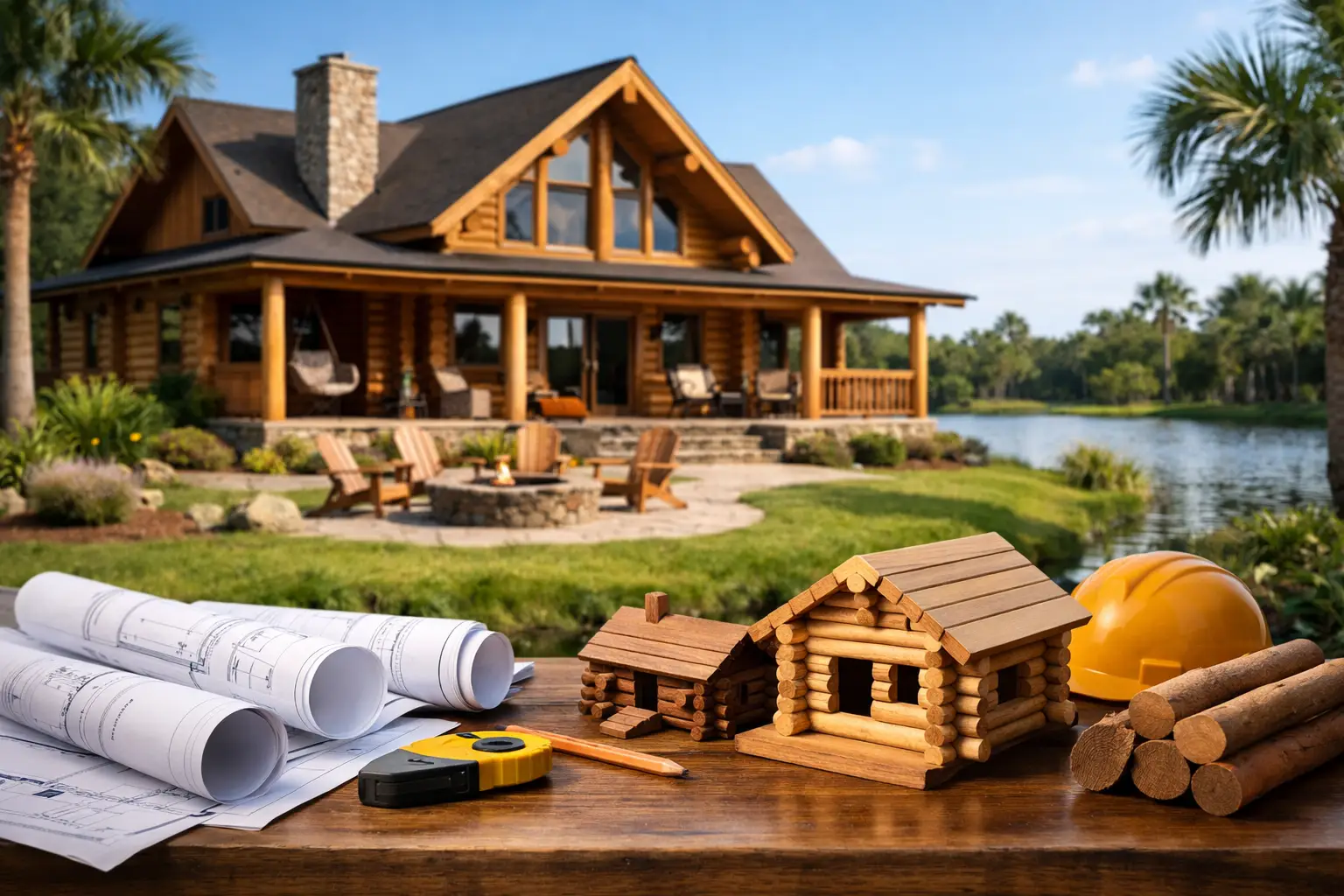
A log home in Florida has to do more than look good on a set of plans. It has to stand up to heat, moisture, termites, wind, and years of hard weather. That is why buyers shopping for log home kits Florida options need to look past pretty photos and ask tougher questions about engineering, wood species, and long-term maintenance.
In this market, the wrong material choice can cost you for decades. A package that looks affordable on paper may turn into a constant battle with movement, decay, insect issues, or storm-related repairs. Florida is not the place to treat a log home like a novelty. It needs to be built for the South from the start.
What makes log home kits Florida-ready
A true Florida-ready log home kit is not just a stack of logs and a floor plan. It should be part of a system that accounts for hurricane exposure, high humidity, structural loading, and the realities of building in coastal and inland southern climates. If a company sells the same package to Montana, Michigan, and Florida without meaningful changes, that should give you pause.
Florida building conditions are different. Wind requirements are stricter. Moisture management matters more. Insect resistance is not a side issue. Even details like overhangs, fastening methods, seal systems, and wall design carry more weight here than they might in a dry, cold climate.
That is why engineered plans matter. A log home package should be backed by real structural design, stamped drawings where required, and support that reflects local code demands. Buyers who want a home that lasts should not have to guess whether the package was actually designed for Florida conditions.
Why wood species matters more than most buyers realize
If you are comparing log home kits, the species of wood is one of the biggest decisions you will make. Many mass-market kits rely on pine because it is widely available and easy to process. Pine can work in some settings, but Florida is hard on it. High moisture, insect pressure, and constant exposure take a toll.
Heart-cut cypress is a different class of material. It is naturally resistant to decay and insects, which makes it far better suited for southern climates. That natural durability is not a marketing line. It is one of the main reasons experienced builders and practical buyers keep coming back to cypress for homes in Florida and across the Southeast.
There is also a maintenance side to this. Every log home needs care. No honest company should tell you otherwise. But the right material can reduce the amount of upkeep and lower the risk of expensive problems later. That matters whether you are building a full-time residence, a retirement home, or a second home you do not want to babysit every season.
Log home kits Florida buyers should compare carefully
Not all kits are equal, even when they sound similar on the phone. Some are little more than shell packages. Some leave major structural details to the builder. Some come with attractive pricing that does not include the engineering, support, or materials needed to finish the job properly.
A good comparison starts with plain questions. What exactly is included in the package? Are the plans custom or stock? Is the structure engineered for local loads and wind requirements? What support do you get during construction? Can the design be adjusted to your land, layout, and lifestyle, or are you expected to fit your life into a rigid package?
You should also ask how much real experience the company has with Florida projects. There is a big difference between shipping a kit into the state and actually understanding how to design for Florida. Buyers deserve more than generic promises. They need guidance from people who know what this climate demands.
Custom versus pre-packaged kits
Some buyers want a straightforward cabin package and plan to handle much of the work themselves. Others want a larger custom home with builder support and a more hands-off process. Both approaches can work, but the better choice depends on your budget, schedule, construction experience, and the kind of property you are building on.
Pre-packaged kits can look simple, but simple is not always better. If the plan does not fit your lot, your family, or local code conditions, changes can add cost fast. A custom-engineered package usually gives you more control upfront. You can plan for porches, rooflines, room sizes, and structural needs before materials are produced, which helps avoid expensive corrections later.
For owner-builders, support matters just as much as materials. A DIY buyer does not need a sales pitch. They need clear plans, honest answers, and a package that has been thought through. For turnkey buyers, coordination and builder guidance are just as important. The best companies understand both kinds of customers and do not force everyone into the same process.
The real cost question
A lot of people start with price per square foot. That is understandable, but it can also lead buyers in the wrong direction. The cheaper package is not always the better value if it brings more maintenance, more site problems, or more structural compromise.
A log home built with better material and better engineering often costs less over time, even if the upfront package price is higher. That is especially true in Florida, where storms, humidity, and insects expose weak choices in a hurry. Saving money on the front end only makes sense if the house can hold up on the back end.
Low overhead also matters. Buyers are often paying for things that have nothing to do with the house itself – dealer commissions, fancy showrooms, national ad budgets, and layers of sales markup. A direct-to-customer model cuts out much of that waste. That means more of your money can go into the actual home, where it belongs.
Design details that matter in Florida
A good Florida log home is a combination of material, engineering, and common sense design. Roof design matters because it affects water management, wind performance, and shade. Overhangs matter because they help protect walls from direct weather exposure. Proper elevation, drainage planning, and foundation design matter because water does not forgive mistakes.
Window placement and porch layout also deserve attention. In Florida, outdoor living is part of daily life for much of the year. A well-designed porch can add comfort, improve shading, and protect the structure at the same time. That is the kind of design choice that looks simple but pays off every day.
Then there is the question of size. Bigger is not always better. Many buyers are happier with a smart, efficient floor plan that lives well and keeps costs under control. A house that fits your land and your life will serve you better than one that simply chases square footage.
A better way to buy a log home kit
People shopping for log home kits Florida homes often have one thing in common – they are tired of being sold to. They want straight answers, fair pricing, and a company that knows the difference between a real home package and a polished brochure.
That old-fashioned approach still matters. A buyer should be able to ask hard questions and get honest answers. They should be able to talk with someone who understands cypress, understands Florida, and understands construction. No pressure. No inflated promises. Just real information from people who know the work.
That is where experience earns its keep. A company with decades in this business has already seen what holds up and what fails. It knows where shortcuts show up. It knows which details matter in the field, not just on paper. Log Home Guys has built its reputation around that kind of practical knowledge, with custom cypress packages designed for the demands of the Southeast.
If you are serious about building, take your time on the front end. Ask about the species. Ask about the engineering. Ask what support you will have when the job starts. The right package should give you confidence, not confusion.
A Florida log home can be one of the best homes you will ever own, but only if it is built for Florida from day one.