
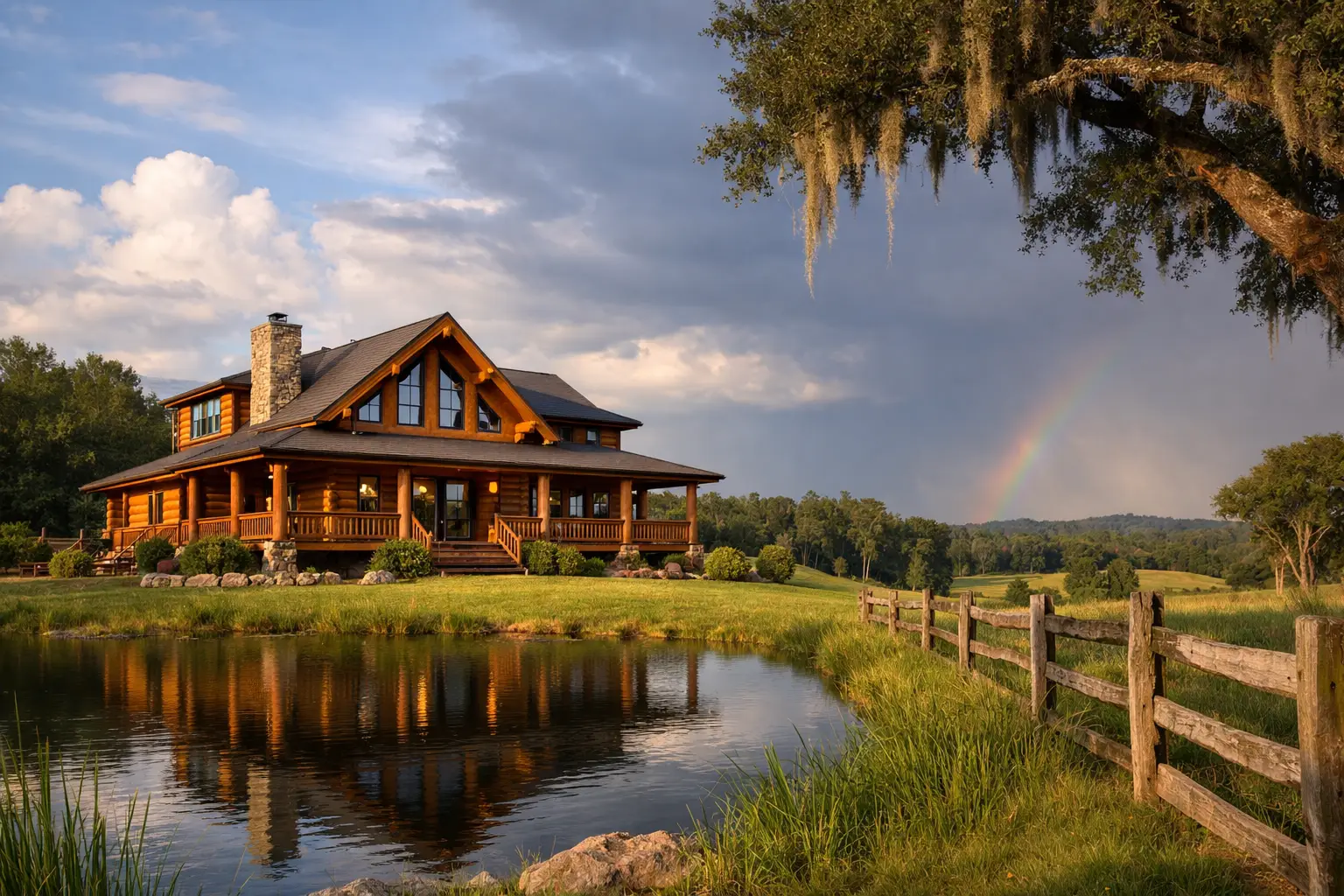
A Georgia log home has to do more than look right against a stand of pines or a mountain view. It has to stand up to heat, heavy rain, humidity, insects, changing soil conditions, and the hard-driving storms that can roll through the state with little warning. That is why the material, engineering, and support behind the home matter just as much as the floor plan.
For buyers who want a real wood home without signing up for constant worry, heart-cut cypress deserves a close look. It brings the honest character people expect from a log home while offering natural qualities that make good sense in Southern conditions.
Georgia Log Homes Need the Right Wood
Not all log homes are built for the same climate. A material that performs reasonably well in a dry Western setting may demand far more attention in Georgia, where moisture is part of life for much of the year. Humid summers, shaded building sites, wind-driven rain, and termite pressure can expose shortcuts quickly.
Many mass-market log packages rely on pine because it is common and inexpensive. Pine can be used successfully, but it generally requires greater dependence on chemical treatment, coatings, careful maintenance, and close attention to moisture. A buyer should understand that trade-off before comparing package prices.
Heart-cut cypress comes from the dense, durable heartwood of the cypress tree. It has long been valued in the South for its natural resistance to decay and insects. That does not mean a cypress home needs no care. Every wood home benefits from proper design, drainage, finish maintenance, and good construction practices. But starting with a naturally durable wood gives the homeowner a better foundation for long-term performance.
The appearance is another advantage. Cypress has warm grain, real character, and the substantial look that buyers want from authentic log construction. It does not try to imitate a log home. It is one.
Engineering Is Not an Add-On
A beautiful cabin plan is not automatically a buildable Georgia home. The home must account for its site, roof loads, wall connections, foundation requirements, and local code expectations. If the property is in the mountains, wind exposure and slope may drive important decisions. If it is on open rural land, the home may need to handle greater wind pressure. In other locations, drainage and soil conditions may be the bigger concern.
That is why stamped blueprints and custom engineering are worth discussing early, not after materials have been ordered. Proper engineering addresses how the log walls, roof system, floor system, and foundation work together. It is particularly important where shear loading and high-wind conditions are part of the design equation.
There is no single “Georgia standard” that fits every parcel of land. County requirements vary. So do elevations, exposure, utility access, and the way a family intends to use the home. A weekend cabin on wooded acreage may call for a different layout than a full-time retirement home with aging-in-place features, wide hallways, and a large covered porch.
A good log home company helps buyers think through those questions before the plans are locked in. That is not sales hype. It is how you avoid expensive changes when the project is already underway.
Start With How You Plan to Live
The best floor plan is not necessarily the biggest one. It is the one that fits the land and the people living on it. Georgia buyers often want a home that can serve as a gathering place for family while still being practical on an ordinary Tuesday morning.
For a smaller cabin, an open great room, one main-level bedroom, and a covered porch can provide plenty of usable living space without adding unnecessary cost. For a primary residence, many families prefer a main-floor owner’s suite, mudroom or utility entry, pantry space, and bedrooms or loft space upstairs for children and guests.
Porches deserve more than an afterthought in this part of the country. A deep covered porch can create shade, keep rain off entryways, and provide the outdoor living space that makes a log home feel connected to its property. Roof overhangs also help protect the walls from direct weather exposure. This is one example of how good design can reduce maintenance demands over time.
Before settling on a plan, consider four practical questions:
- Will this be a full-time residence, a second home, or a future retirement home?
- Does the site favor a crawlspace, slab, basement, or elevated foundation design?
- Where will the sun, prevailing weather, driveway, and best views fall on the property?
- Do you need a local builder, or are you prepared to manage an owner-builder project?
Those answers shape the home more than a glossy brochure ever will.
Material Packages Can Give Buyers More Control
Some homeowners want a turnkey path with builder guidance. Others already have a trusted contractor or intend to take an active role in construction. Both approaches can work, provided the materials and plans are complete, the responsibilities are clear, and the builder understands the system being installed.
A well-planned log home material package can give an owner more control over the project than a one-size-fits-all kit. The important word is “planned.” The package should be tied to the actual design, with engineered documentation where required and knowledgeable support when construction questions arise.
This is where direct experience matters. Log construction is different from conventional stick framing. Details around wall assembly, settling considerations where applicable, flashing, window and door installation, roof connections, and finishes should not be left to guesswork. A good local builder can be a strong partner, but he should have accurate plans and access to people who know the home system.
At Log Home Guys, the focus is not on pushing buyers through a dealer showroom or pressuring them into a preselected package. The work begins with the home, the property, and the way the customer plans to build. That old-fashioned approach takes more conversation, but it often prevents the misunderstandings that cost people money later.
Maintenance Is Mostly About Smart Decisions Early
Anyone promising a maintenance-free wood home is selling a story. Wood is a natural building material, and it should be inspected and cared for. The better question is whether the home is designed and built to make maintenance manageable.
Cypress gives homeowners a strong starting point because of its natural resistance to decay and insects. Proper roof overhangs, sound flashing, gutters where appropriate, good grading, and ventilation all help keep water moving away from the home. Quality exterior finishes protect the wood and should be maintained according to exposure and product recommendations.
The most vulnerable areas are usually predictable: lower log courses near grade, wall sections under short overhangs, transitions around doors and windows, deck connections, and places where landscaping holds moisture against the structure. Catching a finish issue early is far easier than repairing neglected wood years later.
Termite protection should also be part of the overall building plan, not an afterthought. Cypress has natural insect-resistant properties, but responsible construction still includes proper clearance from the ground, moisture control, and a termite strategy suited to the property and local conditions.
Price Should Be Compared Honestly
A low advertised kit price can be tempting, especially when land, site work, wells, septic systems, foundations, and labor are all competing for the budget. But comparing log home packages by the first number alone can lead buyers in the wrong direction.
Ask what wood species is included, what engineering is provided, which structural components are part of the package, and what support is available when the build begins. Find out whether the plan is truly suited to your property or simply a stock drawing with a new name on it. Then consider the likely cost of more frequent maintenance, insect treatment, or material replacement down the road.
The right home is not always the cheapest package. It is the one that gives you sound materials, a clear scope, and a realistic path from plans to a finished house. Straight answers are worth a great deal when you are making a decision that will affect your family for decades.
If you are considering a Georgia log home, begin with the land and the weather it sees. Then choose a design and material package built to meet both. A well-built cypress home should feel like it belongs there from the day the logs arrive – and still feel that way years down the road.