
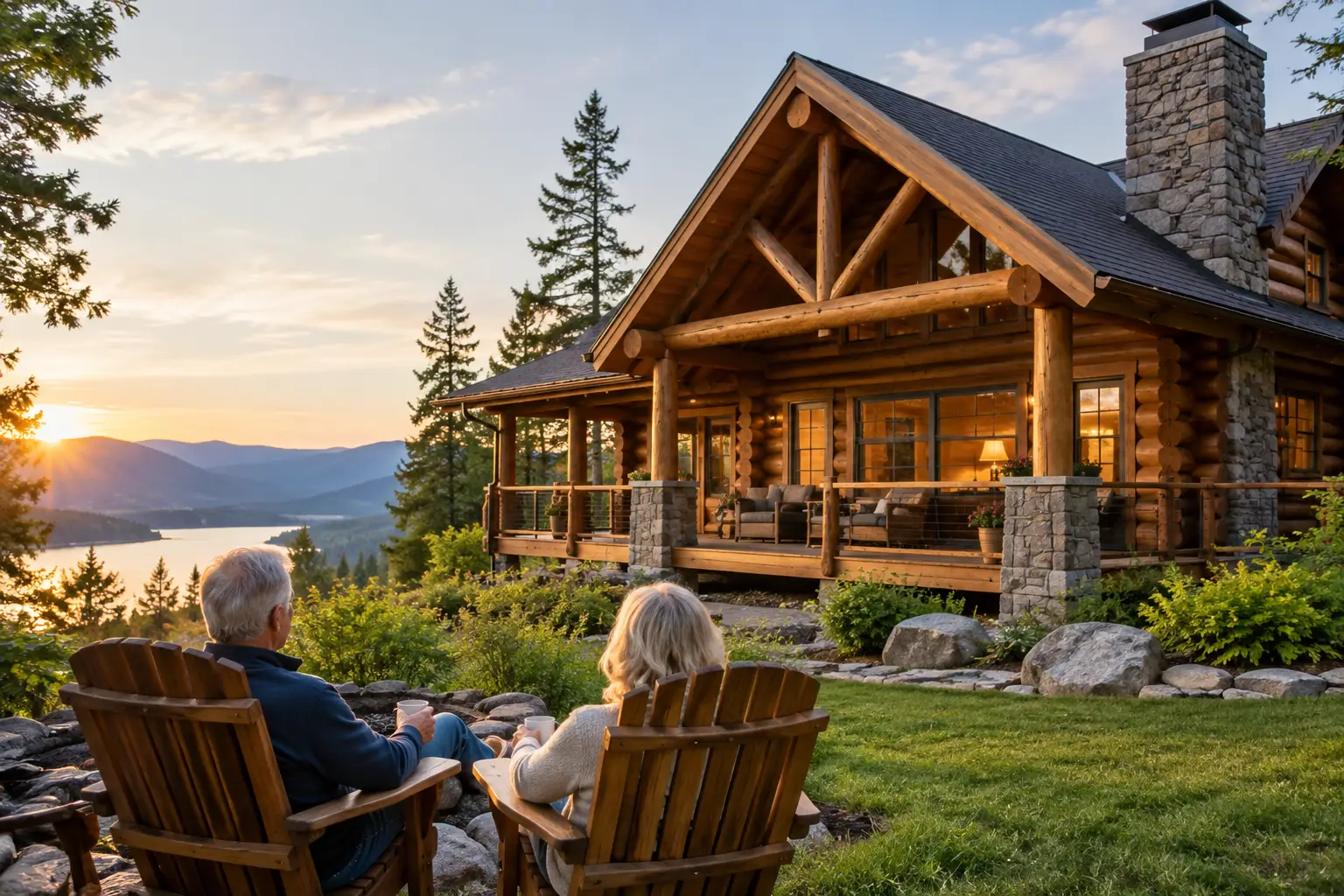
A retirement home should not become another full-time job. For many people, that is exactly why log homes for retirees hold such appeal: they offer a quieter setting, honest materials, room to breathe, and a house built around the way you want to live now. But the right retirement log home is not simply a smaller cabin with a porch. It needs to be planned for comfort, safety, maintenance, storms, and the years ahead.
A well-designed Cypress log home can meet those needs beautifully. The key is looking past the picture-book appearance and making sound decisions before construction begins. A home may be your final major build, a place to welcome children and grandchildren, or a legacy property that stays in the family for generations. It deserves more thought than a standard plan pulled from a catalog.
A Retirement Log Home Should Make Daily Life Easier
Most retirees are not looking for more housework, more stairs, or more systems to worry about. They want a home that feels substantial and comfortable without being oversized or wasteful. That often means a practical one-level floor plan, clear traffic flow, useful storage, and outdoor spaces that can be enjoyed without constant upkeep.
The best layouts place the primary bedroom, laundry, kitchen, and main living areas on one level. A second floor can still make sense for visiting family, a hobby room, or occasional guests, but the homeowner should never have to depend on stairs for everyday living. Wide hallways, well-placed lighting, fewer tight corners, and bathrooms designed with future mobility in mind are simple decisions that pay off year after year.
This is where custom design matters. A beautiful great room is worthwhile, but not if it creates difficult heating zones or leaves no sensible place for furniture. A large porch is a real asset in the Southeast, but it should be sized and positioned for shade, weather protection, and the way you actually use it. Every room should have a purpose.
Why Heart-Cut Cypress Makes Sense for Long-Term Living
Not all log homes are built with the same material, and retirees have good reason to pay attention to that difference. Log Home Guys uses Heart-Cut Cypress, also called Bald Cypress heartwood, because it has natural resistance to decay and insects and performs exceptionally well in humid Southern conditions.
Cheap pine may lower the initial material cost, but it can bring more maintenance concerns over the life of the home. Pine is not Cypress. It does not offer the same natural durability, and a retirement home should not be designed around the hope that a lower-grade material will cause fewer problems later.
Heart-Cut Cypress has a character that cannot be manufactured. Its grain, color, and warmth create the genuine log home look people want, while its natural properties make practical sense for Florida log homes, Georgia log homes, and other projects across the Southeast. It is a premium material because it earns that position through long-term performance, not because it is dressed up with a sales pitch.
A retirement home should be built with materials chosen for the decades ahead. That means considering moisture, insects, sun exposure, changing weather, and the amount of maintenance you will want to handle at 70, 80, or beyond. Good building decisions are often the ones you barely notice later because they helped prevent a problem from developing in the first place.
Storm Readiness Is Part of Peace of Mind
For retirees building in Florida, Georgia, or coastal and storm-prone parts of the Southeast, hurricane performance is not an optional feature. It is part of responsible home design. A home must account for extreme wind, uplift, shear loading, driving rain, and the demands placed on every connection when weather turns serious.
Meeting the minimum required load is one thing. Looking for practical ways to improve structural capacity is another. We believe a home should be designed as if our own family were going to live in it. That means paying attention to engineering, stamped blueprints, roof design, connections, wall systems, and the way the complete structure works together.
A simple roofline is often easier to engineer and maintain than a roof broken into too many valleys and transitions. Large overhangs can be useful for shade and protecting exterior walls, but they must be properly planned for wind exposure. Big windows can bring in beautiful views, yet their placement and protection need to make structural and practical sense.
Retirement also brings a stronger desire for self-sufficiency. Many homeowners choose to plan for generator backup, protected equipment areas, adequate fuel storage where appropriate, and electrical systems that keep essential portions of the home operating during an outage. These decisions are best made during design, not after the house is complete and a storm is already on the forecast.
Comfort Is More Than Square Footage
A large home can be comfortable, but only if it is designed intelligently. Many retirees find that a modestly sized, well-planned home feels better than a larger house filled with unused rooms. The goal is not to build small for its own sake. The goal is to build enough house, in the right places, without creating unnecessary cleaning, heating, cooling, and maintenance work.
Cypress log homes have a solid, grounded feeling that people often notice immediately. Pair that with thoughtful insulation, efficient windows, sensible room orientation, and modern mechanical systems, and the result can be a home that is comfortable through changing seasons.
The Signature Series Country-Style Log Homes approach is a good fit for homeowners who want authentic Cypress log construction without giving up modern conveniences. A log home can have the warm, traditional appearance you remember while still including updated kitchens, practical lighting, contemporary finishes, reliable technology, and accessible features that make daily living easier.
Design for Maintenance Before You Build
Every house requires care. Anyone who says otherwise is selling something. The question is whether your home has been designed to reduce avoidable work and future repairs.
For a retirement log home, that may mean selecting details that shed water properly, keeping exterior elements accessible for inspection, avoiding overly complicated roof intersections, and planning landscaping that does not demand constant attention. It also means thinking about where mechanical equipment, outdoor kitchens, generator systems, and storage buildings will sit on the property.
A detached Cypress log garage or timber structure can provide useful room for vehicles, tools, recreational equipment, and storm supplies without crowding the main home. For some families, a guest cabin or separate suite also makes sense. The right answer depends on how often family visits, how private you want the property to feel, and whether the home may eventually serve several generations.
Do not let a pre-packaged plan make those decisions for you. People often search for log cabin kits or log home kits when they are really planning a substantial custom residence. There is nothing wrong with starting with an idea or a basic plan, but the finished design should fit the land, local conditions, and your long-term life – not force you into somebody else’s idea of a cabin.
Build With People Who Will Answer the Phone
Building a custom home involves many decisions, and no retiree should be left alone once materials arrive. Good guidance matters from the first conversations about the property through engineering, delivery, construction, and the questions that naturally come up along the way.
At Log Home Guys, personal service is still handled the old-fashioned way. We answer calls seven days a week, provide free technical support, and help customers understand how their homes go together. Prospective owners can visit homes under construction, see the workmanship for themselves, and ask direct questions before they commit.
That kind of access matters because a retirement home is personal. You are not buying a box of parts. You are making decisions about where you will wake up, host family, ride out storms, and enjoy the next chapter of your life.
Choose the Home You Can Enjoy Years From Now
The right log home is not the one with the most decorative features or the loudest sales presentation. It is the one that fits your property, your lifestyle, and your future with fewer compromises. Start with a practical floor plan, choose Heart-Cut Cypress for its natural durability, and insist on structural decisions that make sense long after the construction crew has gone home.
If you build with those priorities in mind, your log home can remain what it ought to be: a strong, comfortable place to live simply, stay independent, and welcome the people who matter most.