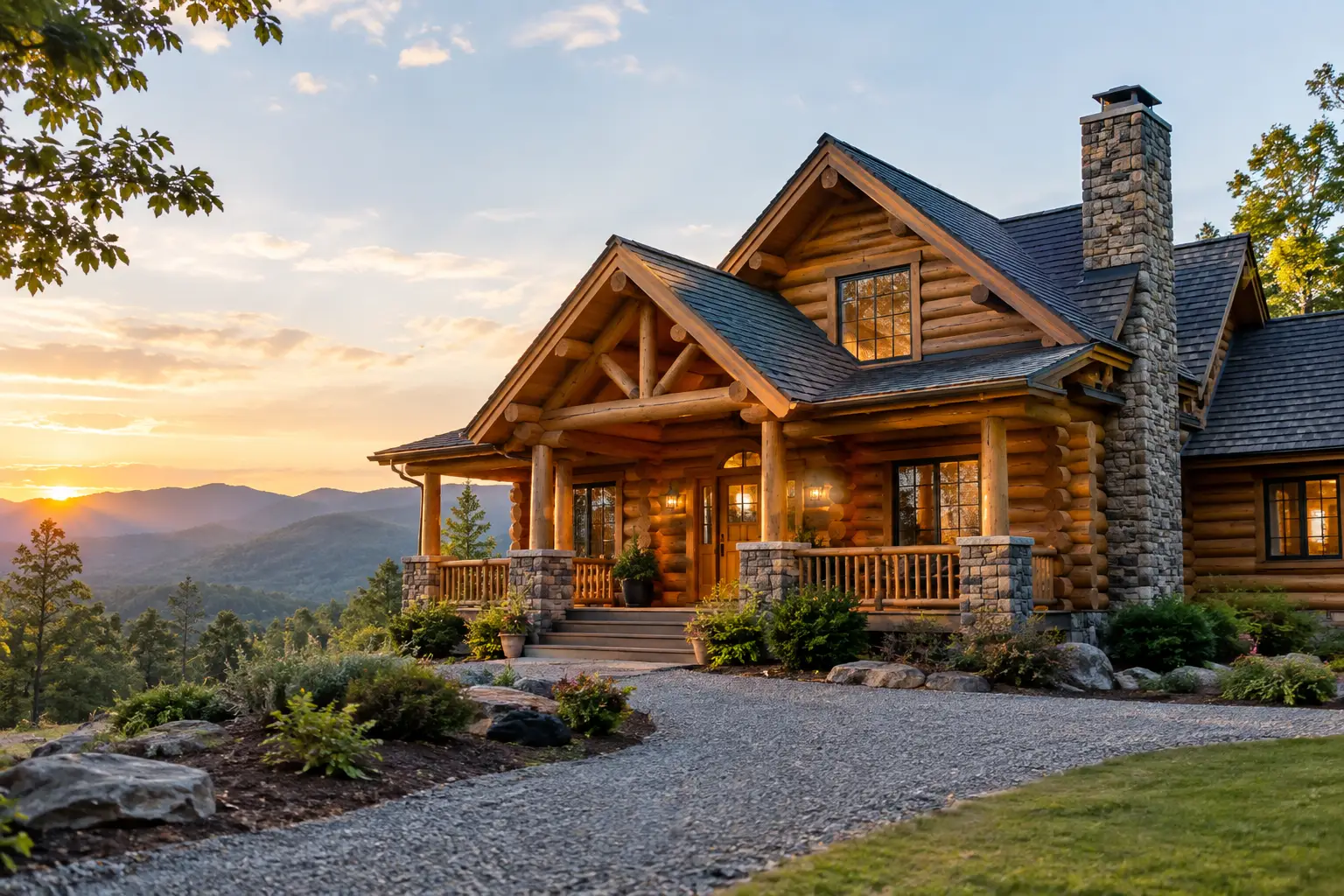
A Georgia log home should be planned around the land, the weather, and the years ahead – not just a pretty picture of a cabin in the woods. This Georgia log home building guide is for people who want a real home or legacy property that will perform through humidity, heavy rain, strong winds, changing seasons, and long stretches of family use.
Georgia offers many great places to build, from Milton, Alpharetta, Johns Creek, Blue Ridge, Lake Oconee, Greensboro, and the North Georgia Mountains to quiet mountain acreage, open farmland, and coastal properties. But each setting asks different questions. A home that looks right on a ridge may need careful wind engineering. A home near a lake or in a wooded hollow needs a serious moisture plan. The best decisions are made before the first log is delivered. That’s where Log Home Guys shines and helps you prepare.
Start With the Land, Not the Floor Plan
Many people fall in love with a floor plan before they understand their building site. That is backwards. Your driveway, slope, drainage, utility access, views, soil conditions, and local building requirements all affect the home design. A pretty set of plans will not fix a bad building site, and it is a whole lot cheaper to solve those problems on paper than after the equipment shows up.
Walk the property after a hard rain if possible. Look for where water stands, where it naturally runs, and whether the driveway will remain usable in wet weather. Mature trees are valuable, but they can also shade the home, hold moisture around the walls, and limit equipment access during construction. A well-designed homesite keeps surface water moving away from the foundation and leaves enough working room for the builder to do the job properly. In Georgia, a hard rain will tell you more about a piece of land in thirty minutes than a sunny afternoon ever will.
On sloping Georgia land, a crawlspace or basement may make practical sense, but it must be engineered and waterproofed correctly. On flatter sites, the foundation still needs to be planned around drainage, termite protection requirements, and the finished elevation of the home. There is no one foundation answer for every property. The right choice depends on the site and the home you intend to build.
Choose Logs for Southern Weather
Georgia heat and humidity are hard on building materials. That is one reason material selection should never be treated as a cosmetic decision. Lower-cost pine logs may look acceptable when new, but a lower initial material cost can bring greater concerns over moisture, insects, checking, maintenance, and long-term durability. Down here, heat, rain, humidity, and insects do not care what the brochure said when the house was sold.
At Log Home Guys, we build with Heart-Cut Cypress, selecting the durable heartwood portion of Bald Cypress because of its natural resistance to decay and insects and its suitability for Southern conditions. Cypress has been trusted in the Southeast for generations. It gives a home the authentic character people want from log construction while providing a better foundation for long-term ownership than lower-grade pine alternatives.
That does not mean any wood home can be ignored. Every log home needs proper overhangs, drainage, flashing, ventilation, and finish maintenance. The difference is that premium material and sound detailing give you a much better starting point. We would rather help a customer avoid a future repair than explain why it became necessary.
Plan for Water Control From Day One
Most log home trouble begins with water where it does not belong. Good roof design is not an optional styling detail. Generous roof overhangs help protect the walls from repeated rain exposure. Gutters, downspouts, splash control, and grade work should move water away from the foundation instead of dumping it at the corners of the house. Water always finds the weak spot, so we would rather give it an easy way away from the house than spend years trying to keep it out.
Pay attention to roof valleys, chimney intersections, window heads, porches, and deck connections. These are common areas where water management must be handled with care. A log home can be built to look simple, but the details behind that simple appearance need to be right.
Design for Georgia Wind Loads and Real Life
Georgia is not one weather zone. Coastal and southern areas can face hurricane conditions, while inland properties can experience powerful thunderstorms, tornado activity, and driving rain. Even mountain sites can be exposed to wind in ways that surprise a homeowner. Georgia weather can go from calm to ugly in a hurry, and that is not the time to find out somebody saved a few dollars on connections you cannot see.
A proper Georgia log home building guide must include structural engineering. Do not assume a standard package designed for another part of the country automatically fits your property. Engineered and stamped blueprints should address the specific home, local requirements, roof system, connections, and expected wind exposure. Engineered and stamped blueprints should address the specific home, local requirements, roof system, connections, and expected wind exposure. Every Log Home Guys home includes project-specific engineered and stamped blueprints and energy calculations at no additional charge, with Georgia engineering stamps provided for Georgia projects.
Meeting the minimum code requirement shouldn’t be where thoughtful building stops. Increasing structural capacity through stronger connections, better load paths, and sensible roof design can provide real value over the life of the home. These choices are especially worthwhile for a retirement home, a family compound, or a property that may remain in the family for generations.
A few early design choices also make everyday living easier:
- Keep primary living spaces, a comfortable bedroom, and a full bath on the main level if this may be your long-term home.
- Plan a protected location for a generator and transfer equipment if backup power matters to your family.
- Give mechanical systems, water equipment, and electrical panels working access rather than hiding them behind difficult finishes.
- Use covered porches where they serve the home well, while making sure their roof connections and drainage details are fully thought through.
These are not glamorous decisions, but they are the decisions you appreciate years later.
Make Custom Design Mean Something
A custom log home is more than changing a window or moving a wall. The design should fit the property, the way you live, and the demands of the structure. A large wall of glass may capture a beautiful view, for example, but it must be balanced with energy performance, wall bracing, privacy, solar exposure, and the home’s overall structural plan.
The same is true of high ceilings, open great rooms, lofts, and wide porches. They can all be excellent choices. They simply need to make structural and practical sense. Good design is not about saying yes to every idea. It is about finding a way to create the home you want without building in unnecessary upkeep or future complications.
For many customers, a Country-Style Log Home offers that balance. It keeps the warmth and honesty of real Cypress log construction while allowing room for modern kitchens, updated colors, practical storage, efficient systems, and the conveniences expected in a well-built contemporary home.
Think Ahead About Energy and Comfort
A log wall is only one part of the home’s energy performance. Roof insulation, window selection, air sealing, HVAC sizing, shading, and duct layout all matter. In Georgia, an oversized air-conditioning system can cool quickly but fail to remove moisture effectively. A properly designed system helps maintain comfort without leaving the home feeling clammy.
Consider how the home will be used in every season. A weekend cabin used occasionally has different needs than a full-time residence. If you plan to be away for part of the year, choose systems and finishes that are manageable, accessible, and dependable. If this will be your forever home, prioritize ease of use over features that look impressive but create daily inconvenience.
Know What a Log Home Package Does – and Does Not – Include
Customers often search for log home kits or log cabin kits when they are really planning a substantial custom residence. That is perfectly normal. The important thing is understanding that a package is only one part of the project.
Your complete build also involves site preparation, foundation work, permits, utilities, roofing, windows, mechanical systems, interior finishes, and a qualified local builder. The best path is clear coordination between the log home designer, engineer, builder, and homeowner. Confusion between those parties is where delays and avoidable changes often begin.
Ask direct questions early. Who provides the stamped plans? How will builder questions be handled during construction? What support is available when the crew reaches a detail they have not seen before? Can you see a home under construction before making a decision? Straight answers matter more than a polished sales presentation.
An old-fashioned company should still pick up the phone. Personal technical support, builder guidance, and the ability to discuss your property directly are valuable when you are making decisions that will affect your family for decades.
Build for Ownership, Not Just Completion
The day construction ends is not the finish line. It is the first day of ownership. A well-built Cypress log home should be designed with reasonable access for inspections, maintenance, and future service. Keep vegetation from growing against the walls. Monitor caulking, flashing, gutters, and exterior finish on a sensible schedule. Address small issues while they are still small.
The goal is not a maintenance-free fantasy. The goal is a durable home that does not demand unnecessary attention because shortcuts were taken at the beginning. A good home should still make sense twenty years from now, after the new-home smell is gone and the family has lived some life in it.
Take your time with the planning stage. Walk the land, ask plain questions, study the structural details, and choose materials that belong in Georgia. A good log home does more than make a fine first impression. It becomes a dependable place for the life you intend to live there.
“You can argue with Georgia weather if you want to, but I wouldn’t bet the house on winning, unless it’s a Log Home Guys structure.”
Reviewed by Bill Mathews Owner & Founder of Log Home Guys 9/29/2026