
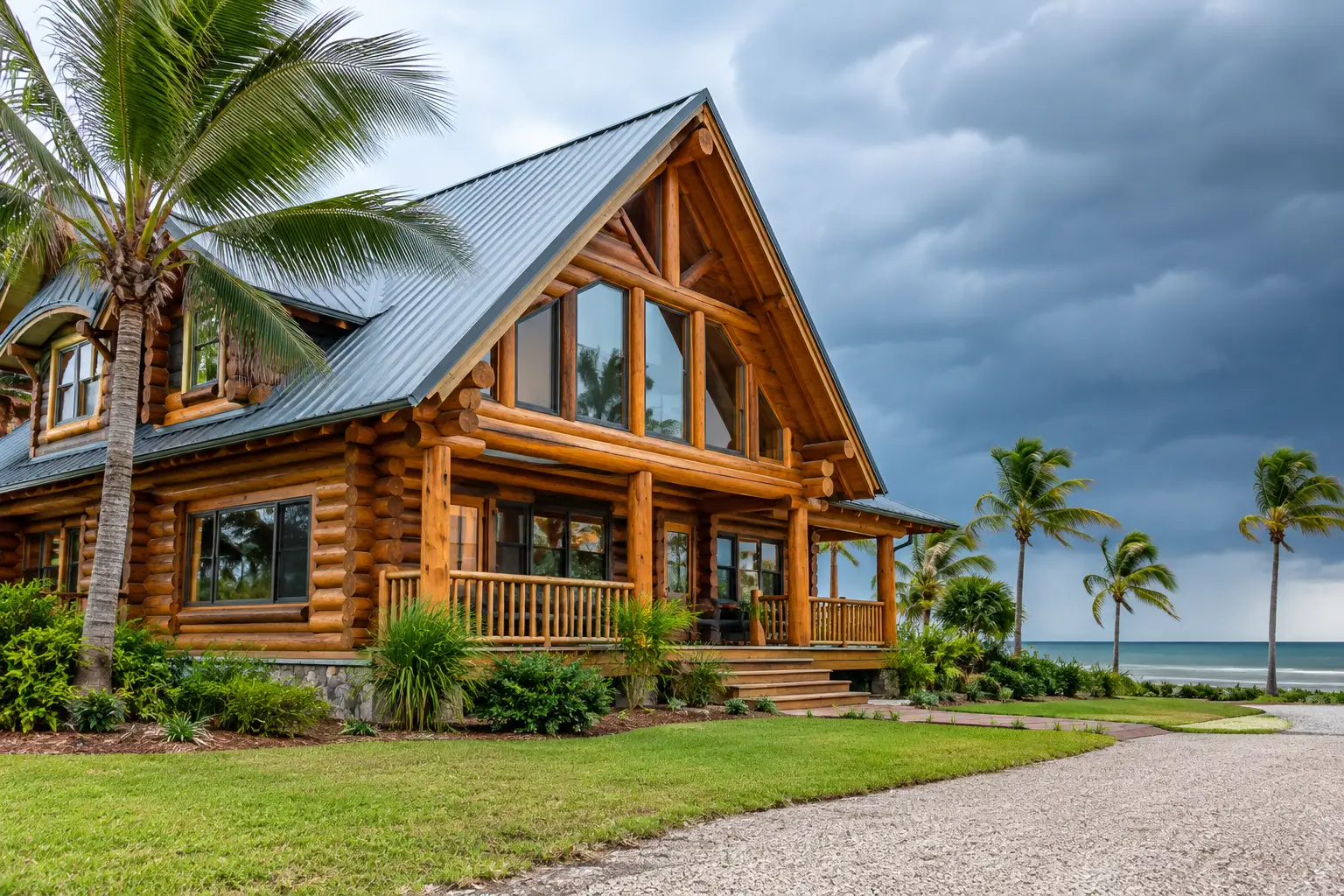
A real cypress home hurricane case study should not begin with a dramatic storm story or a promise that any home is indestructible. It should begin with the decisions made before the first log is set. In Florida and across the Southeast, hurricane performance is earned through sound engineering, proper connections, practical design, and materials chosen for the climate.
That is the difference between a log home that merely looks right on a set of plans and one designed to serve a family for decades. A beautiful Cypress home is worth building. A beautiful Cypress home that has been thoughtfully prepared for wind, rain, humidity, and long-term maintenance is worth even more.
What This Cypress Home Hurricane Case Study Examines
When we look at a Cypress log home through a hurricane-focused lens, we are not looking at one item. We are looking at the entire structure as a system. The roof, walls, foundation, windows, doors, fasteners, porches, overhangs, and mechanical planning all have a part to play.
Many buyers first ask about the logs. That is a good question, but the logs are only one part of the answer. A home can use fine material and still have weak points if the structural load path has not been carefully thought through. Wind pressure pushes, pulls, lifts, and racks a building. The home must move those forces from the roof, through the walls and connections, and into the foundation in a controlled way.
We design Cypress log homes with that full picture in mind. Meeting a minimum requirement is not the finish line. When there is a practical way to improve capacity, reduce future maintenance, or make a home more sensible for its owners, that is the direction we believe in taking.
The First Decision: Use the Right Wood
Not all log home materials belong in a hot, wet Southern climate. Cheap pine log alternatives may look attractive at first glance, especially in a catalog or kit package, but a long-term home deserves a closer look at decay resistance, insect resistance, stability, and maintenance demands.
Heart-Cut Cypress, also called Bald Cypress heartwood, has been valued in the South for generations for good reason. Its heartwood has natural resistance to decay and insects. That matters where summer humidity is high, rain can drive sideways for hours, and shaded areas may stay damp longer than anyone would like.
Cypress is not a substitute for good construction practices. No wood should be asked to overcome poor flashing, bad drainage, neglected finishes, or careless detailing. But when the home is properly designed and maintained, Heart-Cut Cypress gives the owner a far better starting point than lower-grade materials selected mainly to reduce initial cost.
For a family building a final retirement home, a second home, or a legacy property, that difference matters. Less worry about material vulnerability means more time enjoying the property and fewer unpleasant surprises down the road.
Why Heart-Cut Matters
The heartwood portion of Cypress is the premium material. It is not the same thing as simply calling any Cypress board or log “Cypress.” Heart-Cut Cypress is selected for the qualities that have made old Cypress structures endure in demanding climates.
This is one reason we do not treat a Florida log home as a generic cabin package. A home built near the coast, in a wooded inland area, or on open rural land faces different exposure conditions. The material selection and the design both need to respect the site.
Hurricane Strength Begins With a Continuous Load Path
The most useful lesson in any hurricane case study is simple: wind is looking for the weakest connection.
A strong roof is not enough if its connection to the wall system is weak. Strong walls are not enough if they are not properly tied to the foundation. Windows and doors must be selected and installed as part of the whole assembly, not treated as afterthoughts once the structure is already planned.
A properly engineered log home design considers how uplift, lateral pressure, and shear loading travel through the building. The roof framing, wall system, fastening schedule, foundation details, and engineered plans must work together. This is especially important in log construction, where the natural beauty of the exposed structure should never be confused with a reason to overlook the engineering behind it.
We provide engineered and stamped blueprints because a custom home deserves more than a pretty rendering. The plans need to make structural sense for the actual home, its layout, its roof design, and its intended location.
Roof Shape, Overhangs, and Porches Need Common Sense
Large porches and deep overhangs can make Country-Style Log Homes inviting and comfortable. They also need careful planning. The same is true for tall gables, complicated rooflines, and large open living areas.
There is no rule that says a home must be plain to be strong. There is also no reason to pretend that every architectural feature carries the same structural demands. A thoughtful design balances appearance with what makes sense in high-wind country.
Sometimes that means adjusting a roofline, refining a porch connection, or strengthening a detail that may not be visible once the home is complete. Those decisions are not made to add needless complexity. They are made because they can prevent trouble later.
Water Management Matters After the Wind Stops
Hurricanes bring wind, but wind-driven water is often what finds the small mistakes. Rain can be forced into places that may never see moisture during an ordinary afternoon shower. Roof transitions, window and door openings, porch intersections, chimneys, and penetrations all need disciplined detailing.
A Cypress log home should also be planned with everyday water management in mind. Proper site drainage, foundation height where appropriate, roof runoff control, flashing, and sensible clearance around the home protect the structure year after year. These are not glamorous subjects, but they are among the best ways to reduce maintenance and protect a long-term investment.
This is where custom design means more than choosing bedroom counts and exterior colors. We think about where water goes, how the home will age, how accessible maintenance will be, and which details may create headaches ten or twenty years from now.
Openings Are Part of the Storm Plan
Windows and doors bring light, views, and access to porches and outdoor living spaces. They are also critical parts of a hurricane-ready home.
The right approach depends on the home’s exposure, the local design requirements, the size and placement of openings, and the owner’s priorities. A house with broad glass facing open land has different considerations than one protected by dense woods. Larger openings may be entirely appropriate, but they should be accounted for structurally rather than simply added because they look good on a floor plan.
For homeowners who want more independence during outages, storm preparation should also include practical matters beyond the shell of the home. Generator planning, protected equipment locations, sensible storage, water considerations, and a layout that remains comfortable when normal services are interrupted can make a real difference. These choices are especially meaningful for owners who plan to stay in their home for the long haul.
A Log Home Kit Is Not the Same as a Finished Plan
People often begin their search with terms such as log cabin kits, log home kits, or Florida log homes. Those are useful starting points, but buyers should understand what they are comparing.
A pre-packaged log home offering may provide materials, but it may not address the particular engineering, site conditions, construction support, and practical design decisions needed for a serious custom home. The right home for a family property or retirement acreage is rarely found by forcing a standard package onto a nonstandard site.
At Log Home Guys, we believe customers deserve straight answers before they commit. That includes personal access, technical support throughout construction, and the opportunity to see homes under construction. There is no substitute for seeing the craftsmanship, asking direct questions, and understanding how the pieces go together.
What a Stronger Home Really Means
A hurricane-focused Cypress home is not a claim that storms cannot cause damage. No honest builder should make that claim. Extreme weather is unpredictable, and site conditions vary widely.
What a stronger home means is that the structure has been designed with greater care for the forces it may face. It means premium Heart-Cut Cypress has been chosen for its natural suitability in a Southern climate. It means the engineering, connections, roof, openings, drainage, and long-term details have been treated as one job instead of a collection of separate decisions.
If you are considering a Cypress log home or log cabin in Florida, Georgia, or elsewhere in the Southeast, start with the property and the way you intend to live there. Bring the questions that matter – wind exposure, maintenance, generator needs, porches, family use, and how long you expect the home to serve you. A well-built home begins with an honest conversation and decisions made as if the house were being built for our own family.